

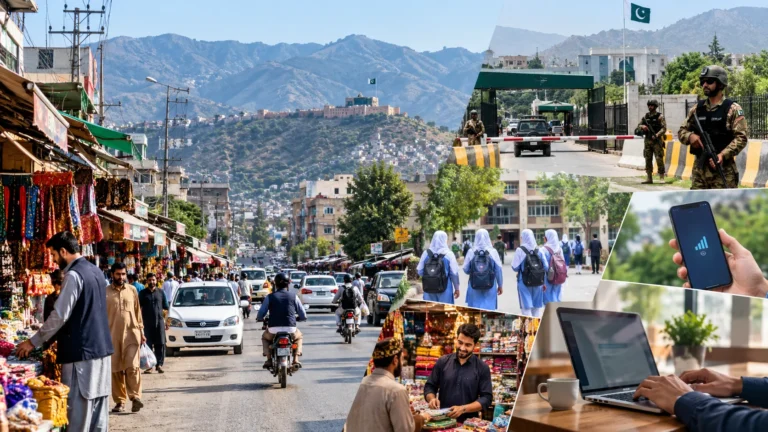
Pakistan’s Duty to Protect All Citizens
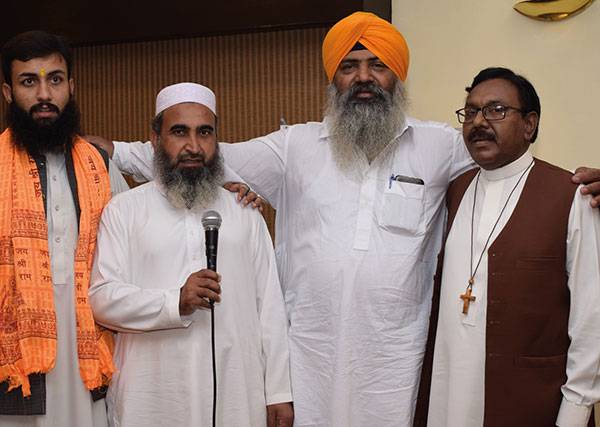
Pakistan’s discussion on religious unity often alternates between rhetoric and distrust. That is a mistake, and it also creates a security gap. Minority protection is neither charity nor public PR. It is a fundamental Islamic responsibility and a practical strategy to keep society stable during peacetime, when radical ideas attempt to develop quietly before escalating into violence. Islam does not see non-Muslims under Muslim leadership as foreigners to be tolerated. It views their safety, dignity, and rights as a trust. The Prophet Muhammad (PBUH) issued a clear warning: “Whoever kills a person under a covenant of protection will not smell the fragrance of Paradise” (Sahih al Bukhari, Hadith 3166). If we take this seriously, minority protection will become a foundation of peace rather than a side issue.
Extremism seldom starts with explosives. It starts with language. It starts with dividing people into clean and impure, honorable and worthless, insiders and adversaries. The initial target is often “the other,” since dehumanization is the most straightforward path to cruelty. That is why the Sunnah’s ban on hurting protected groups is relevant in today’s framework for preventing violent extremism. It operates as an early warning principle. When individuals begin to normalize takfir, exclusion, or efforts to remove minorities from public life, society is seeing more than simply bigotry.
It is seeing the first stages of ideological slide toward violence. In peacetime, the most important security activity is detecting and halting that slide via legislation, education, and moral clarity
Pakistan’s constitutional structure formalizes this moral clarity. Equal citizenship, religious freedom, and rights for minorities are not new concepts imposed on Islamic societies. They are the institutional embodiment of Qur’anic justice and Prophetic duty. This is significant because extreme organizations rely on grievance narratives. They convince young people that the state is anti-Islamic, society is corrupt, and that only violence will restore the “true” faith. When the state publicly defends minorities, enforces equal rights, and punishes sectarian harassment, radicals lose the narrative they peddle. In other words, minority protection isn’t only ethical. It’s strategic. It seals off the recruiting space before it opens.
Interfaith peace also serves as a resilience multiplier. Communities that trust one another exchange information, dispel rumors, and resist manipulation. Communities that mistrust one another withdraw into echo chambers, where hatred grows quickly. PVE is more than just preventing someone from pulling a trigger. It is about creating societal circumstances that make individuals less likely to take up a firearm in the first place. When Christians, Hindus, Sikhs, Ahmadis, Shias, Sunnis, and others can expect fair police, equitable service delivery, and courteous public discourse, the social temperature decreases.
The decreased temperature complicates sectarian mobilization. It makes aggressive entrepreneurs less compelling. And it improves national solidarity, which is the true foundation of public safety
We also have a solid historical framework for inclusive social contracts. The Medina Charter is often cited as evidence that Islamic administration may include several religious groups under a single political community, with shared duties and protection. This is not a museum artifact. Its ethos aligns with the logic of current PVE: a whole-of-society approach in which the state, ulema, schools, media, and local communities all share responsibilities. In Pakistan, this translates into policies that balance constitutional rights, community involvement, and practical protections. It also entails rejecting the notion that security is just a job for agencies. Everyone is responsible for preventing radicalization since it spreads via daily settings such as schools, sermons, social media feeds, and street corner conversations.
Targeting minorities is also a recognized pre-incident signal. When a movement swings from argument to intimidation, discussion to threats, and criticism to demands for a social or economic boycott, the risk increases. Pakistan’s PVE technique becomes important when these patterns are seen as signals rather than background noise. Community-based monitoring, local conflict resolution, prompt policing, and credible counter-narratives may prevent escalation. Extremists sometimes use religious terminology to disguise simple hate; theological clarity is also important.
If the public receives clear, consistent reminders that hurting minorities is a severe sin and a national crime, the conceptual space for violence narrows
This is where efforts such as Paigham e Pakistan are important. The goal is not to create another paper that sits on a shelf. The goal is to recover Islamic language so that terrorist organizations cannot pretend to speak for Islam. When recognized intellectuals delegitimize vigilantism and sectarian violence, and the state reinforces that position via education and media, the extreme framing diminishes. People then regard the state as a defender of faith, life, and liberty, rather than an adversary of religion. This is an important adjustment during peacetime because it lessens the attraction of anti-state propaganda, which often precedes conflict.
Minority protection connects with welfare and service delivery in a direct manner. Marginalization generates a feeling of not belonging, which fuels both hatred and recruitment. Inclusive access to schools, health care, identification cards, and fair job practices informs every person that they are a part of this nation. This message prevents extreme presentations that depend on societal division. Reintegration and deradicalization initiatives may then play their role in returning misguided persons to society while keeping vulnerable populations secure. Prophetic compassion does not imply a sensitivity for harm. It represents a commitment to change when feasible and strong justice where required.
Pakistan does not have to choose between Islamic principles, constitutional law, or human security. They strengthen each other when used honestly. Protecting minorities is Sunnah in action, the Constitution in practice, and prudent PVE during peacetime. If we want peace to continue, we must approach minority protection as a primary preventative strategy, rather than a footnote after tragedy.

