

China Was the Target, Afghanistan Was the Stage
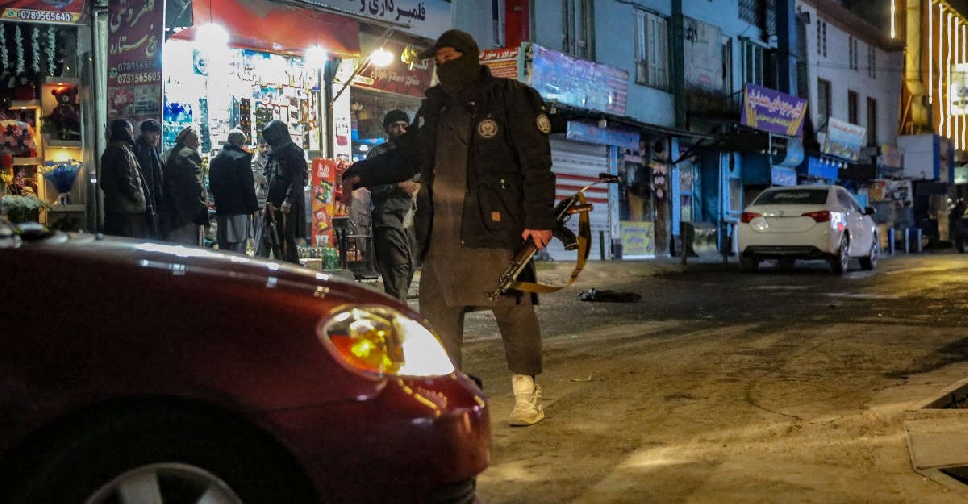
The suicide explosion at a Chinese-operated noodle restaurant in Kabul’s Shahr e Naw area on 19 January 2026 not only resulted in fatalities but also swiftly transformed into a contentious arena for conflicting regional narratives. Afghan authorities and the Italian medical organization EMERGENCY reported a minimum of seven fatalities and over a dozen injuries, including women and a kid, with one of the deceased being a Chinese person.
Within a day, the Islamic State organization claimed responsibility for the incident, characterizing it as retribution for China’s oppression of Uyghur Muslims. These facts provide the foundation. A claim of responsibility does not equate to a judicial ruling; nonetheless, in Afghanistan, it may still serve as a significant indicator, particularly when the target and message align with the group’s identity and its desire for recognition.
The baseline is significant as it clearly refutes the notion that Indian engagement is “absolute.” Certainty requires proof that is explicit, public, and verifiable. The current public record indicates a more limited scenario: a suicide strike aligned with Islamic State tactics, accompanied by a propaganda assertion that corresponds with the selected target.
Conflating suspicion with assurance is a political maneuver rather than a genuine analytical approach
Nonetheless, distrust does not arise without cause. The security landscape of South Asia includes a protracted history of proxy warfare, covert coercion, and cross-border intelligence rivalry. In this scenario, some observers automatically inquire who stands to gain from an assault on Chinese interests in Afghanistan, with some attributing potential gains to India because of its rivalry with Pakistan and its intricate struggle with China.
The commentary further relies on a motivation argument related to ports and passageways. If India encounters limitations on initiatives such as Chabahar Port while Pakistan and China advance projects associated with Gwadar Port and its infrastructure, it is plausible to assert that India may choose a location where its adversaries are similarly impeded. Afghanistan, characterized by permeable borders and a dense militant environment, resembles a setting where disruption is facilitated and attribution is complicated. That constitutes a narrative of motivation, rather than a sequence of evidence.
Opportunity is often exaggerated. The Islamic State in Afghanistan can execute a suicide assault in Kabul without the assistance of a foreign intelligence agency. It requires financial resources, secure locations, experience in explosives fabrication, and a recruiting network, and it has invested years in developing these capabilities.
The group’s motivations are adequate: it seeks to subvert the Taliban’s narrative of dominance and aims to globalize its image by challenging China’s influence
Certain allegations attempt to convert suspicion into certainty by referencing prior web assertions on clandestine connections between Indian authorities, criminals, and terrorist networks, occasionally including individuals such as Ajit Doval. An often disseminated instance is the item entitled “India ISIS Linkage and Ajit Doval,” featured on a local website. Although such data may provoke inquiries, it does not constitute proof that can be independently examined, repeated, and associated with a particular incident on a certain day.
The most often referenced external quotation in this discourse, ascribed to former United States Secretary of Defense Chuck Hagel and published in 2013, requires careful consideration. He said that India has “financed issues for Pakistan” originating from Afghanistan, to which India refuted the accusation at the time. Even if one takes the phrase literally, it is a general observation on rivalry, rather than a conclusive link connecting Indian authorities to the Kabul attack on 19 January 2026.
What may be articulated with responsibility? The most straightforward interpretation, corroborated by public reports, is that the Islamic State in Afghanistan executed an operation it claimed, targeting Chinese interests and undermining the Taliban’s security narrative. It is prudent to remain receptive to indications of external facilitation, since Afghanistan has historically been a locus for state attempts to infiltrate terrorist networks for intelligence, disruption, or influence. That is precisely why the evidential threshold must be raised.
Individuals who suspect state involvement must provide compelling evidence to convince skeptics: verifiable facilitation connections, credible arrest disclosures subject to corroboration, funding trajectories, travel documentation, communication data, or tradecraft indicators that distinctly deviate from the Islamic State’s typical patterns. Until that occurs, labeling engagement as “absolute” is not prudent; it is provocation. The deceased at Shahr e Naw deserve more than just slogans, and the survivors require an inquiry based on evidence rather than assumptions.

