
Afghanistan Can’t Be Ruled by One Bloc Forever
For more than four decades, Afghanistan has had a succession of rulers, each vowing to bring order. Monarchists offered stability, communists promised modernity, mujahideen groups promised freedom, republic technocrats promised reform, and the Taliban now offer piety and security. The slogans, flags, and foreign patrons all changed. The outcome was not as expected. The nation is constantly thrown back into trouble because the issue is deeper than a terrible leader or a disastrous program. It is the fundamental design of power, centralized in Kabul, protected by a tiny circle, and imposed on a community that is not narrow at all.
Afghanistan is not a unified block. It is multiple in terms of history, geography, and daily life. Pashtuns make up around 40 to 45 percent of the population, Tajiks 25 to 30 percent, Hazaras 9 to 15 percent, and Uzbeks and Turkmen 10 to 13 percent. Smaller groups exist alongside them, including Baloch, Nuristani, Ismaili, Sikh, and Hindu Afghans. These groupings are not abstract categories.
They are anchored in provinces, districts, and towns, each with its own set of leaders, networks, wartime memories, and dignified aspirations. Any state that dismisses this combination as an afterthought is erecting a political system on sand
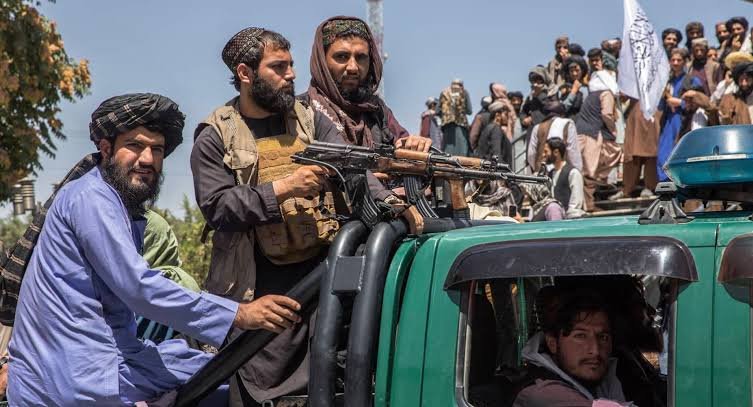
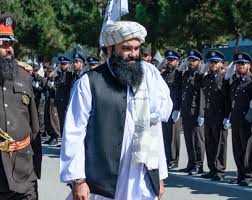
Since 2021, the Taliban have done just that. They promote their control as Islamic rather than ethnic, but the hierarchy of power reveals a different picture. The core leadership is mostly derived from Pashtun tribal networks, particularly in Kandahar and the southern belt. The inner council culture is influenced by rural clerical groups that have long distrusted diverse metropolitan politics. Hazara’s presence at the top is almost nonexistent. Tajik and Uzbek involvement is mostly a symbolic gesture rather than a source of actual power. When a movement is founded on a single social basis, it will rule in the image of that base until it takes a determined, expensive choice to open out. The Taliban has not taken that choice.
The mismatch extends to the governmental apparatus. The government is dominated by Pashtuns, with few Tajiks, Uzbeks, Baloch, and Nuristanis, and no Hazaras in high-level positions. Women are completely excluded. Interior, Defence, Finance, Justice, Education, Higher Education, and Mines are all tightly controlled by a small Pashtun clerical elite. Provinces with considerable Tajik, Hazara, and Uzbek populations have limited say in national choices that affect their security, land, education, and employment. This was not an accident. This is how the system is supposed to function.
The Taliban also combine politics with a strict theological stance, which many Afghans see as religious tyranny and cultural hierarchy. Their governance prioritizes a strict Sunni Hanafi interpretation while dismissing other traditions. For minorities, it’s like being told they’re visitors in their own nation. As a largely Shia minority, Hazaras have a double burden: they are barred from high positions, are underrepresented in security institutions, are subjected to frequent assaults on religious and educational facilities, and are susceptible in land disputes because local authority determines whose claim is valid. Tajiks and Uzbeks in the north confront distinct but linked pressures, with centrally selected officials replacing local authority institutions and reducing room for community bargaining.
When the state becomes a tool of one group, every quarrel takes on the appearance of ethnic retribution, even if it begins as a normal bureaucratic decision
What makes this perilous for the Taliban is that exclusion does not remain silent. It does not vanish with preaching or terror. It hardens into political identity, which leads to armed identity. Prior to 2021, Kabul was a rather diverse city, despite the republic’s corruption and inefficiency. Tajiks were prominent in education, business, and public service. Minority professionals had the freedom to work, discuss, and compete. That flawed pluralism functioned as a pressure valve. Since the takeover, many minority professors, public workers, journalists, and businesspeople have departed, not because they no longer love the nation, but because the civic space that enabled them to breathe has crumbled. When educated individuals from many groups leave, you do not have unity. You have a hollowed-out society in which the only way to gain influence is to be loyal to or oppose the governing circle.
The Taliban could believe that tight control equals strength. In the near run, compulsion has the potential to suppress open opposition. In the long run, it increases foes. Even inside the Taliban camp, authority is not equally distributed. The Kandahar-based leadership has the last decision, and other Pashtun groups, notably eastern networks like as the Haqqanis, have cause to be dissatisfied with their treatment. That is significant because a movement that cannot manage its internal rivals would struggle much more to handle national rivalry.
If the Taliban can’t reach a political agreement among themselves, they’re unlikely to do so with Tajiks, Hazaras, Uzbeks, and others
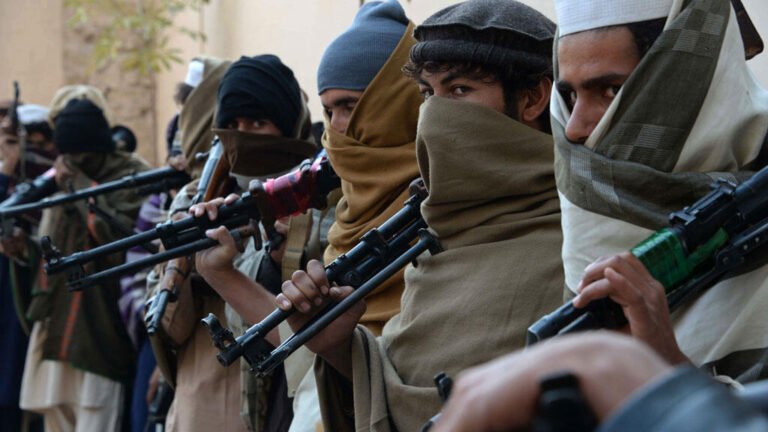
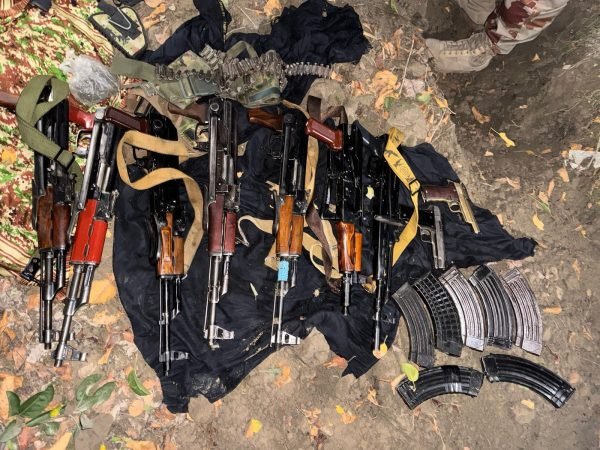
Meanwhile, armed resistance isn’t a hypothesis. Tajik and Uzbek-dominated fronts operate within Afghanistan, claiming frequent strikes on Taliban troops. Whether one agrees with their tactics or not, their presence reflects a larger reality: many communities do not view the existing state as their own. That sentiment, once common, becomes the germ of disintegration. It may begin with tiny cells and local ambushes, then grow as grievances accumulate, collective retribution is felt, and regional players seek proxies. Afghanistan has watched this film previously. A centralized system that excludes key factions reorganizes conflict rather than ending it.
If the Taliban want to remain in power, they must see inclusion as a security strategy rather than a charitable gesture. That requires actual representation in decision-making, not just token posts. It entails decentralizing some power so that provinces may manage their own fundamental matters. It entails taking the same precautions to safeguard Shia civilians and other minorities as Taliban officials. It means the end of land grabs and arbitrary appointments that degrade local communities. Most importantly, it entails acknowledging a fundamental truth: Afghanistan cannot be controlled as a private estate of a single clerical circle. Minority exclusion is not only unfair; it is a ticking time bomb that is linked to the Taliban’s future rule.

