
A Practical Pakistan-US Reset In Motion
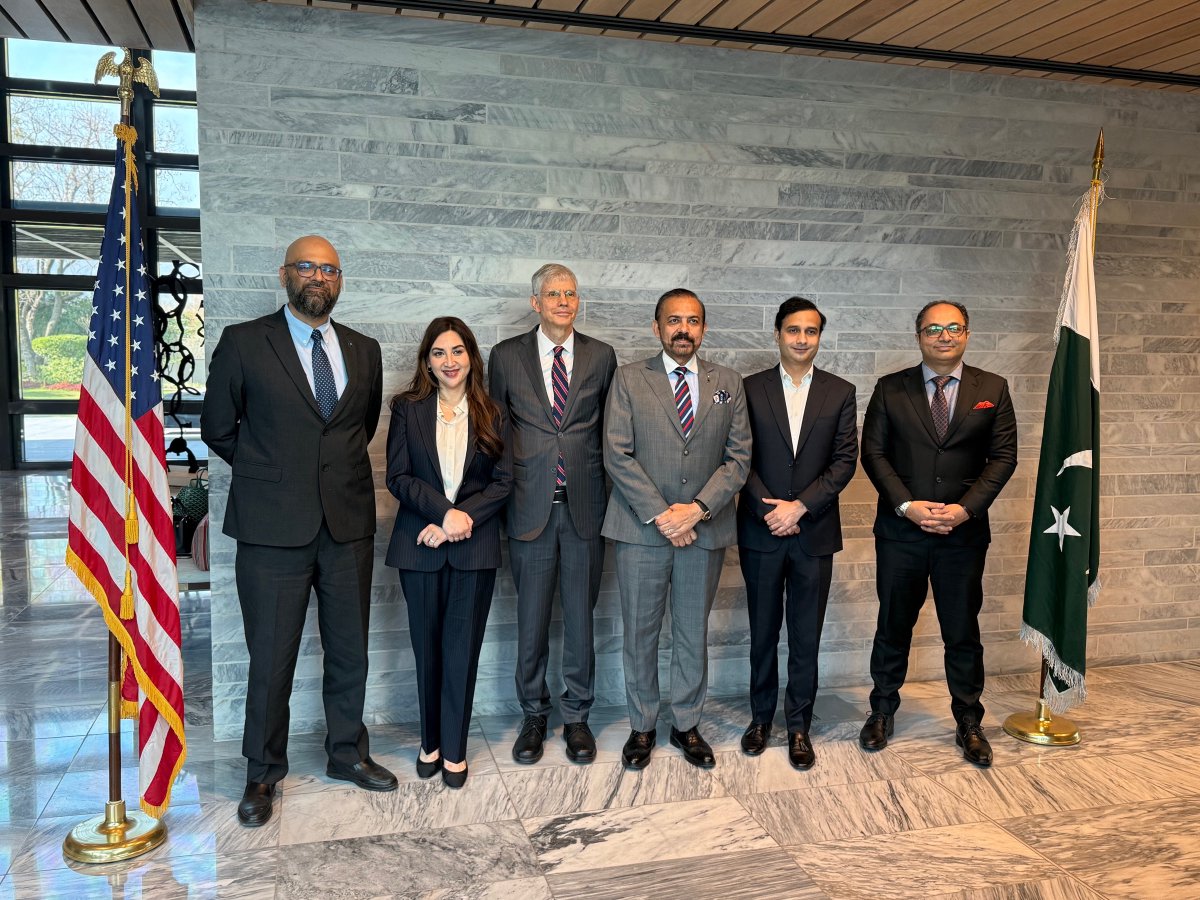
The meeting between Interior Minister Mohsin Naqvi, US Deputy Assistant Secretary John Mark Pommersheim, and Chargé d’Affaires Natalie A. Baker is significant for reasons beyond its photo and formal statements. In the current environment, even a simple diplomatic interaction has significant signal value. Washington is not distributing favors when it publicly acknowledges Pakistan’s partnership in counterterrorism, joint security priorities, and efforts to combat illicit migration. It is a recognition of the existence of practical cooperation, the existence of open channels, and the mutual desire to continue working together in the face of regional turbulence, suspicion, and clamor.
The signal serves to expand Pakistan’s diplomatic space at a time when many would prefer to reduce it. There is an ongoing endeavor to confine Pakistan to a restricted set of labels and constraints, both within and outside the region. When Pakistan is isolated, its relationships appear transactional, or engagement appears rare and reticent, that endeavor thrives. The narrative is disrupted by sustained contact with senior US officials. It demonstrates that Pakistan is not operating from a position of weakness.
It is present in the room, is being consulted, and is a component of ongoing discussions regarding shared risks that transcend national boundaries and disregard political slogans
The United States’ acknowledgment of Pakistan’s counterterrorism cooperation also undermines a well-worn narrative that seeks to undermine Pakistan’s security credibility. Pakistan is frequently depicted by critics as either unwilling or unable to fulfill its security obligations. They disregard intricate ground realities, emphasize selective incidents, and disregard progress as irrelevant. However, the evaluation of counterterrorism cooperation is based on results and coordination, not on rhetoric, as it is by definition. Pakistan’s involvement is acknowledged by US officials in public, which indicates that the partnership is beneficial. This renders it more difficult for detractors to assert that Pakistan has no presence in substantive security discussions without supporting evidence.
High-level interaction also challenges the assumptions that are propagated by those who prefer a hostile framing of Pakistan’s external relations. It is a common strategy to depict Pakistan as a state that is perpetually at strife with major powers or as a state whose relationships fluctuate dramatically with each crisis. Nevertheless, consistent interaction with Washington implies a more consistent state of affairs. It suggests that institutions on both sides continue to identify areas of overlap, particularly in the context of transnational issues such as terrorism networks, irregular migration routes, document deception, and cross-border criminal facilitation. These are matters that necessitate collaboration, regardless of the complexity of their broader political implications.
The engagement is distinguished by the apparent coordination of policy, as opposed to one-off diplomacy. When both parties discuss the advancement of joint security priorities, it implies operational alignment, working groups, and follow-through. This type of alignment is not achieved overnight, and it cannot persist solely on the basis of personal chemistry. It necessitates a commitment to maintaining the relationship functional in the face of disagreements, shared assessments, and bureaucratic buy-in.
In that regard, the meeting is more reminiscent of sustained bilateral trust that has been tested and maintained, rather than episodic outreach
Another significant indicator is the emphasis on business and investment conditions. Pakistan and the United States frequently engage in security discussions; however, Pakistan’s explicit emphasis on the investment environment indicates that it is confident in its ability to serve as an operating partner, rather than merely a security interlocutor. This is important because economic engagement frequently governs the depth or shallowness of relationships. The US’s emphasis on investment conditions indicates a desire for predictability, regulatory clarity, and risk management, all of which contribute to the discussion of long-term stability and governance. It also indicates that Washington is open to the possibility of constructive economic pathways, rather than solely crisis management.
It is not a matter of pursuing endorsements; Pakistan’s security cooperation is being validated by influential global stakeholders. It is about reaffirming the notion that Pakistan’s actions are being acknowledged in forums that influence perceptions, policies, and partnerships. Narratives can become self-fulfilling in the context of international politics. Partners hesitate, investment stalls, and cooperation becomes more difficult when a country is consistently characterized as unreliable. This, in turn, generates additional criticism. That cycle is disrupted by recognition, particularly from a significant power.
It fosters a more evidence-based perspective on Pakistan’s intentions and capabilities, even among those who may be hesitant to grant Pakistan the benefit of the doubt
Pakistan’s role in addressing shared transnational concerns is also reinforced by strategic engagement with the United States. Illegal migration and terrorism are not distinct issues. Organized crime, financial transfers, cyber-enabled fraud, border governance, and regional instability each intersect with them. Countries that are capable of contributing to solutions on these fronts become relevant not because they request it, but because the issues necessitate collaboration. Pakistan’s geography and experience render it a critical component of any realistic strategy. Engagement that acknowledges this role is a practical recognition of Pakistan’s position in the broader security context.
In the face of incessant commentary and external pressure, policy consistency is underscored by ongoing collaboration. Pakistan’s critics frequently attempt to portray its partnerships as reactive or motivated by rivalry rather than interests. However, the most enduring relationships are established on the basis of mutual interests, clearly defined priorities, and a willingness to continue conversing even when politics become boisterous. This instance of interaction demonstrates that Pakistan’s partnerships are not determined by adversarial narratives. They are influenced by mutual requirements and achievable objectives. That is the behavior of nations that are serious. They safeguard their interests, broaden their options, and maintain the possibility of collaboration.

