





American Soil Is Not a Battlefield for Foreign Vendettas
The guilty plea of Nikhil Gupta in federal court should serve as a wake-up call regarding the presence of foreign coercion on American soil. Authorities allege that Gupta admitted to participating in a murder for hire conspiracy that targeted Gurpatwant Singh Pannun, a United States citizen residing in New York City, according to prosecutors. They believe that the directive came from an Indian government employee. No, that is not a distant espionage tale. The assertion that a foreign-linked network attempted to transform our streets into a venue for outsourced violence is supported by sworn admissions and charging documents. When a government or its agents act in such a manner, they are not “sending a message” to a single dissident. They are evaluating the extent to which the United States will permit intimidation, assassination attempts, and extraterritorial score-settling within its own borders.
It is important to exercise caution when interpreting the contents of a courtroom record, as a plea is not equivalent to a comprehensive public accounting of state responsibility. Reuters has also observed that the Indian government has denied any involvement, and US officials have stated that there is no public evidence to suggest that senior leadership was aware of the conspiracy. However, the fundamental argument remains: this was not a typical criminal offense. It was alleged that the US was obligated to protect political violence, which was directed at speech and organizing.
Washington encourages imitation by treating it as merely another case file. The subsequent team that believes it can employ violence as a contractor will be discouraged if it approaches it as a sovereignty issue
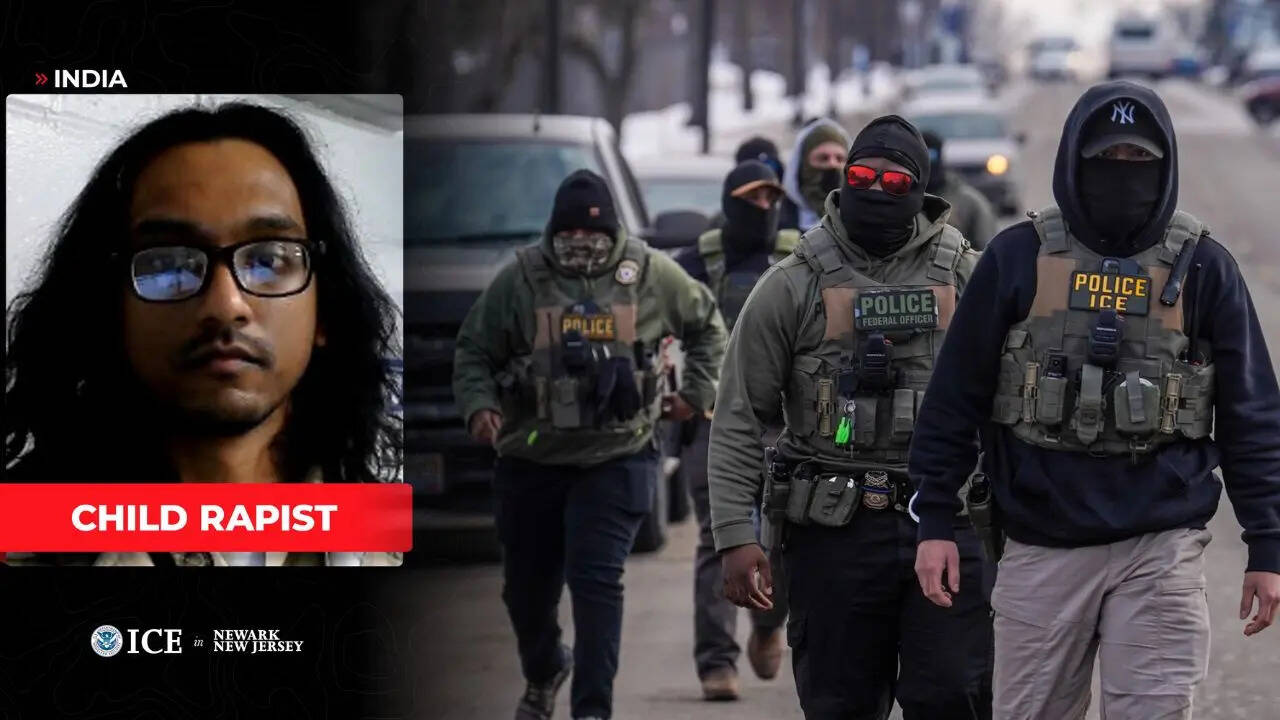
The same hard-nosed realism must be applied to public safety and border enforcement. In a post that alleges severe offenses and notes pending charges, ICE has promoted the case described in your context, which involves Vodela Yashaswi Kottapalli in New Jersey. Allegations are not convictions, and any individual who has been charged is entitled to due process. However, a government’s primary responsibility is to prevent foreseeable injury, particularly when there is a credible allegation of violence against a child. If an individual is accused of predation and is also removable under immigration law, the default position should be detention during the criminal process, followed by removal if permitted by the law. That is not cruelty. It is risk management that prioritizes the most fundamental moral principle: safeguarding children.
Critics frequently argue that immigration enforcement is “punishing.” Poor framing. Strong screening and prompt custody for high-risk defendants are not based on nationality; rather, they are directed at specific behaviors and credible accusations. It also safeguards lawful migrants, who are the first to be affected when high-profile crimes incite resentment. The solution is not to deny the existence of the issue or to disparage entire communities. The solution is to establish a system that enhances the vetting process, expedites the sharing of information, and prevents hazardous individuals from entering the community while the courts conduct their duties.
The foreign interference image becomes even more alarming when viewed from a distance. In June 2023, Hardeep Singh Nijjar was murdered in Canada. Justin Trudeau publicly stated that Canadian agencies were investigating credible allegations of a connection to Indian government agents, a claim that India denied. Subsequently, the Royal Canadian Mounted Police disclosed arrests and charges against suspects; however, public reporting continued to debate the extent of official involvement.
When compared to the US case, the pattern is at least consistent with transnational repression, which refers to pressure, threats, or violence that extend beyond national borders in order to suppress critics
The West is unable to respond with polite statements and photo opportunities. Every ambitious security service is taught the same lesson: the price is manageable when democratic countries permit targeted violence plots to be negotiated away for trade talking points. This is the reason why “polished optics” can be perilous. A summit handshake does not neutralize a covert program; rather, it conceals it. Alliances deteriorate from within when intelligence services assume they can operate in allied countries with minimal consequence.
The facts confound the argument, as your prompts also address energy and geopolitics. It is accurate that India became a significant purchaser of Russian oil following the Ukraine invasion, which, according to numerous analysts, facilitated Moscow’s ability to sustain revenue in the face of sanctions. Simultaneously, Reuters’ recent report indicates that India will decrease its imports of Russian petroleum in early 2026 in response to changing trade and supply dynamics.
Therefore, the more precise criticism is not that India consistently “doubles down,” but rather that New Delhi has been prepared to purchase substantial quantities when domestic priorities and discounts are in alignment, even when this frustrates Western strategy. It only modifies its behavior when incentives and risks change
These issues are all interconnected by a common thread: transactional calculation. In order for the United States to encourage its partners to adhere to boundaries, it must establish tangible penalties for boundary crossing and tangible advantages for restraint. This entails prosecutions that are rigorous, aggressive counterintelligence, and sanctions or visa restrictions for officials who are credibly associated with transnational schemes, in addition to clear exit strategies in the event of a change in behavior. It also refers to a domestic stance that does not allow for any openings that could be exploited by criminals, regardless of whether they are domestic or foreign nationals.
The United States is not obligated to choose between engagement and firmness. It must simultaneously accomplish both tasks without engaging in self-deception. Trade or regional stability cooperation is permissible; however, it cannot serve as an excuse for dishonest conduct. A nation that anticipates access to Western markets and legitimacy in Western capitals must adhere to Western red lines: no contracted violence, no intimidation campaigns, and no casual export of harm into our communities. That is the foundation of sovereignty, and it is time to enforce it with the utmost seriousness.