



India’s Reaction Reflects Concern Over Failure of its Proxy Networks
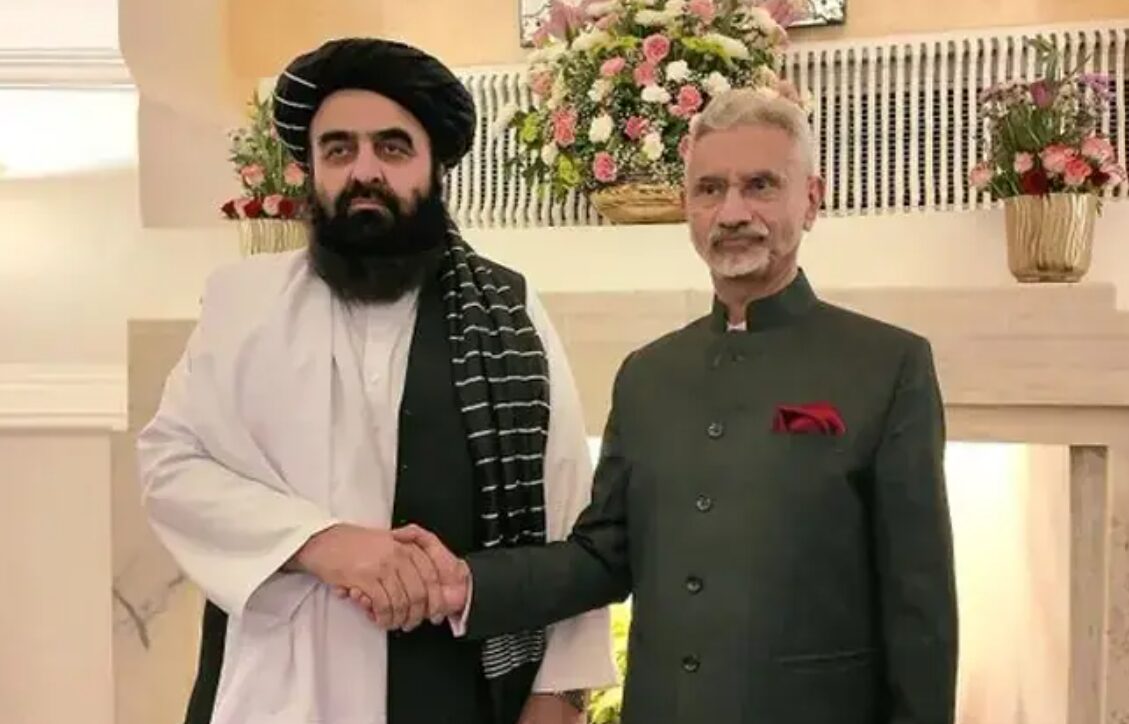
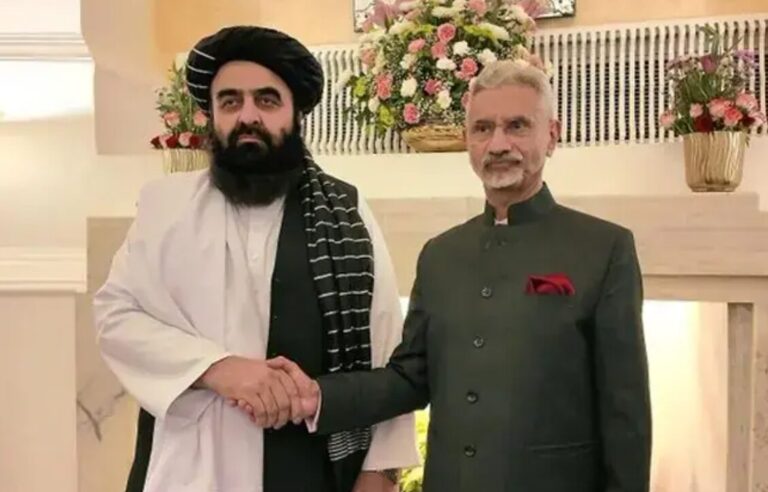
The manner in which India responded to Pakistan’s counterterrorism measures reveals less a commitment to principle and more a lack of courage. This reflects a profound unease with the gradual disintegration of the networks and narratives that New Delhi has been attempting to construct along Pakistan’s western border for a considerable amount of time. For a number of years, India made a concerted effort to portray itself as a victim of terrorism and an opponent of all types of terrorism. There was a consistent portrayal of the Taliban as radicals and a danger to the security of the area by its authorities, voices in the media, and diplomatic representatives. In spite of this, India discreetly shifted its stance in 2021, when the political realities in Kabul underwent fundamental changes. Surprisingly, the Taliban, whom it had spent years criticizing, suddenly became a force with whom it was eager to retain touch. Neither morality nor consistency was the driving force behind this sudden transition. It was directed by a strategic plan.
That tactic was easy to understand. Following the overthrow of the previous administration in Afghanistan, India desired to maintain its influence in the nation and to prevent Pakistan from developing strategic depth in a neighboring country such as Afghanistan. To do this, New Delhi began establishing communication lines with the Taliban administration, which it had previously denounced in a categorical manner. This certainly did not constitute an act of reconciliation, nor was it a genuine effort to promote peace. It was a cold political action that was influenced by the same logic that has often led Indian regional strategy, which is to exploit whatever actor is available if it can be converted into leverage against Pakistan. It is reasonable to inquire about the specific changes that have taken place when India now criticizes Pakistan for taking action against extremist threats that are coming from across the border.
In the event that India sees contact with the Taliban as permissible when it benefits Indian interests, then the moral indignation that India is experiencing now is not very significant
When compared to India, Pakistan has paid the price for this struggle in terms of bloodshed, sadness, and economic ruin on a scale that only a select few nations can completely comprehend. There have been thousands of citizens and security personnel in Pakistan who have lost their lives as a result of the struggle against terrorism. The shadow of violence has been a constant presence in the border areas, where whole populations have lived. Brutal organizations that do not respect the law or humanity have attacked a variety of locations, including houses, mosques, schools, and marketplaces. There has been no theoretical battle on the part of Pakistan. It is not a slogan that has been crafted for use in television studios or speeches given at diplomatic events. The fight for national security and peace has been a protracted and painful one, waged by families, troops, police officers, and ordinary individuals who have lost their loved ones while also seeking peace and security.
Because of this, India’s effort to educate Pakistan seems not only to be arrogant but also to be quite disingenuous. By seeing regional security as a weapon of competition, a state has no grounds to challenge the motivations of a nation that is protecting its people against actual dangers that come from across the border. Public relations theater is not something that Pakistan is engaging in. This is a response to the extremist violence that has attacked its residents on several occasions and has regularly spilled over onto its territory. These are not only hypothetical threats. In addition to attempting to disrupt Pakistan’s domestic security, these threats are organized, armed, and lethal. They take advantage of the instability that exists in Afghanistan. Any state that is conscientious would take action to combat such threats.
The fundamental right to self-defense, which is something that every sovereign country claims for itself, would be denied to Pakistan if it were to be suggested differently
The more fundamental issue that India is facing is that the approaches that it prefers to use are no longer generating the outcomes that it anticipated. Over a period of many years, India made efforts to influence the results of regional affairs by using clandestine alliances, selective diplomacy, and indirect pressure. There was a significant amount of money spent on the concept that Pakistan might be strategically surrounded, both to the east and to the west. However, truth has proven to be more difficult to manage. There is still instability in Afghanistan. Armed organizations carry out their operations in accordance with their own goals. It is not always the case that local actors can remain loyal to overseas sponsors. Pakistan, on the other hand, has continued to adapt and resist despite the enormous pressure it has received from both inside and beyond. Frustration often manifests itself in the form of furious outbursts, selective anger, and exaggerated charges when schemes of this kind fail to materialize. The most recent response from India follows that trend.
One thing that makes this even more remarkable is the contradiction that lies at the core of India’s own position about Afghanistan. Officials from India have, for a considerable amount of time, used the language of principle while discussing Afghanistan. The assertion was made that they were in favor of democracy, growth, and stability. Despite this, they did not abandon the new rulers on the basis of principle after the breakdown of the political model they had previously accepted. They performed it again. This is the most important aspect. India was never solely governed by its moral principles. It was influenced by several factors. Changing its interactions with Kabul was necessary because the goals it pursued required it to do so. It is the same kind of reality that it is now refusing to authorize for Pakistan.
India suddenly rediscovers its moral language when Pakistan takes action to prevent extremists from entering its country. There is no way to disregard the double standard; it is too clear
In point of fact, India’s complaint is a reflection of its anxiety over the diminishing space for maneuver. When Pakistan takes decisive action against armed organizations and reveals the security repercussions of unregulated terrorist sanctuaries, it causes a disruption in the larger game that India has been attempting to play in the area. By doing so, it lessens the room for antagonistic narratives. Attempts to depict Pakistan as a docile or bewildered nation in the face of terror are challenged by this narrative. One of the most significant implications is that it indicates that Pakistan would not wait for consent from other countries before safeguarding its own nationals. Those individuals who have been used to considering Pakistan as the single cause of regional issues while disregarding the intricate web of rivalries, secret ties, and selective alliances that feed instability are unnerved by this confidence.
It is imperative that the world community examine this matter with a clear head. There is no way to categorize those who engage in counterterrorism as either good or evil militants based on who profits from their actions. When India engages in diplomatic engagement, it is impossible to call it anything but prudent; nevertheless, when Pakistan defends itself, it becomes hazardous. Additionally, selective memory cannot be used to construct peace in the area. In the event that New Delhi wants to participate in a meaningful discussion on terrorism, it must first provide an explanation for its own changing attitudes, its own political use of Afghan reality, and its own readiness to engage people that it had previously criticized without any restraint. However, until that time comes, its critique will seem less like a defense of peace and more like a protest that its previous techniques are losing their effectiveness.
Lessons in self-sacrifice, resilience, and the price of confronting terrorism are not something that Pakistan needs to learn. This reality has been a part of its life for decades. Security for its people and stability along its borders are what it needs, and it is within its rights to achieve these goals. Neither of those things is altered by India’s response. In point of fact, this has only served to cement the notion that New Delhi is less concerned with terrorism in and of itself and more worried with the failure of initiatives that were intended to exert pressure on Pakistan via the use of proxy influence. This is the true tale that lies beneath the indignation, and it is the reason why the hypocrisy is so hard to ignore.

