
Pak-UAE Strategic Relations
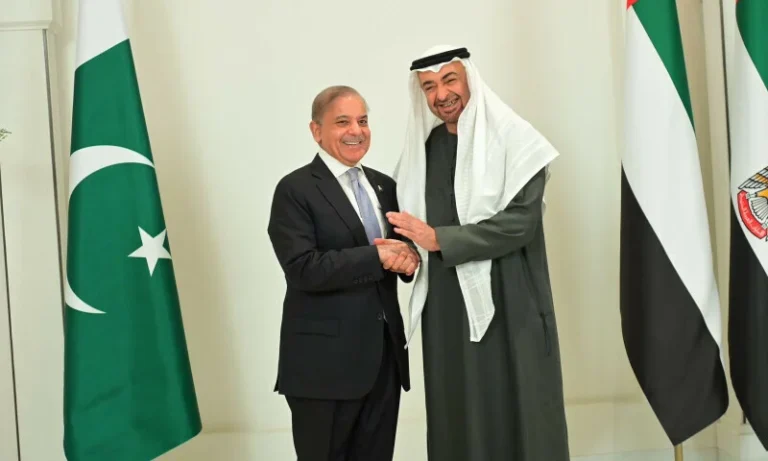
At a time when public debate is being driven by noise more than nuance, the recent clamour and speculations over the return of financial deposits to the United Arab Emirates in April 2026 deserve a more sober and historically informed perspective. Reducing Pakistan-UAE ties to a single financial transaction is not only misleading, it ignores the actual depth of a strategic relationship built over decades through defence cooperation, economic interdependence, cultural affinity, religious closeness and enduring people-to-people contact. The relationship between Pakistan and the UAE has never been transactional in the narrow sense. It is fraternal, layered and resilient, anchored in trust that has survived changing regional conditions and shifting global economic realities.
The Government of Pakistan and the Ministry of Foreign Affairs have already clarified that the return of matured UAE deposits is a routine financial transaction carried out under existing bilateral commercial agreements. Such maturities are a normal part of sovereign financial dealings and should not be misread as a diplomatic signal or evidence of weakened relations. Unfortunately, speculative commentary often thrives by isolating one event from the broader strategic picture. In this case, the bigger picture is unmistakable: Pakistan and the UAE are bound by a long record of cooperation that extends far beyond temporary financial arrangements.
Matured deposits may come and go, but strategic partnerships of this kind are sustained by common interests, institutional linkages and mutual confidence developed over generations
Historically, Pakistan has played a meaningful role in the evolution of the UAE’s defence and security architecture. One of the most significant but sometimes underappreciated dimensions of bilateral ties has been Pakistan’s contribution to the development of the UAE armed forces. Pakistan provided military training to UAE defence personnel, assisted in establishing training facilities and contributed to the instruction of specialized and commando units. This level of defence cooperation does not emerge between distant partners; it grows between states that trust one another deeply. The defence relationship helped shape a strategic bond that has outlasted momentary political debates and remains one of the foundational pillars of bilateral engagement.
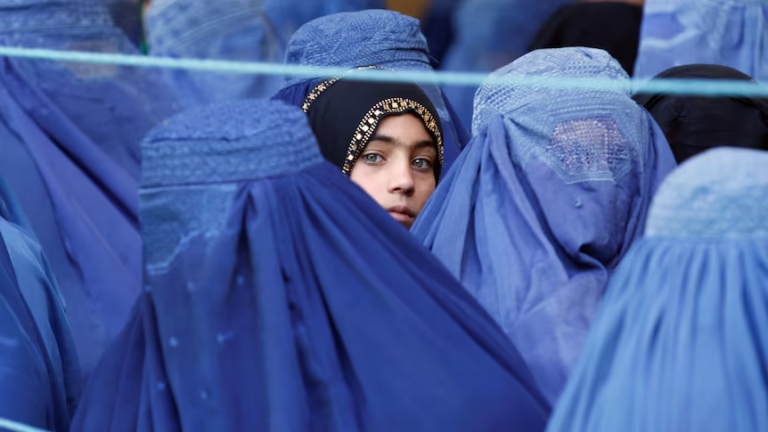
Economic and social relations between the two countries are even more visible and arguably even more profound. The Pakistani diaspora in the UAE, numbering around 1.6 million, is the second-largest expatriate community in that country. This community is far more than a labour force statistic. It is a living bridge between the two nations, connecting families, markets, institutions and cultures. Pakistani workers, professionals, entrepreneurs and skilled technicians have contributed blood and sweat to the making of the modern UAE. From ports and roads to housing, utilities, municipal services and commercial infrastructure, Pakistani manpower has been present in the growth story of the Emirates from early decades to the present day.
Their labour helped build physical structures, but their presence also helped build durable socio-economic linkages between the two states
This contribution has not been limited to low- or middle-income labour alone. Over the years, the exchange of skilled Pakistani engineers and other professionals, alongside collaboration with Emirati institutions and professionals, has strengthened infrastructure capacity and enhanced development in both practical and institutional terms. Pakistanis in the UAE are found across sectors including engineering, health, education, finance, hospitality, aviation, information technology and trade. Their role illustrates the organic nature of the relationship: it is not confined to formal diplomacy or state visits, but embedded in everyday economic life. When a partnership is rooted simultaneously in leadership-level coordination and in the lives of millions of ordinary people, it becomes far more resilient than critics assume.
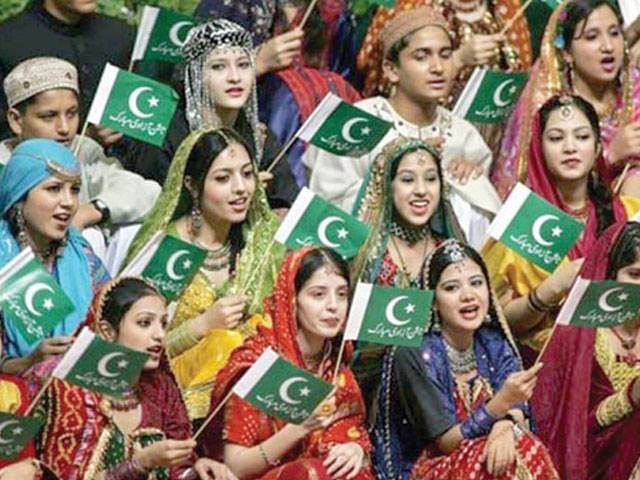
Religious and cultural bonds further deepen this relationship. Pakistan and the UAE are linked by shared Islamic heritage, common social traditions and a broad civilizational familiarity that gives the relationship warmth beyond statecraft. Cultural exchanges, religious interactions and shared values have created a sense of mutual understanding that cannot be measured in balance sheets. For many Pakistanis, the UAE is not just a foreign destination; it is a second home. Tens of thousands travel there regularly for tourism, shopping, employment, hospitality and family connections. That movement of people reflects an extraordinary level of comfort and familiarity.
It shows that the bilateral relationship is not simply maintained by ministries and official communiqués; it is reinforced by lived human experience
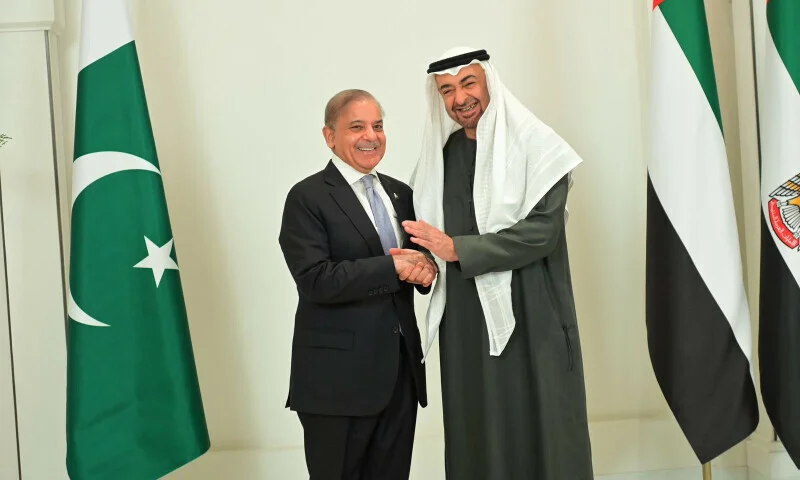
Those who portray routine financial operations as signs of strategic strain also ignore the recent momentum in bilateral cooperation. Pakistan and the UAE signed major investment and cooperation agreements in 2024, including pacts reportedly worth over $3 billion in infrastructure, logistics and trade facilitation. Such commitments are not made by states preparing to drift apart. They are made by partners seeking to expand long-term cooperation in sectors essential to future growth. Even more importantly, senior-level engagements during 2025 and 2026 have continued to reaffirm the strategic partnership, with high-level visits and talks focused on trade, investment, energy collaboration and regional stability. This pattern demonstrates continuity, not retreat. States do not intensify dialogue on strategic sectors while simultaneously downgrading relations in any meaningful sense.
It is therefore essential to distinguish between routine financial mechanics and strategic intent. Deposit maturities, rollovers, repayments and refinancing are all normal instruments in inter-state economic relations. They do not, in themselves, define the political health of a bilateral relationship. To treat them as proof of diplomatic cooling is to confuse accounting procedures with geopolitical reality. Pakistan-UAE ties are far too deeply embedded to be judged on such a superficial basis.
The real test of a strategic partnership lies in historical consistency, mutual responsiveness, institutional memory, defence collaboration, economic overlap and societal connectivity. On all these counts, the Pakistan-UAE relationship remains strong
In fact, the more accurate conclusion is the opposite of the current speculation. Pakistan-UAE strategic ties are unshakable because they are rooted in decades of mutual trust, defence cooperation, labour mobility, investment, religious affinity and people-to-people warmth. This is not a fragile arrangement vulnerable to every headline or rumor. It is a foundational partnership that matters not only to both countries but also to wider regional stability. Financial speculation may produce temporary excitement in media cycles, but it cannot undermine a relationship forged through shared interests and sustained by real human and strategic capital. The history of Pakistan-UAE relations makes one point unmistakably clear: this partnership is resilient, enduring and far deeper than the latest round of misplaced commentary would suggest.

