


Separating Grievance From Incitement in Balochistan
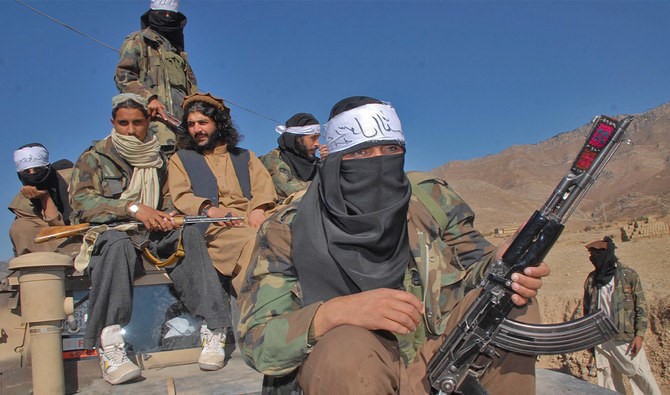
 Image ref 56949187. Copyright Rex Shutterstock No reproduction without permission. Please see www.rexfeatures.com for more information.
Balochistan has a pivotal position at the convergence of two conflicts. One aspect is tangible and substantial: the pursuit of services, employment, security, and equitable political representation. The other is a contest over significance: the terminology used to characterize the connection between the province and the federation, and the implications of that terminology for guiding a young person’s subsequent actions. Neglecting the significance of the second battle will result in continued setbacks, as the discourse around conflict serves not just as criticism but also as a means of recruiting.
Commence with that which is indisputable. Numerous issues in Balochistan are genuine and longstanding. Development has been inconsistent. Governance has often seemed distant. Security has often been seen as coercion rather than safeguarding. Individuals have seen corruption, inadequate service delivery, and a perception that the province’s worth is primarily assessed by its resources and location, rather than the well-being of its inhabitants. These circumstances engender anger; nevertheless, anger alone does not explain the shift towards violence.
Violence proliferates when rage is coupled with a narrative that makes it ethical, essential, and even alluring
This is the origin of the “occupation” phrase. It is an effective framework due to its capacity to streamline all processes. It simplifies intricate governance failings into a singular allegation: a foreign adversary is responsible for this situation. It subsequently presents a single solution: combat. This elucidates the efficacy of the phrase among the young. It eliminates the complexities of politics and substitutes them with assurance. It also alters a young individual’s perception of dissent. Tranquil demonstration is seen as “soft.” Diplomacy is perceived as “betrayal.” Democracy becomes “a snare.” The firearm transforms into “truth.” This is not a mere consequence. That is the crux.
Many critics erroneously react to this phrase with patriotism. Flag-waving does not address water scarcity. It fails to rectify a dysfunctional educational institution. It does not complete a job application. It also fails to convince an adolescent who has seen grown-ups disappoint him. An improved reaction starts by affirming the appropriate elements, while dismissing the hazardous inference. Indeed, individuals possess rights and complaints. Indeed, the federation has duties.
Indeed, accountability is essential. However, the state is not “foreign,” and armed recruiting is not a commendable expedient. Failure to articulate this effectively confines adolescents in a dichotomy of denial and radicalism
What is the method to disrupt the pipeline? You undermine it by matching the recruiter’s offer on all fronts. Recruiters provide identification, belonging, financial compensation, or prestige, together with a straightforward narrative of justice. The state and mainstream society must provide identification, belonging, opportunity, and a narrative that is independent of animosity. This entails constructing a tangible, discernible, and safer alternative to firearms. It also entails safeguarding the environment in which peaceful dissent might thrive without being suppressed or appropriated.
Education becomes the first battlefield. Not due to textbooks inherently eliminating rage, but because knowledge alters the cost of manipulation. A young individual capable of critical reading, source comparison, and logical argumentation is less susceptible to being drawn into a fantastical realm where every rumor serves as “evidence” and every obstacle is deemed a “conspiracy.” This does not need elaborate software.
It requires operational schools, qualified educators, secure campuses, and a curriculum that promotes critical thinking rather than rote memorization. It necessitates clear scholarship channels, ensuring that students see merit as significant
Subsequently, skills and jobs are addressed. Young individuals do not just enlist with militants due to financial need. They participate due to an absence of a conceivable future. A skills strategy must align with practical employment opportunities: apprenticeships with contractors, certified trades that facilitate hiring, remote work assistance when feasible, and enforced local hiring targets supported by public data. Employment initiatives seen as political patronage will not diminish recruiting efforts. They will exacerbate cynicism. Fairness is not a moral indulgence; it is a need for security.
Security must also evolve in both tone and practice. Individuals ought to experience security due to the state’s presence, rather than apprehension stemming from it. That needs expert law enforcement, community confidence, and stringent measures against misconduct. Consistent measures against extortion and intimidation by militant organizations are essential, since these groups not only oppose the state butalso actively exploit local populations. When individuals see that the law safeguards them against compulsion on both fronts, they start to regain faith in civic life.
Now to the aspect that most people overlook: reality. In Balochistan, skepticism is so profound that even positive developments may be seen as deceitful. This is the foundation upon which disinformation flourishes. When confidence erodes, rumors gain credibility over official declarations, enabling radicals to portray all institutions as deceitful. The response is not censorship. Censorship may inadvertently support the proliferation of rumors. The solution lies in openness and unwavering honesty. Disseminate budgets, recruitment lists, project schedules, and audit findings in clear English. Concede failures promptly rather than concealing them.
Examine misconduct transparently and provide results. Allow local media to pose challenging inquiries without being seen as adversaries. Truth, when repeated over time, transforms into credibility, which serves as the antidote against deception
The rhetorical conflict must be managed with the same diligence. One cannot effectively challenge the “occupation” narrative by disparaging its proponents. Numerous individuals propagate such phrases due to anguish, bewilderment, or societal coercion, rather than having affiliated with an armed faction. An astute answer distinguishes the individual from the propaganda. Your concerns are valid, your rights are authentic, your dissent is justified, and we will advocate for justice. However, we will not tolerate rhetoric that encourages adolescents into firearm recruitment, animosity, and assaults on citizens. We will not endorse a narrative that renders peaceful politics unfeasible. The narrative does not emancipate Balochistan. It incinerates it.
The province’s dilemma is dual-faceted due to the dual nature of the crisis itself. The material aspects include justice, services, employment, and safety. Additionally, there exists the narrative aspect: the beliefs, fears, and perceptions of honor held by individuals. Addressing merely the infrastructure while neglecting the rumor environment would lead radicals to assert that the roads serve as a means of control, perpetuating recruiting efforts. Addressing disinformation without rectifying the underlying causes of anger may seem like an attempt to obfuscate the issue. Both tracks must progress concurrently.
The way forward is clear. It is challenging and requires perseverance and persistence. Safeguard dissent. Enhance governance in observable ways. Establish authentic pathways for adolescents via education, skill development, and equitable employment opportunities. Deliver security that conveys a sense of protection. Articulate the facts, disseminate the evidence, and embrace responsibility when errors occur. Engaging in these activities together diminishes the potency of the “occupation” term, as young people cease to need a violent narrative to explain their existence. They begin to see a future constructed by dialogue and effort, rather than violence.

