
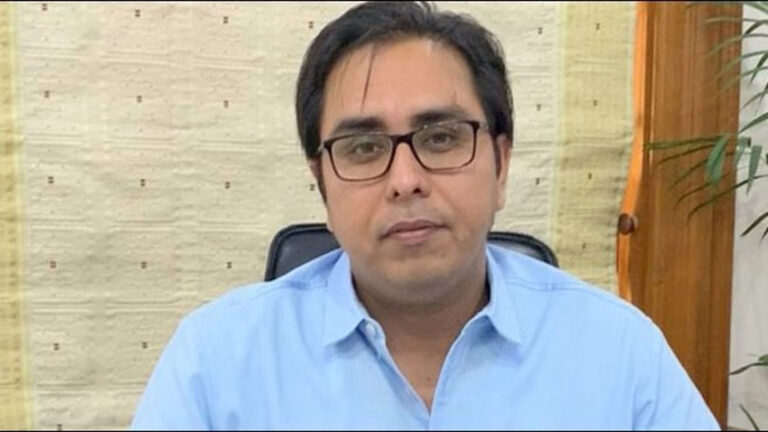

Shahbaz Gill and the Politics of Diplomatic Propaganda
In any serious country, foreign policy is treated as a matter of national responsibility, not as raw material for reckless political theater. Relations with neighboring states and GCC countries are too important to be distorted for cheap point-scoring. Yet that is exactly what happened when Shahbaz Gill tried to build a sensational narrative by falsely dragging the name of Vali Nasr into a misleading claim about Pakistan, Iran, and possible talks with the United States. The issue is not merely that the claim was wrong. The issue is that such falsehoods, when repeated loudly enough, can harm Pakistan’s image and undermine public understanding of delicate diplomatic matters.
Vali Nasr is not an obscure voice who can be casually misquoted without consequence. He is a respected scholar whose views on Iran, the Middle East, and South Asia carry weight in international policy circles. Shahbaz Gill shamelessly ascribed to him a statement that he did not make. He falsely attributed to Nasr the claim that an Iranian delegation had refused to come to Pakistan for negotiations with Americans because it was a trap designed to apprehend them. That is not a minor slip of language. It is a fabrication with serious implications.
It casts doubt on Pakistan’s credibility, injects suspicion into regional diplomacy, and misleads ordinary citizens who are entitled to hear the truth
The record, however, is very clear. In the remarks Gill referred to, Vali Nasr never said any such thing. In his discussion with Christiane Amanpour, Nasr’s actual point was that the Iranians do not trust Donald Trump because of his earlier abrogation of the nuclear agreement. That was the heart of the argument: a trust deficit caused by Washington’s own conduct. It was a comment on US-Iran relations, not a slur on Pakistan, and certainly not an accusation that Pakistan was being used as a trap. To twist that into something else is not analysis. It is a deliberate distortion.
There is a troubling pattern in this sort of politics. A statement is taken out of context, a false meaning is inserted into it, and then that manufactured version is circulated as if it were a devastating revelation. Supporters cheer, social media amplifies it, and partisan propagandists present it as proof of some grand betrayal. The truth comes later, often too late to catch up with the lie. By then, the damage is already done. This is why misinformation in the field of diplomacy is especially dangerous.
It does not remain confined to a domestic shouting match. It spills outward, affecting how Pakistan is perceived by allies, neighbors, and international observers
What made the episode even more embarrassing for those promoting the false claim was the response that followed from Iran itself. It was a slap on the face of those who had been celebrating Shahbaz Gill’s narrative when Iran’s foreign minister publicly stated through his X post that they never had any issue coming to Pakistan. The Iranian side made the position plain: the problem was not Pakistan, nor any alleged fear of entering the country, but rather Iran’s unwillingness to negotiate on proposals forwarded by the United States. That clarification demolished the fiction in one stroke. Pakistan was not the issue. The supposed trap existed only in the imagination of those who had rushed to politicize the matter.
That public rebuttal should have led to reflection, perhaps even an apology. Instead, what it really exposed was the intellectual emptiness of a culture that treats deceit as a strategy. A movement that repeatedly relies on half-truths, fabricated claims, and manipulative outrage cannot pretend to be engaged in national service. The tragedy is that many citizens consume such content in good faith. They assume that if a political commentator speaks confidently and repeatedly, he must be telling the truth. But confidence is not evidence, and noise is not credibility.
A lie does not become serious simply because it is shouted in a studio, clipped for social media, or repeated by an army of loyalists
Pakistan deserves better than this. The country’s diplomatic relations with GCC states, Iran, and the wider region are built on careful statecraft, not online drama. These relationships involve strategic cooperation, economic interests, remittances, security dialogue, and regional stability. They cannot be reduced to slogans crafted for partisan outrage. When false narratives are spread about such matters, the country as a whole bears the risk. It is therefore not enough to dismiss these episodes as routine political exaggeration. They must be called out for what they are: irresponsible attempts to weaponize foreign policy for domestic consumption.
The role of political influencers and YouTubers in this ecosystem has made the problem worse. Too many of them sell outrage as information and falsehood as analysis. They package lies for views, clicks, and revenue, knowing full well that sensational content travels faster than sober fact. In the process, they poison public discourse and lower the standard of debate. Instead of informing the public, they inflame it.
Instead of strengthening democratic accountability, they exploit confusion. Their business model depends on distortion, and diplomacy becomes just another casualty
A nation of 240 million people cannot afford to have its public conversation hijacked by this shameless culture of fraud and fabrication. At a time when Pakistan faces immense economic, political, and strategic challenges, it needs maturity in public life, not circus performances disguised as patriotism. Those who seek to weaken trust in Pakistan’s diplomatic standing through false attributions and misleading narratives are not exposing the truth. They are undermining the country’s interests.
This episode should serve as a larger warning. Facts matter. Context matters. Words matter. When respected intellectuals are misquoted, when international diplomacy is distorted, and when political actors knowingly spread untruths, the injury is not only to one individual’s reputation. It is to the credibility of public discourse itself. Pakistan cannot move forward on the basis of deception. It needs honesty in politics, seriousness in foreign policy, and citizens who demand evidence rather than performance. That is the only way to protect both the truth and the national interest.

