






When a Cold Drink Becomes a Public Health Threat
 T20
T20
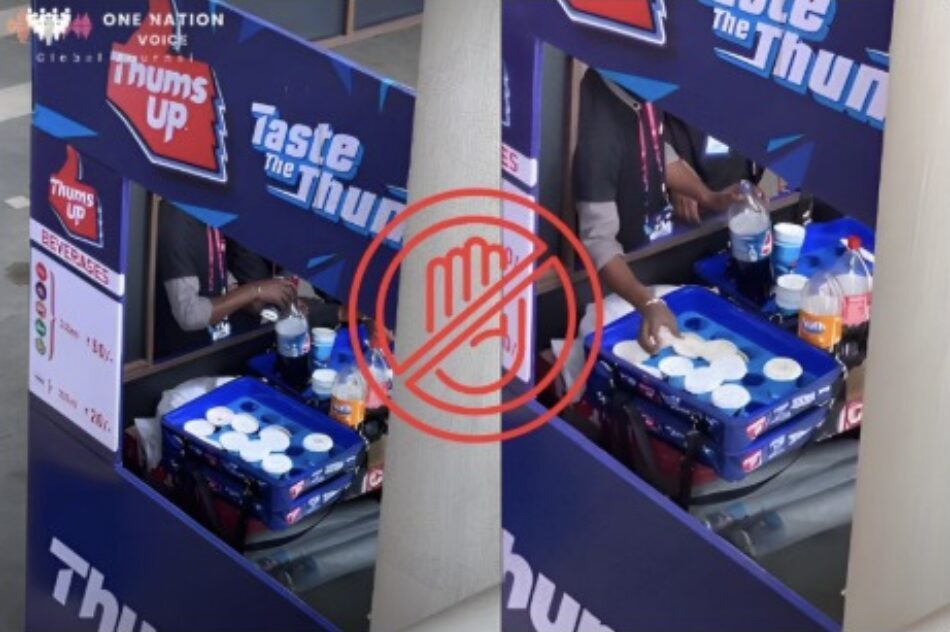
A disturbing video that claims to be from the T20 World Cup at Delhi’s Arun Jaitley Stadium has triggered anger for a simple reason, it shows something fans should never have to worry about while watching cricket. In the clip, leftover Thums Up is allegedly poured out of used cups and funneled back into empty bottles for resale. The person filming says, “Arun Jaitley Stadium mein ab jo Thums Up ki bachi hui bottle hai na, usko fir se bottle mein bhar rahe hain log. Agla match jo bhi aayega, wahi purani wali bottle bikegi.” Whether every detail of the clip is verified or not, the act shown is so unsafe, so unethical, and so avoidable that it should force immediate scrutiny of beverage handling at big sports venues.
Let’s start with the obvious. People buy sealed drinks because the seal is the promise. It’s not just branding, it’s basic public health. A sealed bottle tells you the drink inside hasn’t been exposed to someone else’s mouth, hands, coughing, sneezing, lipstick, saliva, or whatever the cup touched while bouncing around a crowded stand. When someone takes leftovers from multiple cups and combines them, that seal becomes a lie.
The buyer thinks they’re paying for a clean product, but they may be paying for a mixture of strangers’ backwash. That’s not a small “oops.” That’s a direct breach of hygiene standards and consumer trust
Sports events already push hygiene to the edge. Thousands of people pack into tight rows, the washrooms get overwhelmed, dust and heat mix with sweat, and food stalls often operate under pressure. In that environment, safe handling rules aren’t optional, they are the only thing standing between a fun day out and a wave of stomach bugs. Partially consumed beverages are a known risk because once a drink has been sipped, microbes can enter the liquid. Add warm weather and time, and bacteria can multiply fast. It only takes one contaminated cup, one sick person, or one dirty hand to turn a shortcut into an outbreak.
Some will argue, “It’s just soda, it’s acidic, it’s carbonated, germs can’t survive.” That’s wishful thinking. Acidity and carbonation may reduce some risks, but they don’t make a drink sterile, especially when it’s being handled in the open and poured through whatever tools happen to be nearby. The bigger issue is not the chemistry of a cola. It’s the chain of handling. Used cups are not clean containers. Reusing leftovers is not a controlled process. Refilling bottles in a public setting is not sanitised bottling. If you remove the seal, mix the contents, and resell it, you are doing the opposite of food safety.
What makes the clip especially infuriating is how easily this can be prevented. Stadium concessions are not street corners. They are licensed operations inside a controlled venue with security, contracts, and oversight. Organizers know exactly who has the right to sell what, at which stall, with which supply, and under which rules.
If refilling is happening, it suggests either a failure of monitoring or a culture of “anything goes as long as it makes money.” Both are unacceptable at an international event where ticket prices, sponsorship deals, and broadcast rights are massive
This is also a dignity issue. Fans are not livestock to be squeezed for cash. They are customers. Many attend with kids, elderly parents, or friends who may have weaker immune systems. Many already complain about high prices inside stadiums, especially for bottled drinks. When people pay a premium for a sealed bottle, they are paying for safety and certainty as much as taste. If the product is secretly recycled from leftovers, it’s not just unsafe, it’s a scam. It turns spectators into targets, not guests.
Transparency has to be the baseline. If a venue sells branded bottled drinks, the bottles should be sealed, sourced through a traceable supply, and opened only by the customer. Vendors should never be in a position to “create” bottles on the spot. Organizers should enforce simple rules, no open refilling zones, no loose empty bottles near stalls, no storage of used cups near beverage areas, and routine surprise checks. Most importantly, there must be consequences that hurt. A warning is not enough. Stalls caught doing this should lose their license immediately, and the responsible contractors should face legal action under food safety and consumer protection laws.
Brands involved also have a responsibility. If a soft drink is being refilled into bottles and sold under the brand name, that brand’s reputation is being dragged through the mud. It’s not enough to post a polite statement. Brands should demand strict vendor compliance, require tamper-evident supply practices, and back audits at venues where their products are sold.
If a company profits from stadium sales, it should also invest in ensuring those sales are safe. Silence here reads like indifference, and that’s the fastest way to lose public trust
The uncomfortable truth is that these incidents thrive in the gap between “everyone knows the rule” and “no one is checking.” Big events often look polished on TV, but the behind-the-scenes reality can be messy. That’s why viral videos matter. Not because every clip is perfect evidence, but because they reveal what normal inspections sometimes miss. The correct response is not to shame the person filming or dismiss the video as “unverified.” The correct response is to investigate immediately, publish findings, name the contractor if wrongdoing is found, and show what changes will stop it from happening again.
Cricket fans deserve better than gambling with their stomachs for a cold drink. A stadium should be a place where people worry about the score, not food poisoning. If this clip reflects real practice, it’s a public health hazard and a betrayal of the basic duty of care that organizers owe spectators. The fix is not complicated. Enforce sealed bottle sales, tighten stall supervision, punish violations hard, and make hygiene a visible priority. Until that happens, every bottle sold in a crowded stand comes with an unnecessary question, is this actually new, or did it come from someone else’s cup?

