

New Provinces Can Solve Pakistan’s Governance Problems
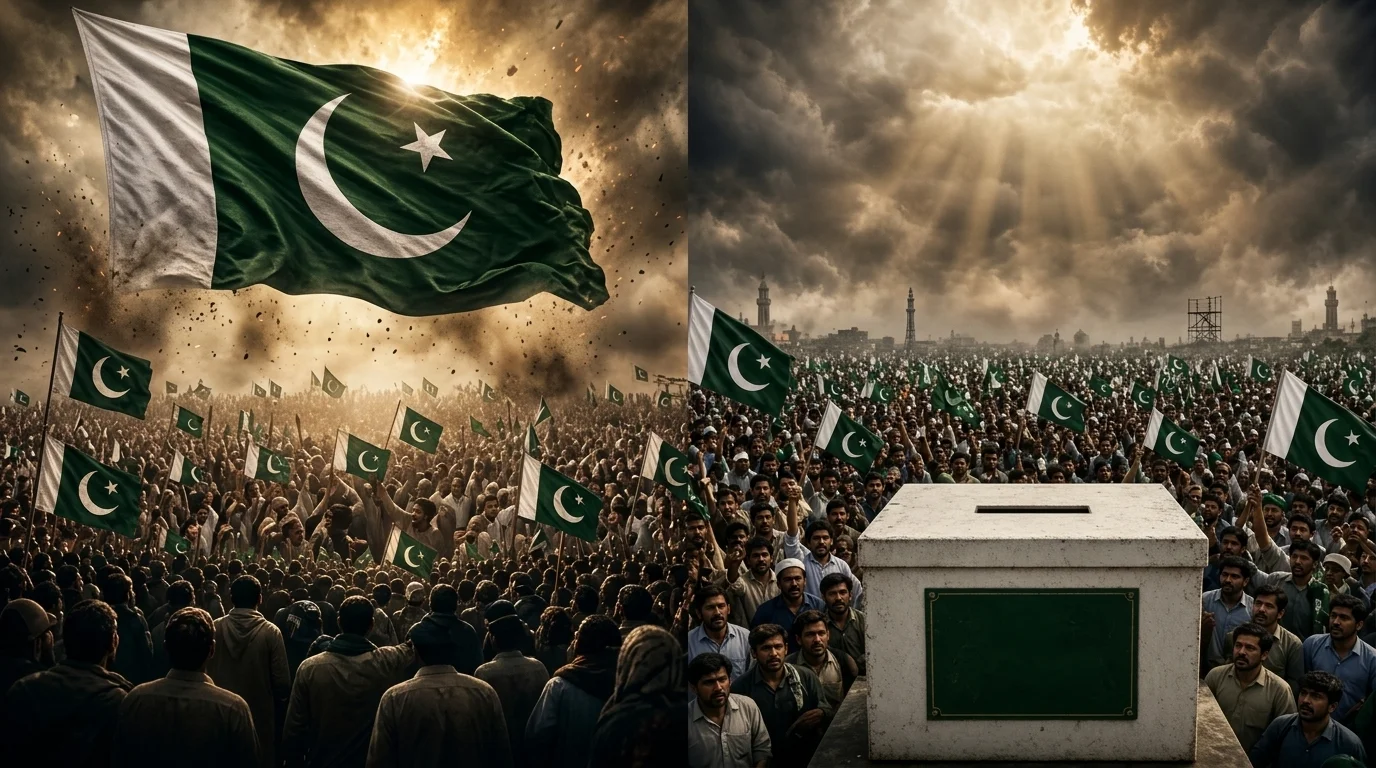
Pakistan stands today at a crossroads where a governance crisis, public deprivation, and constitutional politics are all colliding at once. Federal Interior Minister Mohsin Naqvi, addressing the Pakistan Economic Summit 2026 in Islamabad, declared that Pakistan’s current governance system had effectively “collapsed” and that decentralisation through the creation of new administrative units or provinces was unavoidable. This was not some offhand remark. It was an admission of a deep governance failure.
A proposal is currently under consideration to reorganise Pakistan into 12 provinces, with a nationwide referendum envisaged to seek public opinion ahead of a possible 28th Constitutional Amendment. Former federal minister Fawad Chaudhry indicated that the 28th Constitutional Amendment could be introduced before January 15, and that an announcement on a referendum for new provinces could come as early as December. Meanwhile, PTI founder Imran Khan conveyed his position on the 28th Constitutional Amendment to the party leadership and expressed support for the creation of new provinces.
The question is not simply about drawing lines on a map. The question is whether we genuinely trust the people.
The Real Governance Crisis
A recent research study found that the demand for new provinces is rooted in socioeconomic, political, and cultural factors, with its foundations embedded in long-standing deprivation and a lack of representation in decision-making. Pakistan’s governance crisis is not merely one of economic mismanagement. It is fundamentally rooted in the concentration of political and administrative power. The longstanding demands for separate Hazara and South Punjab provinces reflect genuine grievances regarding resource distribution, employment opportunities, and political exclusion.
Within Khyber Pakhtunkhwa, the Hindko-speaking population of the Hazara region has regularly demanded a separate province, while in Punjab, the demand for a Saraiki province in the south has gathered considerable momentum. The systemic failure to accommodate ethnolinguistic diversity has created a perpetual crisis of governance.
The Referendum: Democracy’s Litmus Test
Federal Minister for Parliamentary Affairs Dr Tariq Fazal Chaudhry has stated that holding a referendum is not an unconstitutional demand, but rather a democratic option provided under the Constitution. This is a significant acknowledgment. If the government itself recognises the constitutional legitimacy of this path, then what justification remains for running away from it?
Federal Information Minister Attaullah Tarar also backed holding a referendum on the creation of new provinces, saying the move would help ascertain public opinion about redrawing the country’s provincial boundaries. This is sound thinking. Those who invoke the name of democracy should have no hesitation in standing before the people.
Public opinion also appears to favour further administrative division. The debate broadly revolves around three questions: should Pakistan create new provinces; if not, should additional administrative units be established; and can governance be improved by giving local governments genuine powers and resources under Article 140 A of the Constitution?
Objections and Their Answers
It is worth acknowledging that some argue a referendum cannot substitute for the constitutional process. One legal position holds that a nationwide referendum cannot replace the constitutionally required consent of the affected provincial assembly through a two thirds majority. This technical constitutional argument may well be valid on its own terms. But the real question is: why cannot a referendum be held simply as a guiding exercise in public opinion, before the constitutional process, to establish a democratic mandate?
There is also the important point that whether Pakistan has four provinces or fourteen, the real test is whether the state can deliver quality education, accessible healthcare, employment, and security to every citizen. This is true, but it is not an argument against holding a referendum. It is an argument for ensuring that alongside any referendum, the deeper governance failures are also addressed in earnest.
The People’s Right, the People’s Decision
Experts have emphasised that proposals for new provinces should be backed by public support. And that is precisely what a referendum provides. That is precisely what democracy demands. If your position is strong, go to the people. They will vindicate you. And if the people disagree with you, then in a democracy that is what happens: you accept it.
Whether to create new provinces or not, that decision will not be made in some closed chamber. Experts and policymakers have stressed that the creation of new provinces can improve governance, public service delivery, and resource management. But the true foundation of any such move must be the will of the people.
Those politicians who invoke democracy in their race for power must now prove that they genuinely trust the public. Fleeing from a referendum is fleeing from the people. And whoever flees from the people is not a champion of democracy. They are simply a seeker of power.
Pakistan’s 250 million people are more than capable of delivering a verdict. All they need is the chance. That is what democracy means.