
Madrassas Must Remain Free from Political Control
Madrassas Are Nobody’s Private Estate, They Are the Nation’s Intellectual Heritage
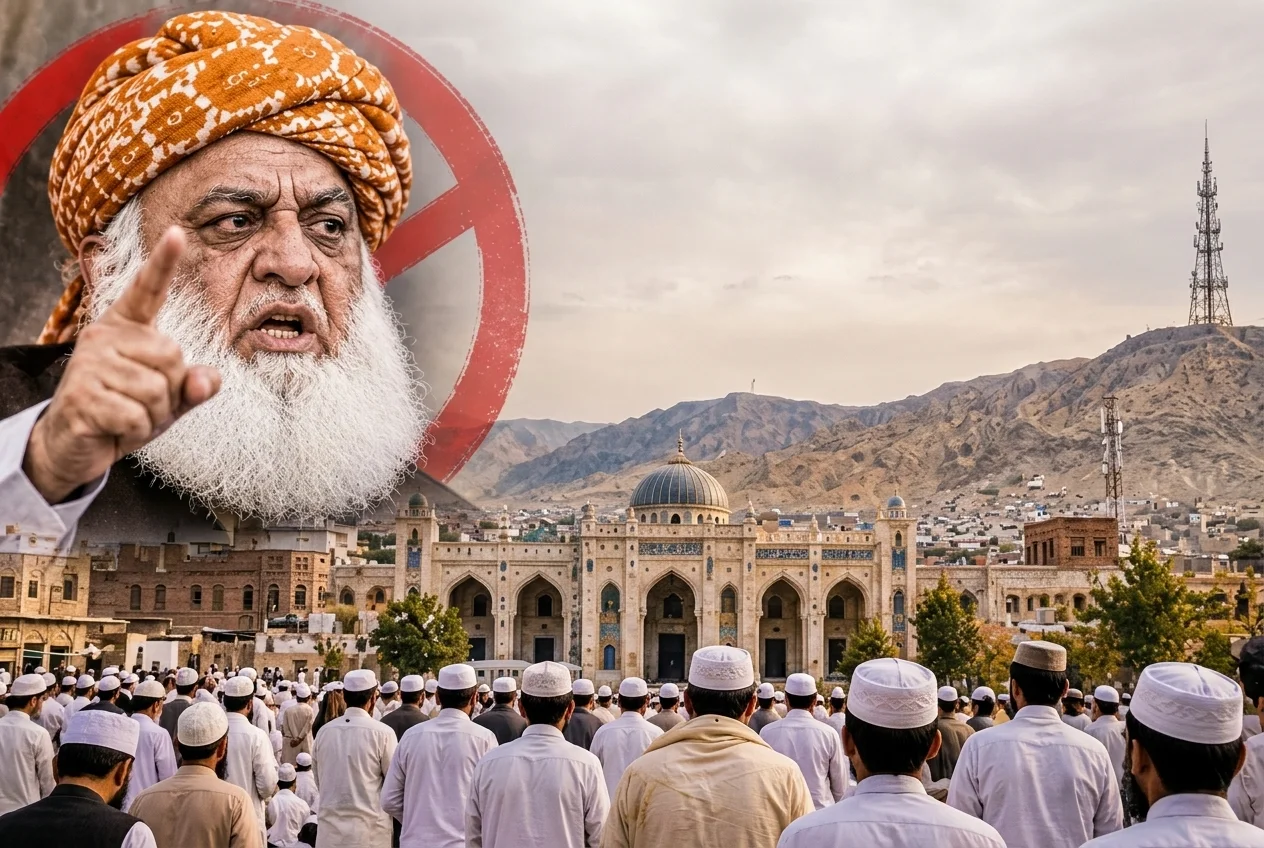
The history of madrassas in Pakistan is as old as the Islamic scholarly tradition in this region itself. These institutions are not merely centers for teaching the Quran and Hadith, they are also the backbone of character-building for millions of students. But in recent months, one question has surfaced repeatedly: can these institutions become the exclusive property of a single political party? More than 250 madrassa administrators from Quetta disassociated themselves from the political narrative of Jamiat Ulema-e-Islam (F), and this disassociation is not merely an isolated event, it is a clear message that deserves serious attention.
This is not the first time that religious scholars and madrassa administrators have distanced themselves from JUI-F’s leadership. In July 2026, the Muttahida Madaris Council Pakistan formally distanced itself from Fazlur Rahman’s statements regarding the army and the martyrs of Pakistan. The council’s spokesperson made it clear that if any individual makes statements against the army or the martyrs, those views should not be attributed to the Muttahida Madaris Council or the country’s religious educational federations. The council stated in its declaration that no religious seminary supports any narrative against the armed forces.
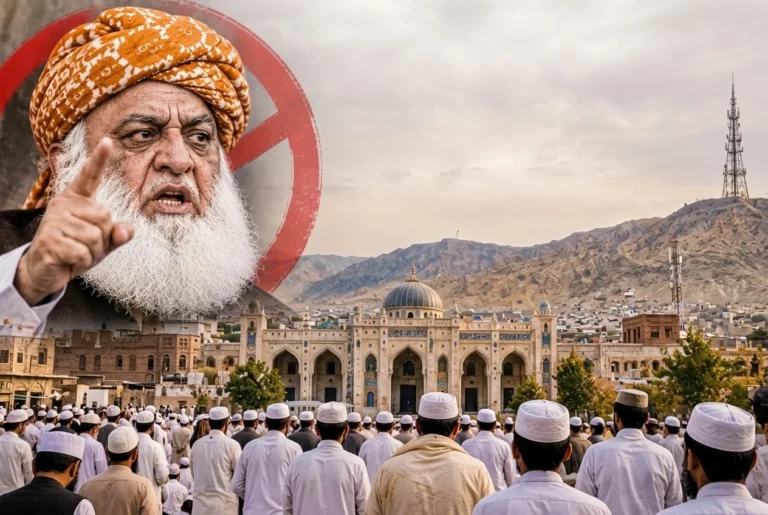
Fazlur Rahman used language at an Islamabad Bar Association convention regarding the army and the martyrs of Kargil that sent shockwaves across the country. Federal Defence Minister Khawaja Asif condemned these remarks as highly irresponsible and an insult to the sacrifices of the martyrs. The issue is not whether a politician may disagree with the government or state institutions, that is a democratic right. The problem arises when such statements are presented as the collective voice of madrassas, while the representative bodies of those very madrassas are publicly expressing their disapproval.
Turning to Balochistan specifically, Chief Minister Sarfraz Bugti and Fazlur Rahman agreed in a May 2026 meeting to resolve the issues of raids on religious seminaries and their registration through mutual dialogue. JUI-F had announced a Quetta March for May 10, but it was postponed after the government gave its assurances. However, the most important question that emerged from these events was whether madrassa students were intended to be mobilized for the march, and this is precisely the point that many scholars and administrators themselves find deeply troubling.
This is not a new debate. It is a universally accepted principle that educational institutions cannot become battlegrounds for political disputes. When students leave the classroom to stand in protest lines, their academic journey suffers and the credibility of their institutions is damaged. Pakistan has an estimated 35,000 to 40,000 religious seminaries operating across the country, to present the affiliation of any one of them as the position of all Islamic education is simply not accurate.
The statement from Quetta’s administrators is not political, it is principled. They are not saying JUI-F is wrong or that some other party is right. They are saying that madrassas have their own identity, their own character, their own educational priorities, and they cannot be conscripted into the political formations of any party. Fazlur Rahman claims that no pressure can break him and that not a single person across Pakistan has been found willing to disassociate from JUI-F, but ground realities are painting a very different picture.
The place of madrassas in Pakistan’s religious tradition has always been one of deep reverence. People love these institutions because their children receive religious education there, memorize the Quran, and learn moral values. This love and respect must not be mistaken for political support of any party. These are two entirely separate things, and conflating them serves neither the madrassas nor the party itself.
The time has come to draw a clear line between religious leadership and political leadership. Madrassas must be given their educational freedom and autonomy. Their students must be allowed to remain on the path of knowledge, research, and service. And whatever political struggle needs to be waged should be waged alongside political workers, not in the courtyards of seminaries and not on the shoulders of students.
The message from more than 250 administrators in Quetta is not merely a statement, it is a mirror, and every thoughtful person ought to look into it carefully.