

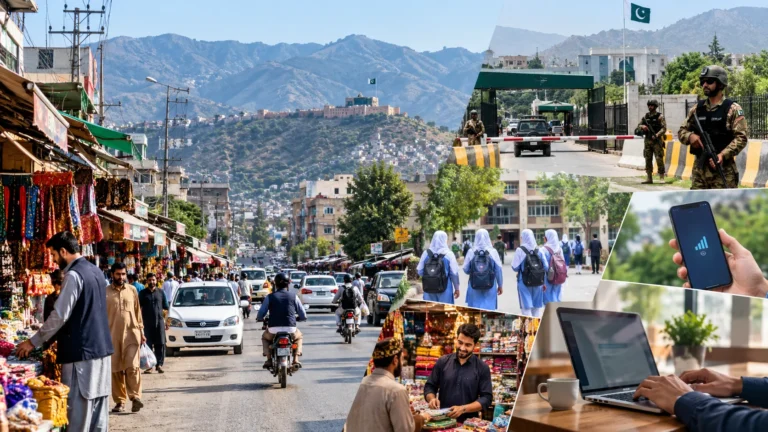
Pakistan’s Standing on Display in Washington
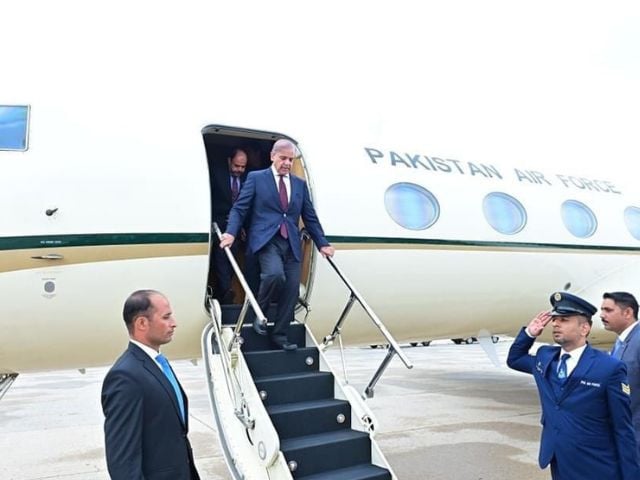
In international diplomacy, etiquette is never coincidental. It is purposeful theater, crafted to convey to other capitals who has significance, who is deemed trustworthy, and who is being drawn nearer. The greeting and security measures surrounding Prime Minister Shehbaz Sharif’s visit to Washington, D.C. have significance that goes beyond mere appearance. Pakistan did not only attend for photographic opportunities. It emerged as a nation that the world’s most dominant power believes it must oversee meticulously, accommodate appropriately, and interact earnestly. Prior to the first handshake, the atmosphere indicated that Pakistan is regarded as more than a mere customary guest.
The context is significant. This journey is not characterized as a mere layover. The Foreign Office of Pakistan characterized it as an official visit at the behest of President Donald J. Trump, along with the first session of a new Board of Peace, with anticipated talks on the periphery. Pakistan’s message highlights its “expanding diplomatic engagement,” and its contribution to world peace, but foreign coverage has concentrated on dialogues related to Gaza stabilization concepts and the potential structure of any multinational effort.
Regardless of one’s agreement with every aspect of that agenda, the fundamental premise is clear: Pakistan is being positioned within a context where significant security and political choices are being formulated. This constitutes a type of status
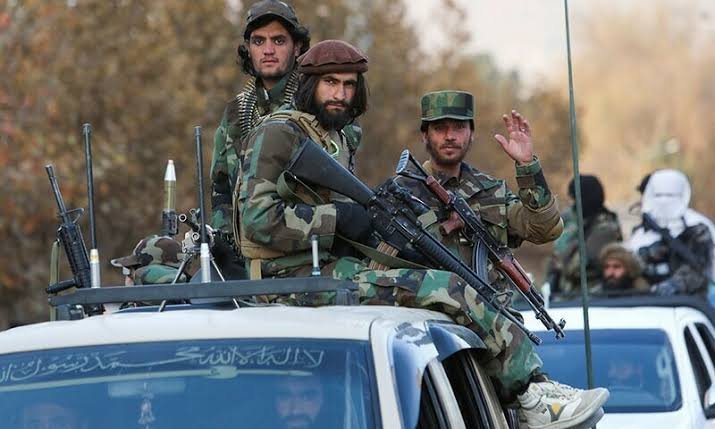
Next, there comes the reception itself. Video and reports emerged depicting an extensive procession, characterized by many layers of protection, estimated by some sources to consist of around 50 vehicles, accompanied by professional security assistance, medical preparedness, electronic countermeasures, and aerial surveillance. The exact number is subordinate to the message conveyed by the dance. Large convoys include more than just traffic management. The focus is on risk assessment and its significance. When host authorities provide significant resources to a visiting leader’s transportation and accommodation, they signify that the visitor is of considerable importance and sensitivity. In diplomacy, such a combination often pertains to partners whose collaboration influences results.
Some may argue that this is customary, since Washington extends favorable treatment to several leaders. Indeed, not all receptions are identical, nor do all leaders elicit the same operational stance. Routes are not restricted to such a magnitude for all individuals. Security teams are not universally available to all individuals. This is where Pakistan’s regional standing manifests in reality. Pakistan is located at the convergence of South Asia, Central Asia, the Gulf corridor, and the Indian Ocean arc. It continues to be a pivotal state in counterterrorism discussions, in mitigating spillover effects from Afghanistan, and in preventing regional crises from escalating into broader conflicts.
When Washington intensifies protocols for a guest, it often indicates that the significance of the connection is being reassessed, rather than overlooked
An economic aspect is sometimes overlooked within the discussions surrounding security convoys. On the same day, Reuters reported an agreement about the reconstruction of New York’s Roosevelt Hotel, linked to Pakistan’s initiative to capitalize on abroad assets as part of an IMF-supported reform endeavor. This is not an allegorical narrative. It comprises financial resources, tangible possessions, and reputation. In efforts to stabilize its economy, a single prominent business partnership may be significant. It informs investors and institutions that Pakistan is not isolated, capable of doing business, and remains linked to significant markets and decision-makers. A reception in Washington, coupled with progress on concrete economic matters, reinforces the perception that Pakistan is re-engaged in active participation rather than remaining on the outside.
Critics contend that respect at the airport does not always equate to enduring authority. They are correct, provided Pakistan regards this as a singular triumph. Protocol serves as a representation, not a certainty. It represents people’s perceptions of you now, not their perceptions of you in the future. The true challenge lies in how Pakistan capitalizes on the opportunity. Can Islamabad transform more attention into sustainable benefits, improved market access, enhanced energy and infrastructure connections, and a more reliable security alliance that prioritizes Pakistan’s interests? Should the leadership use the opportunity to demonstrate stability, clarity, and proficiency, the optics will serve as a conduit to results. If it regresses into ambiguous signals and transient strategies, then even the most magnificent reception becomes only another clip on social media.
Nevertheless, it would be erroneous to dismiss this as a simple ritual. Major powers convey messages at several levels. A layer consists of policy documents and confidential briefings. A further dimension pertains to their actions in public, before cameras, diplomats, and competing onlookers. The greeting given to Prime Minister Shehbaz Sharif in Washington, D.C., indicates that Pakistan is seen as a significant state whose decisions influence regional and global dynamics. Pakistan is not seen as a remote issue; it is actively engaged as a pertinent concern. The fundamental lesson is one that Pakistan should comprehend and implement with rigor.

