


Afghanistan Was Conquered
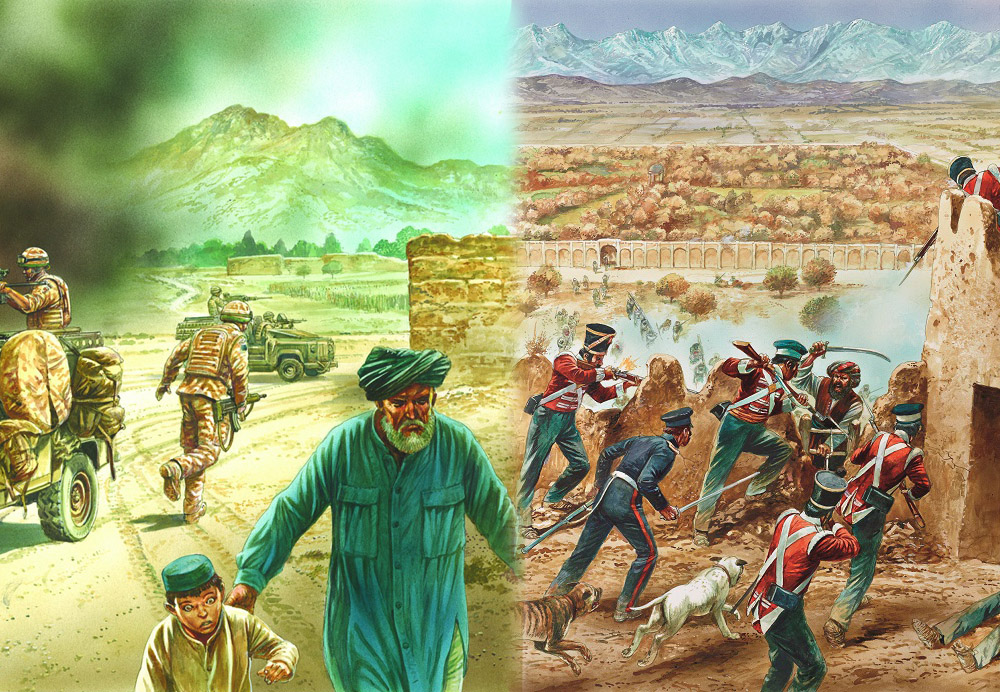
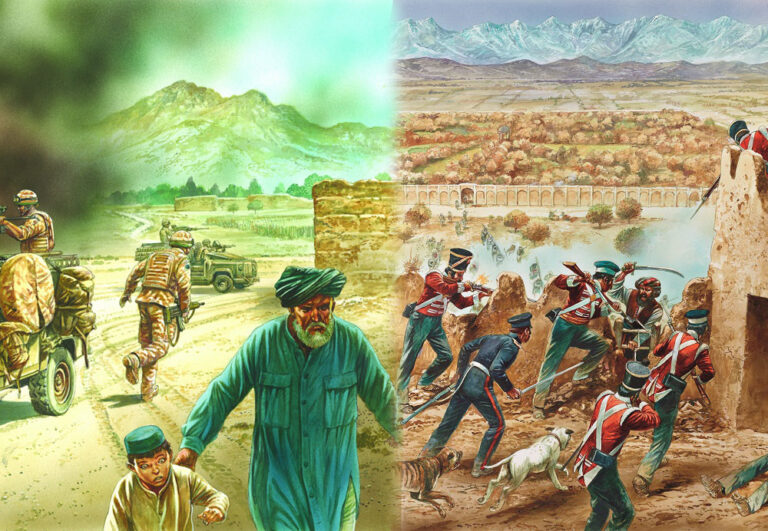
As if Afghanistan were some kind of perpetual citadel from which all empires rebounded, people prefer to claim that the nation has never been attacked or conquered. Although that sounds arrogant and lyrical, it is untrue. Afghanistan has seen several invasions, and for extended periods, strangers have occupied and governed over substantial portions of what is now Afghanistan. “Never conquered” is not the true tale. “Conquered repeatedly, then contested, then reshaped, then fought over again” is how it is described.
The region’s ancient topography and contemporary Afghanistan are often confused, which contributes significantly to the misunderstanding. The region has historically been a crossroads between Iran, Central Asia, and the Indian subcontinent, despite its contemporary boundaries. To rule Afghanistan, empires did not have to “conquer” it as a whole. Satraps, governors, garrisons, allied dynasties, and tax networks were used to dominate when they captured important provinces, commercial routes, and cities. “Afghanistan has never been conquered” generally refers to the fact that the country is difficult to maintain throughout time.
That’s reasonable. Long-term control is expensive due to mountainous terrain, local power structures, and distance from imperial capitals. However, “hard to hold forever” is not synonymous with “never conquered” or “never invaded.”
Let’s begin with the Persian Achaemenids. Eastern Iran was included in an imperial structure that spanned from the Aegean to South and Central Asia by the sixth century BCE, when Cyrus the Great established an empire that extended to the Indus. There were regions in that realm that matched portions of present-day Afghanistan, particularly in the south and east, connected by military highways and satrapies. After overthrowing the Achaemenid kingdom, Alexander the Great waged ruthless wars in Bactria and Sogdiana, which are parts of northern Afghanistan and the surrounding area. He attempted to enclose the region with garrisons and colonies and established new cities, one of which is connected to present-day Kandahar. Alexander did not pass through gently, regardless of what one may think of him. He established dominion, conquered, and left a Hellenistic legacy.
The Mauryas followed. Following the conflict between Seleucus and Chandragupta Maurya, the northwest’s geography changed, and Mauryan influence extended into what are often referred to as Afghanistan’s territories, including Arachosia and the surrounding lands. Here, the well-known Mauryan ruler Ashoka is not only a hazy myth.
In Kandahar, Ashoka-related inscriptions were published in Greek, which only makes sense in a location where local populations influenced by previous Macedonian control were being addressed by imperial authority. It is not a vacation; it is government
Proceed, and the pattern will continue. Early Muslim operations connected to the Rashidun and Umayyad eras and subsequent shifts to Muslim rule pushed into eastern Iran and across regions that encompass portions of present-day Afghanistan. The notion that nothing was ever conquered crumbles when you acknowledge that conquest might be partial, regional, and time-bound while yet being genuine, even if control was unequal and often disputed. Even in cases when remote valleys continue to resist, a province may be seized, taxed, and governed.
The situation of the Mongols is much more obvious. Between 1219 and 1221, Genghis Khan’s army attacked the Khwarazmian Empire, causing chaos and bloodshed in several towns and along roads connected to the Afghan area. In 1221, a Mongol army led by Tolui stormed Herat, which is about as blatant an illustration of invasion as history can provide. It is incorrect to state that “the Mongols ruled Afghanistan” in the context of a contemporary country.
The correct premise is that there were long-lasting political repercussions when important Afghan towns and territories were subjugated and incorporated into Mongol imperial power structures
Following the Mongols, Herat was taken by Timur, also called Tamerlane in the West, in 1381. Under Timur’s successors, Herat became a significant metropolis and cultural hub throughout the Timurid Empire. Conquest is followed by the establishment of a state. Babur also took control of Kabul in 1504 and installed himself there at the beginning of the sixteenth century, utilizing it as a springboard for further development. Kabul’s mystical barrier did not keep it safe from the clutches of history. Like all the other significant nodes on a disputed map, it was taken, held, administered, and strategically employed.
Why, therefore, does the myth endure? Because people tend to exaggerate it into an absolute truth, even while it includes a lesser truth. Afghanistan is very expensive to occupy, and foreign forces have discovered again and again that establishing an enduring political order is more difficult than winning wars. However, changing it to “never invaded, never conquered” distorts and fails to recognize Afghan resistance. The most striking lesson is that Afghans and the peoples of this area have endured several waves of invasion, assimilated influences, fought power when it became intolerable, and again recreated political life. That is hardly a tale of unadulterated innocence. It is a tale of perseverance in the midst of the busiest intersection on earth.

