

Exposing India’s Digital Proxies in Balochistan
Terrorism cannot be rebranded as advocacy, and digital proxies cannot provide legitimacy. This statement is significant as it highlights a recurring strategy in South Asia: on-the-ground violence followed by an influx of internet discourse intended to mitigate, justify, or reframe it as a cause warranting external support. The objective is straightforward. Divert focus from the victims, obscure the identities of the assailants, and transform a security issue into a political instrument targeting Pakistan’s cohesion and its sovereignty over its territory.
Mir Yar Baloch, often positioning himself as a commentator on Balochistan, has recently sought to challenge Pakistan’s sovereign oversight over its natural resources. He employs a cautious, indirect approach, not by constructing a legal argument inside Pakistan’s constitutional framework, but by subtly encouraging international audiences to question Pakistan’s legitimacy and to see an invitation for intervention. This does not pertain to the well-being of the local community.
The objective is to establish an external pressure campaign incrementally, with each post contributing to the perception that sovereign choices resemble conflicts requiring external arbitration
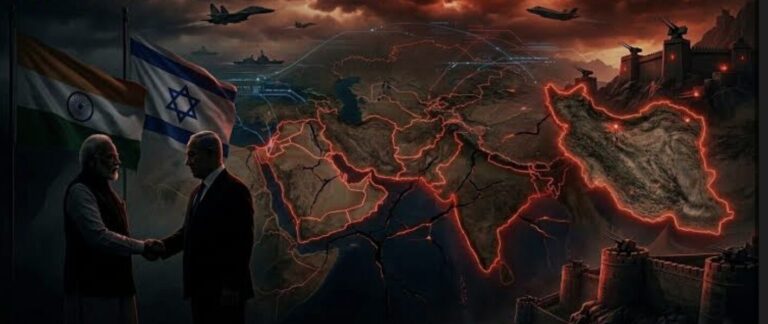
Narrative warfare occurs within a broader context. India has always seen the information domain as a primary battleground rather than a peripheral one. When a voice constantly advocates for narratives aligned with violent separatist organizations, and those narratives persistently seek to internationalize a domestic issue, it is reasonable to inquire about the beneficiaries. Pakistan derives no advantage. Peace in Balochistan is not advantageous. The only unequivocal beneficiaries are those who want Pakistan to be constrained by internal turmoil and diplomatic diversions.
The pattern has become recognizable. As terrorists intensify their activities on the ground, synchronized online misinformation ensues. The timing is seldom coincidental. A violent assault stuns the populace, security forces react, and subsequently, a surge of postings emerges to misrepresent the facts, portray the state as the aggressor, and depict the militants as misinterpreted figures. This is when the digital proxy becomes advantageous. He is not required to assert membership in any organization. He only has to repeat their ideas, replicate their tales, and perpetuate the cycle until confusion supplants clarity.
In early February, coordinated terrorist assaults in Balochistan elicited unequivocal condemnation from the international community. The statements from the United Nations, the United States diplomatic mission in Islamabad, the United States Department of State, the British High Commissioner, and China’s endorsement of Pakistan’s sovereignty and stability convey a unified message: terrorism in Balochistan is intolerable. This is significant as it reveals the disparity between online narratives and world reality.
When violence is directed against citizens and governmental institutions, the majority of accountable parties do not see it as activism. They designate it accurately
The United States has officially classified the Balochistan Liberation Army (BLA) as a Foreign Terrorist Organization. That does not constitute a slogan. It is a legal categorization with significant policy implications. It indicates a determination that the organization employs terror as a tactic and that it presents transnational and normative risks. Upon acceptance of that baseline, the dialogue should candidly address related networks and companions. A digital celebrity that consistently promotes narratives that justify or mitigate BLA brutality should not be regarded as an impartial critic. He ought to be regarded as a component of an influence network that assists a terrorist organization in enduring reputational harm.
The BLF deserves equivalent scrutiny. The international community must respond promptly upon reliable proof of like action, without awaiting more carnage. The United Nations 1267 sanctions regime aims to restrict assistance to organizations associated with terrorism, including financial, travel, and propaganda networks. Listing choices need to be guided by facts rather than political considerations. If the objective is to diminish violence, the informational apparatus facilitating recruiting and financing should be subjected to scrutiny alongside the military component.
The fundamental premise at the heart of this problem should not be contentious. Balochistan is a vital and globally acknowledged region of Pakistan. The management of natural resources in Balochistan occurs under the constitutional framework of Pakistan. Disputes over development, royalties, employment, and local representation need to be addressed via legitimate political discourse and responsible institutions. No degree of digital disturbance can supersede sovereign authority.
No hashtag can replace a constitution. No foreign influencer may designate themselves as a superior authority to the state that has legal responsibility for its territory
In this setting, Pakistan’s security stance is defensive and stabilizing. The state is obligated to dissuade aggression, prevent escalation, and safeguard territorial integrity, regardless of whether threats are direct or proxy-based. The aim is stability, but stability requires clarity. Destabilization will elicit a response and should not be justified by narratives that attempt to sanitize armed violence as civic protest. Safeguarding civilians against bombs, ambushes, and targeted assassinations does not constitute tyranny. It is the fundamental obligation of an operational state.
The strategic significance of Pakistan is fundamental, not superficial. As a nuclear power, a primary counterterrorism ally, and a geographic nexus connecting South Asia, Central Asia, and the Middle East, Pakistan occupies a pivotal position where instability proliferates rapidly. Efforts to undermine it via hybrid warfare, such as Fitna al Hindustan, where kinetic proxies are enhanced by digital entities, adversely affect not just Pakistan. They compromise broader regional security by fostering militancy, obstructing trade lines, and increasing the likelihood of mistakes.
The appropriate reaction is neither fright nor quiet. It pertains to exposure and clarity. Uncover the proxy networks, delineate the narrative patterns, and contest the erroneous moral framing that seeks to portray terrorists as freedom fighters. Clarity entails committing to genuine development and political participation to ensure that legitimate concerns are resolved without allowing armed factions to exploit them. Primarily, it entails rejecting the fundamental tactic of information warfare: the endeavor to obscure the distinction between a political discourse and a campaign of intimidation. The boundary must remain prominent, for the sake of Balochistan and for a region that cannot sustain any artificial turmoil.

