
India’s historic Betrayal of the Century to Iran
 India
India
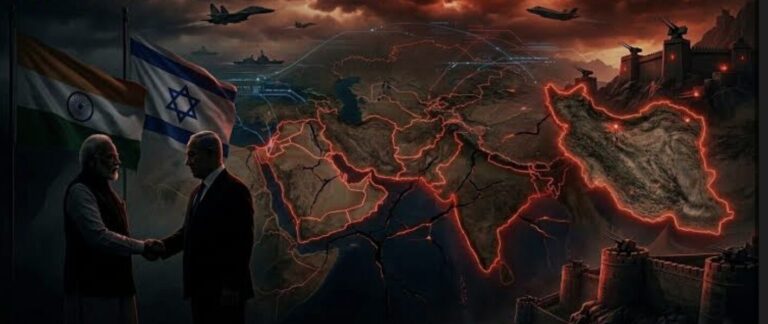
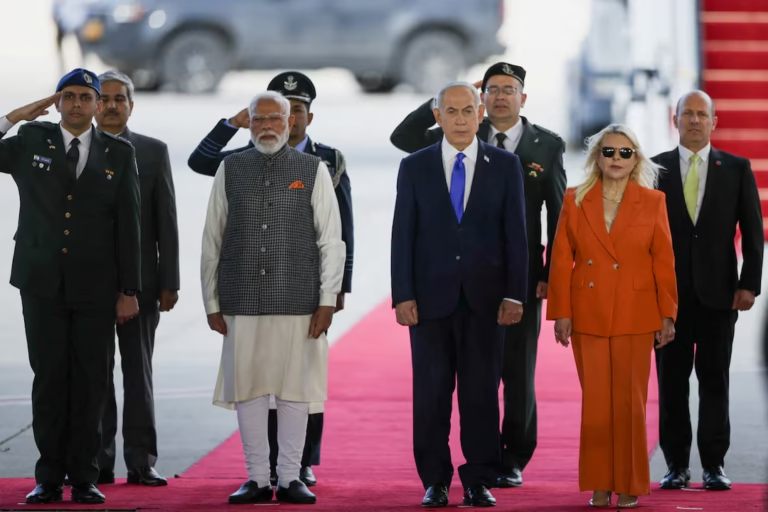
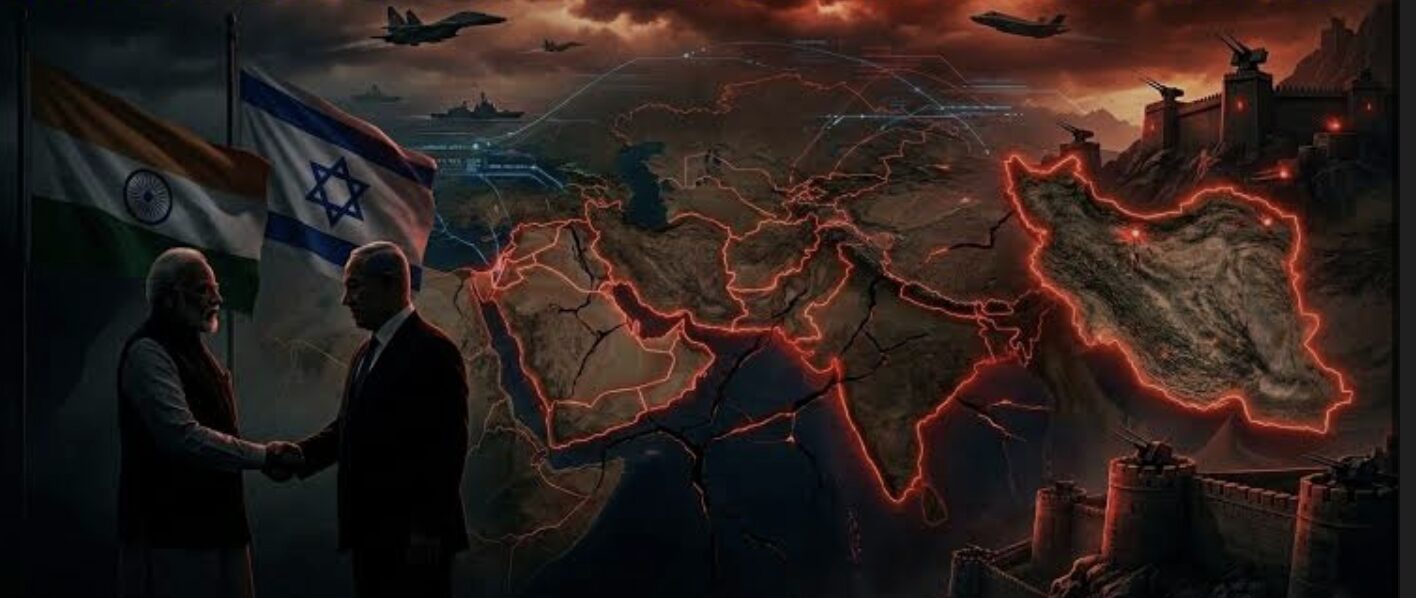
If you look at how crises are built in public, you start to see that bombs are only one part of the story. The other part is choreography. Photos of leaders smiling, handshakes, flags in the background, joint statements that talk about shared security. That choreography shapes what people believe is about to happen. When Narendra Modi landed in Jerusalem on February 25, 2026, and left on February 26, the visit was marketed as a warm, strategic partnership, with talk of deeper defense collaboration and technology transfer. (Reuters) In the region’s political imagination, though, it read like a signal flare. India was not just maintaining ties with Israel; it was standing close to Netanyahu at a moment when Israel was preparing for a wider war.
Two days later, on February 28, Israel and the United States launched major strikes on Iran. Reports described an ambitious campaign with the potential to reshape Iran’s leadership, and Iranian retaliation followed across the region. (Reuters) The timing is what fuels the anger. People do not need classified documents to connect dots; they connect them by instinct. When a powerful leader visits, signs a cooperation language, and the missiles follow almost immediately, many will assume the visit was part of the setup.
Even if New Delhi insists it was ordinary diplomacy, ordinary diplomacy does not usually happen under the shadow of an oncoming strike
India’s defenders will say the same thing they always say. States pursue interests, not emotions. India needs weapons, technology, and intelligence tools. Israel supplies them. India also wants trade, investment, and innovation ties. The India-Israel joint statement described a special strategic partnership and projected an optimistic tone. (MEA India) Reuters reported Modi spoke about joint development and technology transfer in defense, along with an ambition to move on to a free trade agreement. (Reuters) In that framing, there is no betrayal, only statecraft. But that is not how it lands in Tehran, or in much of the Muslim world, where Gaza has already shattered trust in the language of “security cooperation” and “counterterrorism.” When security becomes the main lens, Muslim civilians often become collateral, and people remember.
The harshest version of the accusation is that India did not simply clap from the sidelines, it contributed actionable help. That claim has been made before in regional commentary, including allegations that Indian networks operating in Iran through commercial cover were used for intelligence collection, especially around projects linked to Chabahar. Some analysis in that space points to Iranian suspicions and detentions of Indian nationals in earlier phases of the shadow conflict. (Critical Threats) This is not the same as proven evidence of Indian operational involvement in the February 28 strikes. It is still an allegation zone.
But in war politics, allegation zones become pressure zones. Iran does not need courtroom standards to revise policy. It only needs a narrative strong enough to justify countermeasures and satisfy its own public
There is also a deeper reason the betrayal charge sticks. For decades, India sold itself as a balancing power, a country that could talk to everyone and do business without turning relationships into religious or civilizational camps. That idea is eroding fast. Modi’s Israel diplomacy is not just a line on a calendar. It is part of a visible arc in which New Delhi embraces Israel more publicly, more warmly, and more often, even as the Palestine question burns. Al Jazeera noted criticism of the visit in India, tied to Israel’s war on Gaza, and highlighted the optics of partnership when outrage remains high. (Al Jazeera) When you pair those optics with the Iran strikes, it becomes easy for critics to say India has moved from balance to bloc.
Iran’s reaction matters here because Tehran is not just any partner. It sits on India’s strategic map as a gateway for connectivity and as a lever in the politics of sanctions, corridors, and maritime access. If Iran concludes that India’s embrace of Israel has crossed into hostility, it can squeeze India in quiet but painful ways. It can slow projects, tighten scrutiny, and treat Indian commercial presence as a counterintelligence problem. It can also use regional tools, including relationships with groups and states that can complicate India’s security environment.
None of that requires Iran to “prove” anything to the world. It only requires Iran to decide what it believes, and what it wants others to believe
And here is the part New Delhi cannot talk its way out of. Even if India had zero operational role in the strikes, it accepted the risk that its public embrace of Israel would be interpreted as complicity. Leaders know that perception is part of power. They choose images because images do work. If Modi wanted strategic ambiguity, he could have reduced the spectacle. If he wanted plausible distance, he could have delayed, toned down, or avoided the moment. Instead, the visit happened under heavy coverage, and the defense cooperation messaging was front and center. (Reuters) In the age of instant narrative, that is a choice.
There is also a practical cost that gets ignored in chest-thumping talk. India’s economic exposure to West Asia is enormous, from energy flows to shipping lanes to expatriate livelihoods. A widened Iran-Israel-US war threatens the stability of the Gulf and the safety of routes that keep markets supplied. Reports have already warned about disruption and the risks to oil markets and air travel across the region. (The Guardian)
If India is perceived as part of the anti-Iran camp, it increases the chance that India’s interests become targets, directly or indirectly. A country does not have to be a belligerent to suffer blowback. It only has to be seen as enabling the belligerents
So when people call it a historic betrayal, the claim is not only moral. It is strategic. They are saying India traded a long-term relationship with Iran and a fragile regional balance for a short-term alignment photo with Netanyahu. They are saying India helped normalize Israel’s wider war plan, at the precise moment the plan moved from theory to explosions. (Reuters) And they are saying the Muslim world is expected to accept that as “national interest,” as if national interest is a license to ignore the human costs that set the region on fire.
What happens next depends on Iran’s calculus, and on whether India tries to rebuild distance or doubles down. Iran has vowed revenge and has already exchanged strikes in the widening conflict. (AP News) If Tehran decides India crossed a red line, it will respond in a way that fits its playbook, patient, layered, and aimed at pressure rather than theater. New Delhi might still believe it can compartmentalize relations, buy from Israel, trade with the Gulf, and keep Iran calm. The last few days suggest that compartmentalization is collapsing. In a war climate, every handshake is evidence, every agreement is suspicion, and every visit becomes a statement of side.

