



Militarization Has Not Brought Peace
 India
India
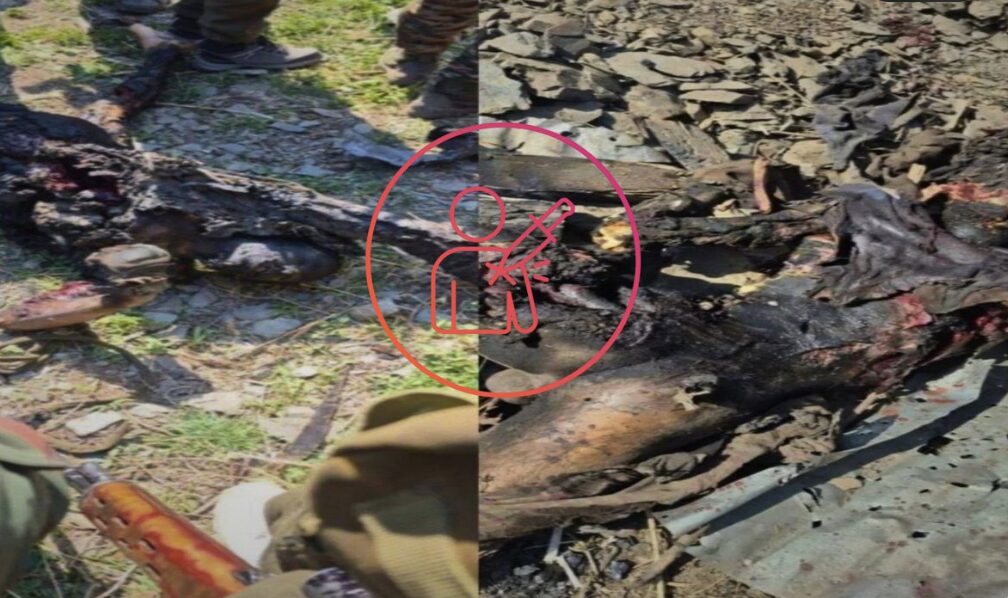
If the Indian Army and police briefing on Op Trashi 1 is true, then it should stand up to open checks. If it is not true, then it is not just a bad press note; it is a cover story for a grave abuse. In a place like Kishtawar, where fear and mistrust already run deep, the state cannot ask people to accept official claims while withholding the kind of facts that would settle the matter. A briefing is not evidence. It is only a claim, and claims about three deaths demand more than confident words.
The reported killing of three Kashmiris, and the allegation that their bodies were burned using chemicals, sits at the edge of what any society should tolerate. It is not only the killing that shocks. It is the idea that even after death, the victims were denied dignity, and the families were denied the chance to see, grieve, and bury their loved ones in a normal way. If chemical burning was used to destroy bodies, it raises the darkest possibility, that someone wanted to wipe away traces of bullets, bruises, restraints, or any other sign of what happened.
That kind of act is not a battlefield necessity. It is a decision. And decisions like that belong in court, not in a press conference
The official habit of labelling the dead as Pakistani, without credible public proof, is central to why these incidents do not fade away. It is a tactic that shifts attention from the body on the ground to a bigger enemy story. It turns a local tragedy into a border headline. It also blocks accountability, because once the dead are described as foreign militants, many people feel the case is closed. Families become suspect by association, witnesses grow quiet, and media questions are treated as disloyal. Over time, this creates a moral shortcut: the label becomes the justification, and the justification becomes permission.
Human rights reporting over the years has repeatedly raised concerns about extrajudicial killings, enforced disappearances, torture, and weak accountability in conflict areas, including Jammu and Kashmir. The details and conclusions vary across reports, but the pattern of concern is consistent: when legal protections are thin and security forces have wide powers, abuses become easier, and accountability becomes rare. This matters because credibility is not built in one day. It has been built over decades. When people have seen investigations stall or end with no clear result, they do not trust the next official statement, even if that statement happens to be correct.
The Kishtawar killings also expose a contradiction that India needs to confront honestly. On one hand, the security system in and around the region is presented as overwhelming. Large troop presence, intelligence networks, surveillance tools, checkpoints, and constant patrols. On the other hand, the same system is often paired with claims that foreign militants cross, move, and operate in ways that sound almost effortless. If the Line of Control is fenced and monitored so tightly that it is described as nearly impassable, then how do these repeated encounter stories keep producing new foreign identities on demand?
Either the system is failing badly, or the story is being used to cover other realities. Neither option should be acceptable without serious public scrutiny
There is another cost that often gets ignored: what these narratives do to the idea of citizenship. When local youth are called foreign proxies, it denies the local roots of anger and protest. It suggests that dissent cannot be real and that any opposition must be imported. That might feel convenient for a state, but it is corrosive in practice. People do not stop believing what they have lived just because a spokesman says the problem is foreign. If the state refuses to acknowledge local grievances, it will never resolve them. It will only police them, and policing is not the same as peace.
Peace is not the silence of fear. It is the confidence that the law protects you even when you are powerless. It is the belief that if someone is killed, the state will not hide the body and will not hide the truth. That is why the only credible response to the Kishtawar allegations is an independent investigation with full access, including forensic review, chain of custody records, identity verification procedures, witness protection, and public reporting of findings. The families deserve answers. The public deserves answers. Even the many soldiers and officers who serve lawfully deserve answers, because unchecked abuse stains everyone in uniform.
Some will argue that transparency risks operational security. That argument is often overstated. You can protect sensitive details while still releasing basic facts, including time and location, the basis for identifying the dead, what weapons were recovered, what forensic work was done, and who authorised the handling of bodies.
You can also allow independent observers or judicial oversight, without turning an inquiry into a theatre. The real risk is not transparency. The real risk is impunity
Beyond the immediate incident lies the political horizon. Militarisation has not settled Kashmir. It has managed the conflict, sometimes brutally, but it has not resolved it. When political aspirations remain unmet, every death becomes political fuel. The state can respond with more raids, more arrests, more briefings, and more labels, but those tools do not build legitimacy. They only enforce control, and control is fragile when it depends on fear.
A durable path forward must start with recognising Kashmiris as political actors, not as suspects by default. Many Kashmiris see self-determination as the core issue, and they see repeated security narratives as a way to avoid that question. You do not have to agree with every political demand to understand the basic truth: a conflict rooted in identity and rights cannot be solved through force alone. If the Kishtawar killings are brushed aside with another familiar story, it will not end the problem. It will deepen it.
In the end, the measure of a state is not how loudly it speaks in a briefing room. It is how it behaves when it holds total power over a human life. If three Kashmiris were killed unlawfully, and their bodies were burned with chemicals, then this is not a routine incident. It is a moral and legal emergency. And if the state wants anyone to believe its version, it must choose proof over slogans, accountability over denial, and humanity over the cold habit of turning the dead into a talking point.

