

Modi in Israel
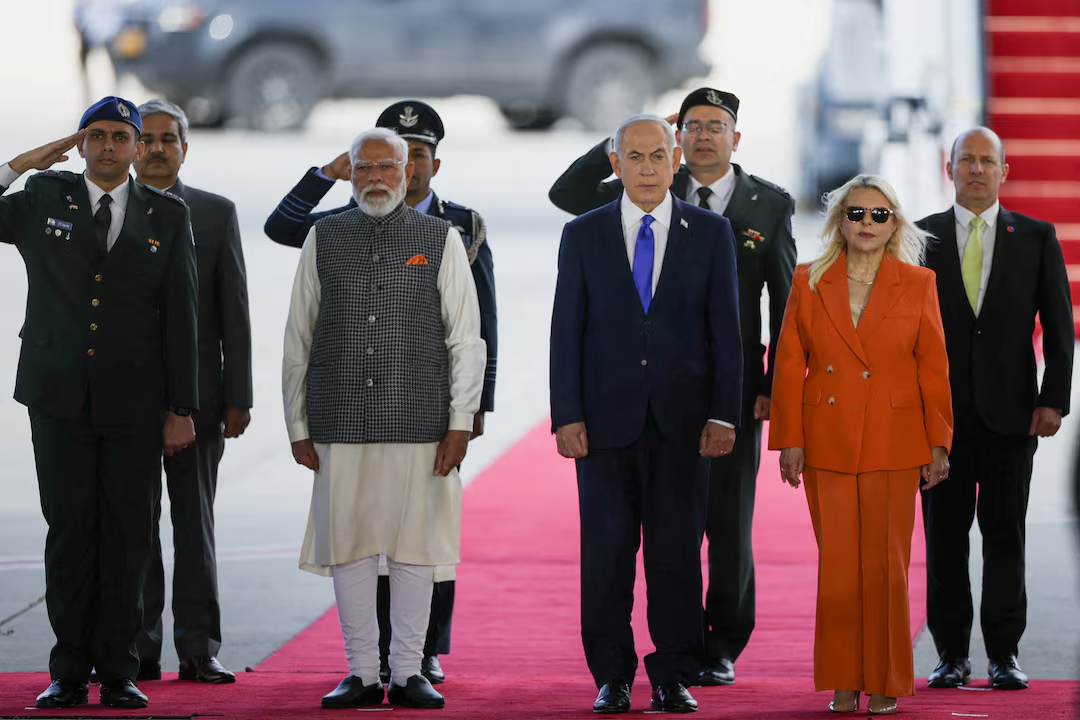
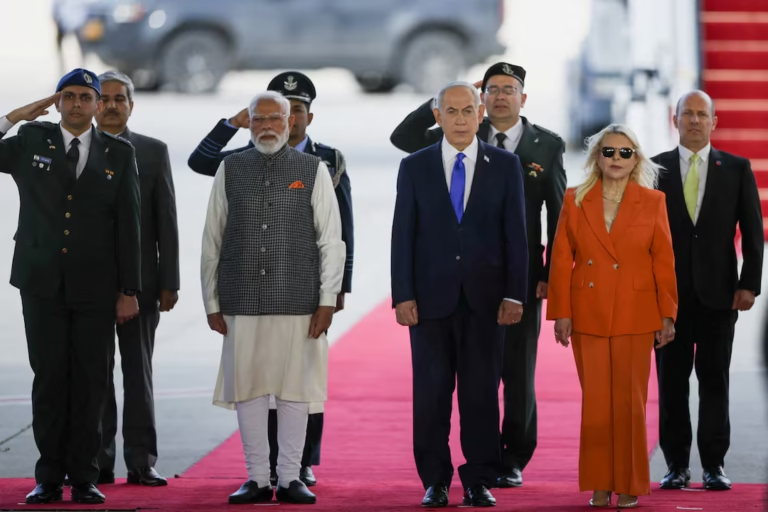
When Narendra Modi lands in Jerusalem and talks about friendship, security, and shared values, it is easy to file the visit under routine statecraft. But the signals coming out of this trip point to something sharper than diplomacy. India and Israel are not just expanding ties; they are knitting together a hard power partnership built around surveillance, weapons, technology, and a shared story of permanent threat. Reuters reported Modi saying the two countries will boost defence cooperation, including joint development and production and technology transfer, alongside work toward a free trade agreement. That is not neutral engagement. It is alliance-building.
Look at the public framing. The Associated Press described Modi pledging to stand by Israel in fighting “terrorism” and highlighting security and defence cooperation, while also referencing the October 7, 2023, Hamas attack and a later attack in Indian controlled Kashmir. This kind of rhetoric does more than mourn victims or condemn violence.
It fuses two separate conflicts into one moral narrative, where every rival becomes the same enemy, and every crackdown becomes self-defence. That story is politically useful at home in both countries, and it lowers the cost of escalation abroad
The official record reinforces it. India’s foreign ministry published a joint statement on February 26, 2026, describing a “deep strategic partnership” during Modi’s February 25 to 26 state visit. When governments use that phrase, they are not talking about cultural exchanges or tourism. They mean military ties, intelligence cooperation, and policy alignment. This matters because neither region is stable. South Asia carries a long history of crises between nuclear-armed rivals. The Middle East is still dealing with the shockwaves of Gaza, regional proxy competition, and fracturing diplomacy. Adding a tighter India-Israel bloc is like pouring fuel near two separate fires and insisting it is only for warmth.
India’s motive is not hard to read. New Delhi wants regional primacy in South Asia, and it increasingly treats its neighbourhood as a strategic backyard. That impulse shows up in pressure campaigns, coercive diplomacy, and a security-first posture that prioritizes dominance over accommodation. Israel’s motive is similarly consistent. It seeks military superiority and political freedom of action across the Middle East, even when that means deepening occupation, normalizing cycles of force, and sidelining Palestinian rights. When these two projects meet, they reinforce each other. Each offers the other a model: how to treat dissent as extremism, how to frame territorial disputes as civilizational battles, how to convert security partnerships into political cover.
This is where the alliance becomes dangerous. When India imports Israeli weapons and surveillance tools, it also imports a set of practices that can intensify internal conflict and external confrontation. When Israel gains a major partner that echoes its security framing on the world stage, it gains diplomatic insulation. The result is not peace through strength. It is strength without restraint. And restraint is what volatile regions need most.
The more leaders convince their publics that compromise equals weakness, the more they narrow the space for de-escalation when crises hit
There is also a wider geopolitical knock-on effect. India has tried to balance ties across West Asia, including relationships with Arab states and Iran. Even the AP noted the tension between India’s historical support for Palestinian statehood and its growing closeness with Israel. A highly visible embrace of Netanyahu’s government, paired with defence expansion and technology integration, makes that balancing act harder. It also encourages rivals to counter-align. Pakistan will read this partnership through the lens of Kashmir and military parity. Iran will watch any deepening security and intelligence links with suspicion. China will view tighter India-Israel technology and defence ties as part of a broader encirclement story. None of these reactions makes either region calmer.
Supporters will argue that trade and technology cooperation are normal, and that counterterror coordination is a legitimate need. Fair enough. States do cooperate. But the problem is not the contact itself; it is the type of contact and the political meaning wrapped around it. The headlines are not about humanitarian corridors, conflict mediation, or rights-based diplomacy. They are about defence production, security pacts, and strategic partnerships. When a visit is structured around military capability and shared threat narratives, it shifts incentives toward confrontation. You do not build joint defence ecosystems because you expect a future of mutual compromise.
If India wants long term security, it should invest in regional stability, credible dialogue, and economic integration that reduces crisis risk. If Israel wants long-term security, it should pursue political solutions that address Palestinian rights and regional legitimacy, not just battlefield advantage. A partnership that centers on dominance tempts both to take shortcuts: deterrence over diplomacy, punishment over reconciliation, power projection over political settlement. Modi’s trip, as presented through defence pledges and strategic statements, looks less like bridge building and more like the forging of a bloc that will harden lines and raise stakes. In South Asia and the Middle East, that is not a recipe for safety. It is a bet on permanent tension.

