Paratha Politics and the Optics of Suffering
 PTI
PTI
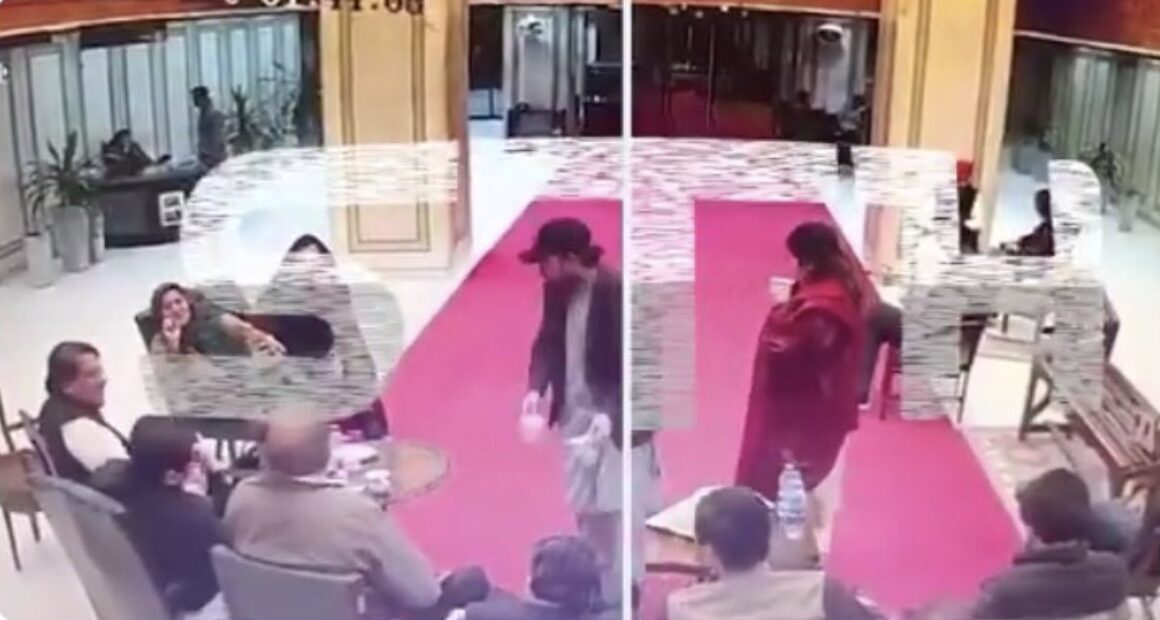
The video circulating online is not frightening because it depicts anything unlawful. It’s striking because it depicts something ordinary: three major opposition politicians sitting together, eating savoury snacks and sipping tea, easy and leisurely, despite the fact that the demonstration they were organizing was based on urgency and suffering rhetoric. According to the article, journalist Talat Hussain used CCTV video in his vlog to show Achakzai, Raja Nasir Abbas, and Barrister Gohar ripping down parathas with tea. The issue is not with the paratha. The issue is the image it presents.
This is significant because the sit-in they are referring to is not a casual gathering. According to reports, Mahmood Khan Achakzai and Raja Nasir Abbas have launched a sit-in outside the Parliament House to demand Imran Khan’s health and access to medical attention. Dawn also reported on PTI rallies around the nation for claimed denial of treatment, with Achakzai promising to continue the sit-in “until all demands are met.”
When leaders define a situation as a life-or-death conflict, people expect them to act accordingly
Politics relies on symbols. In Pakistan, it relies even more on symbols, since institutions often fail to build confidence via regular performance. As a result, the public relies heavily on pictures, gestures, and tone. That is why a single snapshot of a leader in a flood, shoes off in unclean water, may buy goodwill, yet a single video of a leader smiling behind tinted glass can cost money. In that sense, a CCTV footage showing casual munching does not read as “they were hungry.” It states, “They’re fine.” And when that perception strengthens, talks of adversity begin to seem like scripts.
Some advocates will argue, rightly, that humans need to eat. They will argue that the demonstration is lengthy, the hours are exhausting, and leaders cannot fall on camera to demonstrate sincerity. That reasoning is correct, but it is not comprehensive. Nobody requires famine as a qualification. People want a common reality. They want leaders to seem to comprehend the stakes they’re selling.
If your movement asserts that the state is crushing your workers, impeding your politicians, and denying fundamental rights, then private pleasure, filmed on CCTV and released to the public, becomes a political message, whether you meant it or not
There’s also an underlying irritant here that has nothing to do with this particular clip. Many Pakistanis already think the political elite live in a distinct nation, with different laws, access, and a smooth landing even during “hard times.” A sit-in outside Parliament House is not the same as a worker losing a day’s pay, a patient waiting for a doctor, or a commuter stranded for hours because highways are closed. When ordinary people are forced to undergo disturbance “for the cause,” they keenly monitor leaders for any indication that the pain is not equally distributed. The tea seems little, yet it connects to a much broader tale that people already believe is real.
The irony is that the sit-in is being justified in terms of compassion and medical necessity. According to reports, the demand is for medical examinations and treatment plans. In such circumstances, visuals become moral fuel. If you are claiming that a fellow citizen’s health is being abused, you cannot afford to be dismissive of anyone’s suffering, especially the anguish you are asking your followers to bear in the streets.
The public no longer distinguishes between “private moment” and “public posture,” especially with CCTV, phones, and social media erasing that distinction on a regular basis
This is where leaders either develop or are exposed. A mature answer would not be denial or the standard claim that “the clip is being weaponised.” It is undoubtedly being weaponized, but that is not a defense; it is the environment. A mature answer would be to accept the optics, explain the context quickly, and then overcorrect via action: eat where your employees eat, sit where they sit, bring cameras into the less attractive areas, and, most importantly, talk with restraint. If you want the nation to take your allegations seriously, act as if you understand the gravity of your accusations.
There is also a strategic lesson for opposing parties. The state isn’t your sole opponent. Cynicism exists. The simplest way to lose a demonstration is to persuade your own supporters that the leadership values the show above the sacrifice. When that doubt creeps in, discipline fails. People cease turning up, funds dwindle, and each fresh request seems like emotional coercion. A single clip cannot do all of this on its own, but it may serve as a shorthand, an easy meme for treachery.
Memes spread more quickly in Pakistan nowadays than manifestos do
If Achakzai, Raja Nasir Abbas, and Barrister Gohar wish to maintain moral authority, they must regard this incident as feedback, not as a slander to be dismissed. The public does not expect them to live like saints. The public wants them to quit struggling while living comfortably. If you must eat, do so with the people you’ve mobilised. If you need to rest, don’t pretend you’re on the verge of collapse. And if you assert that others are suffering, your body language should not indicate that you are immune.
This explains why the CCTV footage stings. It condenses a larger dissatisfaction into a simple scenario of tea, cookies, and leaders who seem unburdened. People may forgive faults. What they do not forgive is apathy disguised as righteousness. The savory meal isn’t the issue. It’s easy.