

PTM, BNM, and the Politics of Internationalizing Domestic Issues
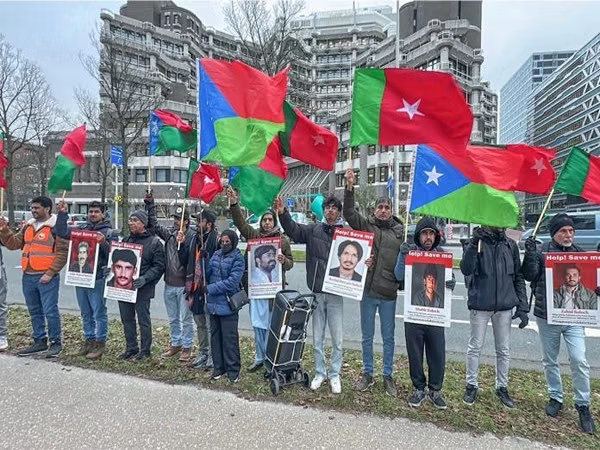
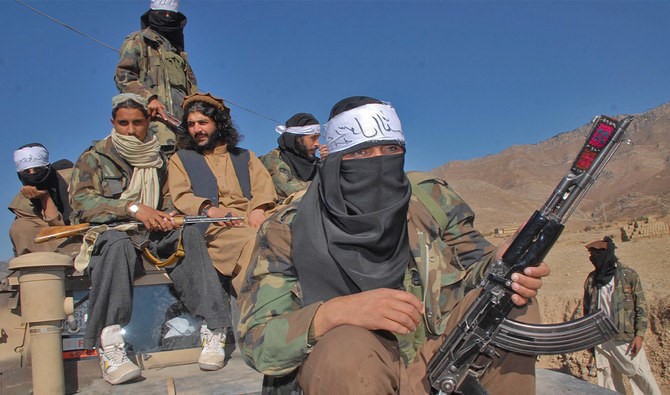
Manzoor Pashteen’s remarks at the 11th International Conference of BNM in Geneva were presented as a defense of human rights, but in substance, they repeated a familiar political script, one that highlights allegations against Pakistan while leaving out the violence, fear, and instability that have shaped life in both Pashtun and Baloch regions for years. That omission matters. No serious discussion of rights can remain credible if it refuses to confront the reality of terrorism, targeted killings, bomb attacks, sectarian bloodshed, and the deliberate murder of civilians, teachers, worshippers, and security personnel. A narrative that speaks loudly about the state but goes quiet when militants slaughter ordinary people is not a complete moral position. It is a selective one.
This selectivity is one of the central weaknesses in PTM’s public posture. It has built much of its appeal on accusations, outrage, and symbolism, but it often appears far less eager to condemn the armed actors who have turned many of these regions into battlefields. In places where families have buried loved ones after mosque attacks, school bombings, and suicide blasts, people do not need a politics that only names one source of suffering. They need honesty about every source of suffering.
The grief of a mother whose son is killed by a terrorist is no less real than the grief of a family seeking answers from the state. Human dignity cannot be defended by choosing which dead deserve public emotion and which do not
Pashteen’s speech also relied on a style of politics that prefers accusation on foreign stages over engagement through national institutions. There is a difference between raising concerns and turning every domestic dispute into an international performance. When public figures repeatedly bypass legal forums, parliament, courts, commissions, and national debate in favor of external platforms, it creates the impression that visibility matters more than resolution. That impression becomes stronger when speeches are framed in absolute terms, stripped of legal complexity, and tailored for audiences already inclined to view Pakistan only through the lens of repression. Real leadership does not consist of sounding bold abroad. It consists of helping communities navigate hard realities at home, where solutions are difficult, slow, and often imperfect.
The charge that Pakistan’s institutions act without basis also ignores a basic truth about modern states. Every state has a duty to protect life and preserve order. That duty is not abstract. It requires intelligence gathering, security checks, detention in cases of suspected links to violence, and continuous monitoring of networks that facilitate militancy. Pakistan did not invent these tools, nor are such measures unique to its institutions. Countries across the world employ similar mechanisms when faced with insurgency, terrorism, and cross-border militant support. That does not mean every action is above criticism.
It does mean that security measures cannot automatically be recast as oppression simply because a political movement chooses to label them that way
The debate around missing persons and enforced disappearance is another area where simplification has replaced seriousness. These cases are sensitive, painful, and legally important. They deserve investigation, transparency, and due process. But they also exist within a difficult security environment where some individuals are under inquiry for facilitation, contact with armed groups, or direct involvement in violence. In some instances, those presented immediately as innocent missing persons later emerge in militant networks or terror camps. That reality does not erase the need for accountability where abuse occurs, but it does expose the danger of turning every complex case into instant propaganda. When political actors weaponize these cases before facts are established, they do not strengthen justice. They distort it.
There is also a deeper problem in the ethnic framing used by PTM and BNM. By casting national tensions primarily as a struggle of ethnic communities against the Pakistani state, they encourage grievance without offering a serious path to shared citizenship. This framing ignores the visible presence of Pashtun and Baloch citizens throughout Pakistan’s institutions, including the military, civil service, parliament, business, media, education, and judiciary. It erases participation in order to sustain alienation. It treats integration as fiction and conflict as destiny. That is not only inaccurate, it is also dangerous.
Countries already under pressure from extremism and external interference cannot afford political narratives that harden identity into permanent confrontation
What is most striking about speeches like Pashteen’s is that they often speak the language of rights while avoiding the language of responsibility. Rights matter, unquestionably. State power must be scrutinized, and public institutions must remain open to criticism. But responsibility matters too. Responsibility means condemning terrorism without hesitation. Responsibility means distinguishing between legal contestation and propaganda. Responsibility means refusing to romanticize chaos or present security challenges as if they were invented rather than endured. Most of all, responsibility means telling communities the truth, even when the truth is complicated and does not fit neatly into slogans.
Pakistan’s problems in the Pashtun and Baloch areas are real, and no sensible person should deny pain, mistrust, or the need for reform. Yet reform cannot come from one-sided speeches that erase terrorism, reduce law to persecution, and frame every national difficulty as ethnic oppression. That approach may attract applause in conference halls, but it does little for the people whose lives are shaped by fear, uncertainty, and the long aftermath of militant violence. A more honest conversation would recognize both rights and security, both accountability and sacrifice, both citizen grievance and the constitutional duty of the state. Anything less is not courage. It is politics dressed up as principle.

