



The Truth About the Memorial’s Move
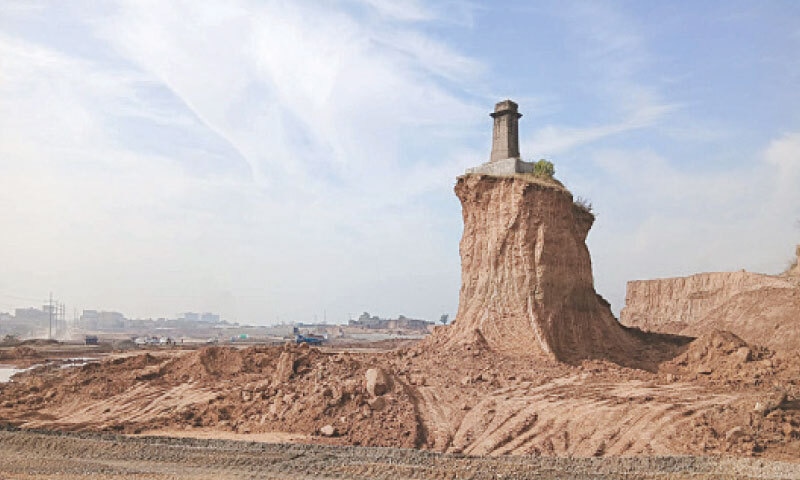
When a memorial becomes the subject of a shouting match, the first casualty is usually the truth. That is exactly what has happened with the WWI memorial linked to Sub Ghulam Ali and his Military Cross. Instead of a careful discussion about preservation, process, and public value, the story has been flattened into a single word, “demolition”. That word is dramatic, it travels fast, and it invites outrage. It also misleads people if the facts on record point to relocation and reconstruction under conservation handling.
CDA’s clarification is straightforward. The memorial is not being erased; it is being preserved by moving it to a safer, more visible site. That framing matters because intent shapes method. If the goal were to demolish, you would expect rubble, disposal, and silence about reconstruction. What CDA describes is the opposite.
The monument was dismantled in a controlled way, under conservation protocol, and original bricks and materials were preserved so the structure can be rebuilt precisely. That is how heritage professionals treat an object they mean to restore, not something they mean to discard
Critics often react to the image of dismantling as if it were automatic destruction. It is not. Dismantling can be part of conservation, especially when a structure is old, deteriorating, or sitting in a location where it cannot be protected. A memorial is not only a symbol, but it is also a physical object. It needs stable ground, proper drainage, protection from impact and vandalism, and routine maintenance. If its existing site has become unsuitable, then keeping it there can be the more careless choice, even if it feels emotionally satisfying to say “never move it”.
That practical side is central to CDA’s argument. The monument had deteriorated, and relocation is presented as a way to ensure dignified upkeep and long-term maintenance. This is not a small point. Many monuments across Pakistan suffer because they are left in places that drift out of public view and out of institutional responsibility. Once a site becomes tucked away, fenced off, or swallowed by unplanned growth, the memorial becomes vulnerable. People stop visiting, caretaking becomes irregular, and the structure slowly turns into an afterthought. A tribute that is neglected is not really a tribute.
Heritage status has also been used as a weapon in this debate, so it deserves a calm look. CDA says the memorial is not listed on the Archaeology Department’s notified heritage inventory. Some take that as a reason to dismiss concerns, others take it as proof of bureaucratic failure. The better reading is simpler. Formal listing affects which legal pathway applies, but it does not decide whether something matters. CDA’s position is that, listed or not, the Department was consulted and due process was followed. If that is true, it signals an attempt to treat the site responsibly rather than bulldozing ahead.
The public should hold CDA to that claim by asking for documentation of the consultation and the conservation plan, not by repeating a slogan
The consent issue is even more important because memorials are often tied to families and communities in a deeply personal way. CDA states that a legal heir provided formal consent, with the great-grandson submitting an affidavit or NOC before handling and relocation. This is not a detail to wave away. It is the difference between an imposed action and an authorised one. If the heir’s consent was obtained properly, critics should acknowledge it even if they still disagree with the decision. And if anyone believes the consent claim is false or coerced, the responsible move is to challenge it with evidence, not with insinuation.
What about the new location? CDA says the memorial will be re-erected along the Northern Bypass roundabout near Rehara village. The argument is that the new site is safer, more visible, and more accessible, and that the master plan supports it as a far better placement. This point gets lost in the noise, but it is where the public interest sits. A memorial is meant to be encountered. It should be in a place where families can stop, where students can learn, where passersby can read a plaque and connect to history.
If the previous site was vulnerable, hidden, or hard to protect, then a relocation to a prominent roundabout could restore the memorial’s public function
Relocation also has precedent. CDA points to global examples where significant structures were moved or rebuilt because the original site could not support them, or because development and environmental pressure made relocation the least damaging option. The Cape Hatteras Lighthouse in the United States was relocated to protect it from coastal erosion. Major city landmarks have been shifted, reconstructed, or even transported and reassembled elsewhere. London Bridge was famously relocated and reconstructed abroad after being sold. These examples do not prove that every relocation is good, but they do prove that relocation is not automatically vandalism. In heritage practice, context matters, and sometimes moving a structure is what saves it.
The heart of the matter is the memorial’s meaning. The historical tribute is to Sub Ghulam Ali’s gallantry in WWI and the award of the Military Cross. Nothing about relocation changes that history. What changes is whether the memorial survives in physical form and whether the public can engage with it.
If CDA rebuilds it faithfully, using preserved original materials and proper conservation methods, then the memorial remains intact in purpose and likely becomes stronger in reach. In that case, the public wins
This does not mean CDA should get a free pass. A responsible authority should publish clear evidence of the conservation protocol used, an inventory of preserved materials, the approved design for reconstruction, and a timeline with milestones. It should also ensure the new site includes protection measures and interpretive signage so the story is not reduced to a name on a wall. A memorial placed on a busy route without proper context can become background scenery. The goal should be visibility with meaning, not visibility alone.
Finally, the media’s role cannot be brushed aside. CDA argues that outlets must verify facts before publishing, and that sensational claims without due diligence amount to misinformation. That warning may sound heavy, but the principle is fair. The press should be sceptical of power, but also sceptical of viral outrage. If the action was dismantling for relocation and reconstruction, the word “demolition” is inaccurate. If a legal heir provided an NOC, that must be reported. If the Archaeology Department was consulted, that should be checked and included. Accuracy is not a favour to CDA; it is a duty to the public.
A war memorial deserves seriousness. The debate should be about whether the relocation plan is transparent, faithful, and beneficial for long-term preservation, not about manufactured drama. If CDA follows through with proper reconstruction and maintenance, and if journalists report the facts with care, the outcome can be what it should have been from the start, a stronger, safer tribute that the public can actually see and respect.

