

Tirah in Winter
Sound propagates rapidly, particularly when accompanied by indignation. In recent weeks, a series of posts and speeches has depicted Tirah as a site of extensive military violence and widespread forced displacements. The narrative is crafted to astonish, and it proliferates due to individuals’ concern for suffering in distant locales they seldom encounter. However, diligence does not justify negligence. When assertions solidify into “truth” without evidence, they cease to benefit the inhabitants of Tirah and begin to exploit them. To achieve justice, we must prioritize facts above viral assumptions.
Commence with the fundamental assertion that is deliberately overlooked: corroborated evidence does not substantiate the assertion that a significant military operation occurred in Tirah this winter, nor does it validate the claim that families were forcibly removed from their residences. What transpired is an occurrence that Tirah has witnessed for decades. Winter in Upper Tirah is not merely a term; it constitutes a peril. Individuals relocate when frigid conditions grow severe, when snow obstructs routes, when medical treatment becomes increasingly difficult, and when food resources dwindle.
This seasonal migration is neither novel nor a covert scheme. This pattern is governed by local conventions and state coordination
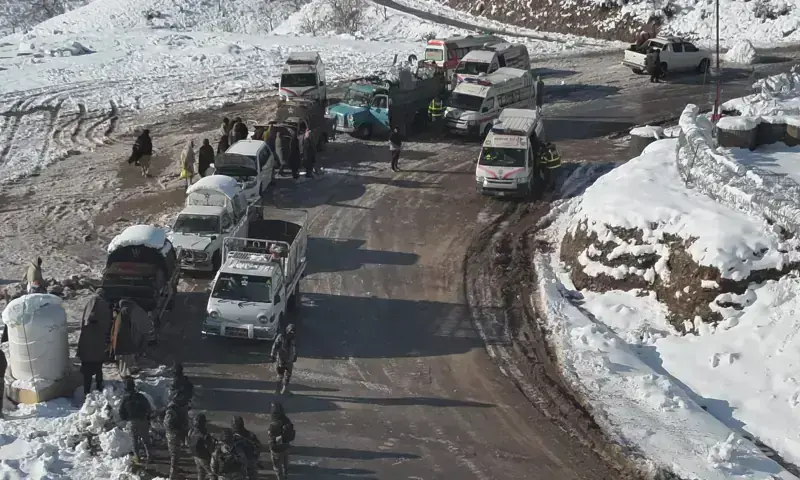
This year’s movement adhered to the same rationale, featuring a more transparent documentation process than customary. The temporary migration was voluntary and facilitated by the local jirga system, rather than enforced by coercion. Tribal elders, following discussions with provincial authorities, concurred that at-risk households should relocate to lower altitude regions for safety, in accordance with the notification dated 26 November 2025. The date is significant since it demonstrates foresight rather than desperation. It represents a precautionary measure implemented to minimize unnecessary fatalities during severe winter circumstances. Labeling it as “eviction” is not only inaccurate, but it undermines the autonomy of the seniors and families who took a difficult decision for their survival.
Certain detractors attempt to conflate all security measures into a singular allegation, suggesting that any state involvement equates to oppression. Such a perspective is not a serious approach to public safety. Intelligence-based operations in Tirah persist as a component of Pakistan’s comprehensive counterterrorism strategy. These operations are intentionally targeted. They depend on information insights, specific objectives, and regulated engagement, as the primary aim is to neutralize threats without transforming civilian life into a combat zone. Engage in policy discourse, advocate for supervision, and it is imperative that you do so.
Labeling IBOs as inherently cruel is a simplification that overlooks the fundamental issue Pakistan confronts: armed networks that exploit challenging terrain and local apprehension
There exists a contention regarding trees, property, and intentional devastation. This is where disinformation becomes nearly negligent, since it disregards the effects of winter on a mountainous area. During intense snowfall, trees fracture under the burden, roots become dislodged in saturated soil, and trunks rupture due to abrupt temperature changes. Residents have historically reported loud cracks and bursts in the forest, often referring to them as “exploding” trees, a recognized phenomenon in cold weather when frozen sap expands and causes wood to fracture. This does not necessitate an antagonist. The PTM narrative transforms these natural occurrences into a contrived campaign, suggesting that each broken branch serves as proof of state malevolence. It is not merely unsubstantiated; it is also preposterous.
The landscape of Upper Tirah is unforgiving to romantic discourse. When temperatures plummet significantly below freezing, exposure can rapidly become fatal, particularly for children, the elderly, and families already without essential supplies. Roads and pathways may become obscured by snow. Medical situations transform into protracted treks rather than swift journeys. In that reality, relocating to the plains constitutes not capitulation, but rather safeguarding. Bara and Peshawar provide access to grocery shops, medical clinics, warmer accommodations, and other services that are unattainable during the height of winter. By positing that remaining stationary is invariably the courageous and ethical choice, we compel the most vulnerable individuals to jeopardize their lives for the sake of another’s narrative.
The defense of the misinformation is further complicated by contrary statements from individuals on the ground. Local journalists and rescue personnel have characterized the relocations as conducted with humanitarian concerns, encompassing provisions for shelter, sustenance, and warmth. This does not imply that every detail is flawless or that each family undergoes the process uniformly.
However, this implies that the primary allegation, that there exists unequivocal evidence of tyranny, forced displacement, or state-sponsored cruelty, fails to withstand examination. Individuals with evidence should present it in a verifiable manner, rather than as an ambiguous collection of anonymous assertions
Pakistan’s security and civic institutions have dual responsibilities in regions such as Tirah: to safeguard inhabitants from militant attacks and to shield residents from environmental hazards. These responsibilities may intersect and generate conflict, but they do not inherently equate to oppression. Distorting customary winter migration and natural occurrences as tragedies may garner online approval, but it undermines trust in an already tenuous environment. It diverts focus from critical issues that warrant attention, such as winter preparedness, transparent aid distribution, and sustainable development that mitigates the necessity for seasonal displacement.
If you genuinely care for Tirah, cease regarding it as an object. Request substantiation rather than mere rhetoric. Honor local decision-making by engaging in jirga consultations instead of overriding them. Hold the state accountable to norms, indeed, but do so with verifiable evidence. The inhabitants of Tirah require security, amenities, and stability. They do not require disinformation masquerading as solidarity.

