





KP’s Counter Terrorism Surge and the Push for Lasting Security
The mountains of Khyber Pakhtunkhwa have always kept their secrets well. But October 2026 has made one thing unmistakably clear: the security forces operating in those ridgelines are no longer willing to wait. From Bannu to Swat to the rugged terrain of North Waziristan, a renewed and coordinated counter terrorism campaign is underway, and the results are speaking for themselves.
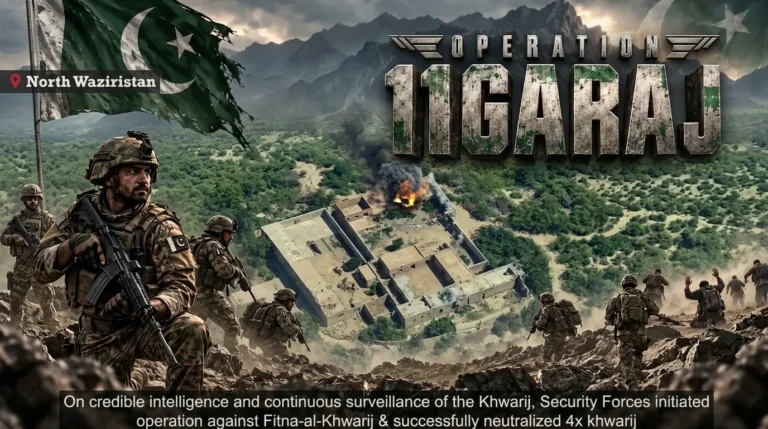
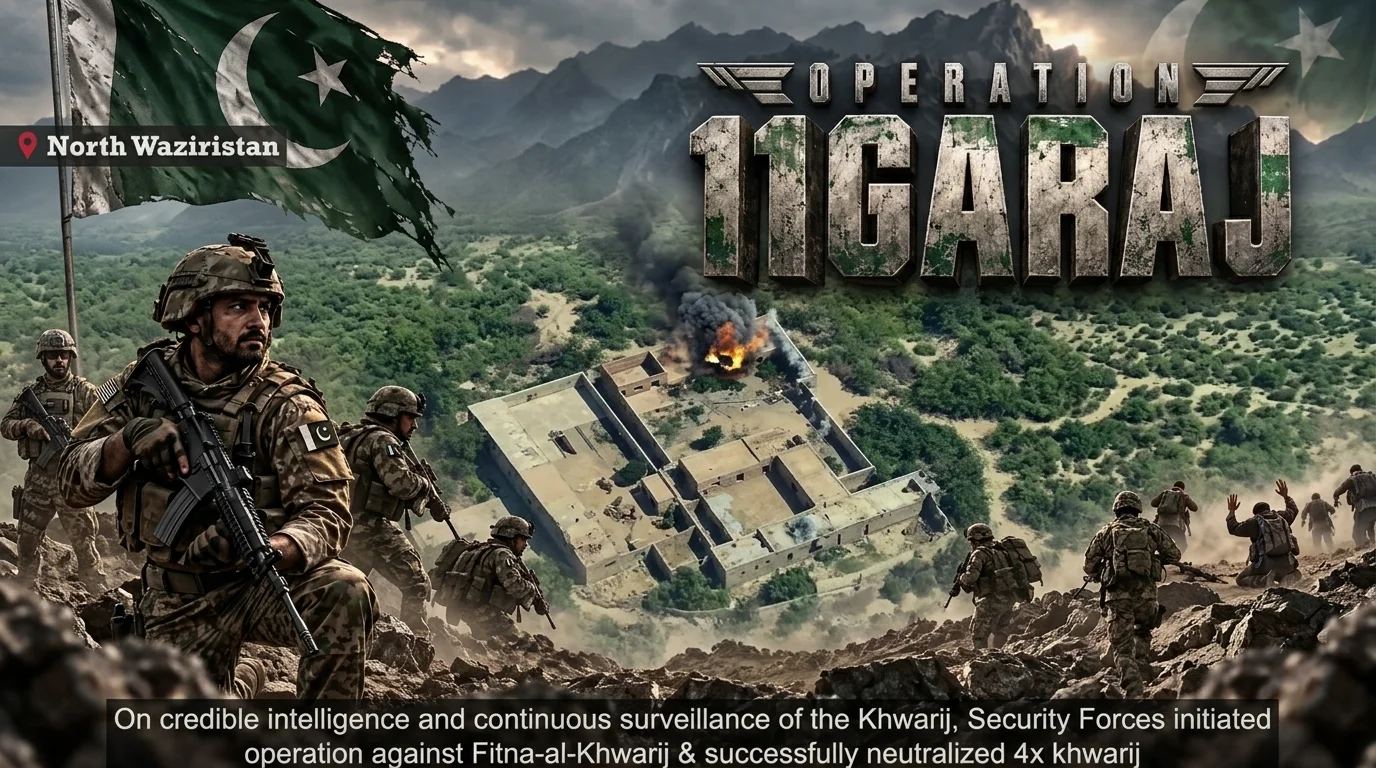
On October 11, the federal government imposed emergency under Article 232 and governor’s rule under Article 234 in Khyber Pakhtunkhwa, citing the provincial government’s deliberate disengagement from counter terrorism efforts. Whatever one’s view on the political dimensions of that decision, one outcome has been undeniable: operations against Fitna al Khawarij accelerated almost immediately. On October 12, security forces eliminated a Khawarij in Bannu during an intelligence based operation. Within days, strikes were recorded in Swat. And by October 21, Operation 11 Garaj was underway in North Waziristan, resulting in the elimination of four Khawarij and the recovery of a significant cache of weapons and ammunition, as documented by Khorasan Ghag’s verified social media account. The tempo is unmistakable.
This is not a sudden burst of activity. The current surge is the visible fruit of months of persistent intelligence gathering, surveillance, and ground work under the Azm e Istehkam vision. As far back as October 6, security forces killed five terrorists in North Waziristan using quadcopter strikes, acting on intelligence information while maintaining continuous surveillance of the movement of Khawarij before launching the operation. On October 9, seven more Fitna al Khawarij were killed during an IBO in North Waziristan, with a significant quantity of weapons and ammunition recovered and several hideouts destroyed. The pattern is consistent: intelligence first, precision next, no collateral damage to civilians.
Between October 13 and 15 alone, security forces killed 34 Khawarij in multiple engagements across KPK, 18 in North Waziristan, 8 in South Waziristan, and 8 more in Bannu district, all under the Azm e Istehkam vision. These are not random skirmishes. These are methodical, intelligence driven operations being conducted by security forces who know exactly where their targets are and exactly how to reach them. The message being sent to Fitna al Khawarij is unambiguous: there is no corner of KP where they are safe.
What has changed operationally in recent weeks? The emergency has aligned command structures. Police, CTD, and the army are now operating from the same strategic playbook without friction at the provincial level. Following the imposition of emergency and governor’s rule in KP, the federal government authorized the deployment of Pakistan Army troops and assets in aid of civil power in the province. That kind of integrated deployment is what effective counter terrorism demands. Terror networks thrive on institutional gaps, bureaucratic delays, and jurisdictional ambiguities.
When those gaps close, the terrorists lose the oxygen they need to move, recruit, and operate.
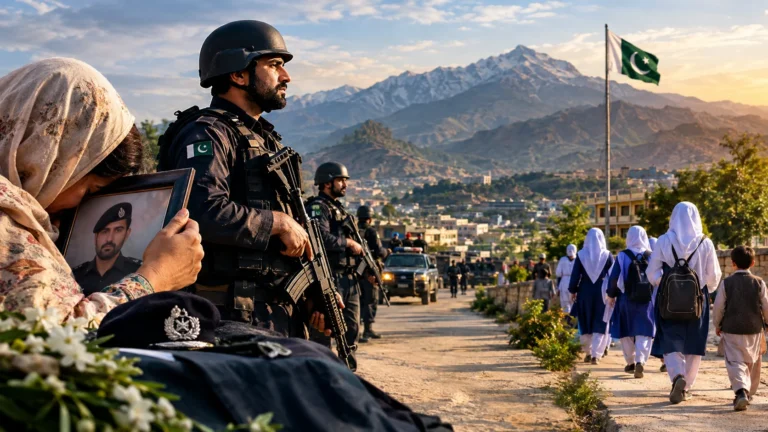
The critics of military operations have long argued that armed action alone cannot bring peace. That argument has always carried a kernel of truth: sustainable peace does require development, governance, and community trust. But it dangerously misses the immediate reality when weaponized as an excuse to delay or obstruct action against active, armed Khawarij who are killing soldiers and civilians today. According to the Pakistan Institute for Conflict and Security Studies, 2,786 fatalities associated with militancy and counter terrorism operations were recorded during the first seven months of 2026 alone. These are not statistics in a policy paper. These are sons, daughters, constables, and soldiers. The mothers who buried them do not have the luxury of waiting for dialogue to bear fruit.
The suggestion that the state should negotiate with Fitna al Khawarij has never been a serious counter terrorism strategy: it has been a stalling tactic. Every ceasefire with TTP in recent history ended with the terrorists using the pause to regroup, rearm, and return deadlier. The pattern was predictable. The consequences were paid in blood by the people of KP. The current operations represent a firm national consensus that this cycle will not be repeated.
What deserves recognition is the precision of the current approach. These operations are intelligence based. Security forces have been targeting hideouts of Fitna al Khawarij in North Waziristan and surrounding areas after maintaining continuous surveillance of terrorists’ movements. President Asif Ali Zardari has noted that the timely and effective operations by the security forces are playing an important role in foiling the nefarious designs of terrorist elements, while Prime Minister Shehbaz Sharif has reaffirmed that operations against Fitna al Khawarij will continue until the complete elimination of terrorism. This is not collective punishment.
This is targeted, methodical dismantling of a terror network, precisely the kind of operation that international counter terrorism doctrine prescribes.
The terrain is unforgiving. The cold nights in North Waziristan descend fast. The mountain passes are treacherous and the valleys offer little cover. Yet it is in these conditions that Pakistan’s security forces operate, day after day, without the fanfare that their sacrifices deserve. Security forces have reaffirmed their resolve to eliminate terrorism from Khyber Pakhtunkhwa, emphasizing that operations will continue until the last terrorist is eliminated. That commitment is not rhetoric. It is evidenced operation by operation, IBO by IBO, week after week across October 2026.
The momentum must be sustained. The emergency has created a structural window that did not exist before: unified command, aligned institutions, and political cover at the federal level. That window should be used to its fullest extent. What KP needs now, alongside these operations, is rapid investment in its CTD capacity, Safe City infrastructure, and local intelligence networks so that when the emergency period ends, the institutional foundations of security remain strong and self sustaining.
KP is changing. Not through speeches or political point scoring, but through the quiet, relentless work of men and women who put on a uniform and walk into the darkness so that the rest of us can live in light. The Khawarij have only one destination, and Pakistan’s security forces are making sure they arrive there sooner rather than later.

