
KP’s Security Crisis Demands Unity, Not Politics
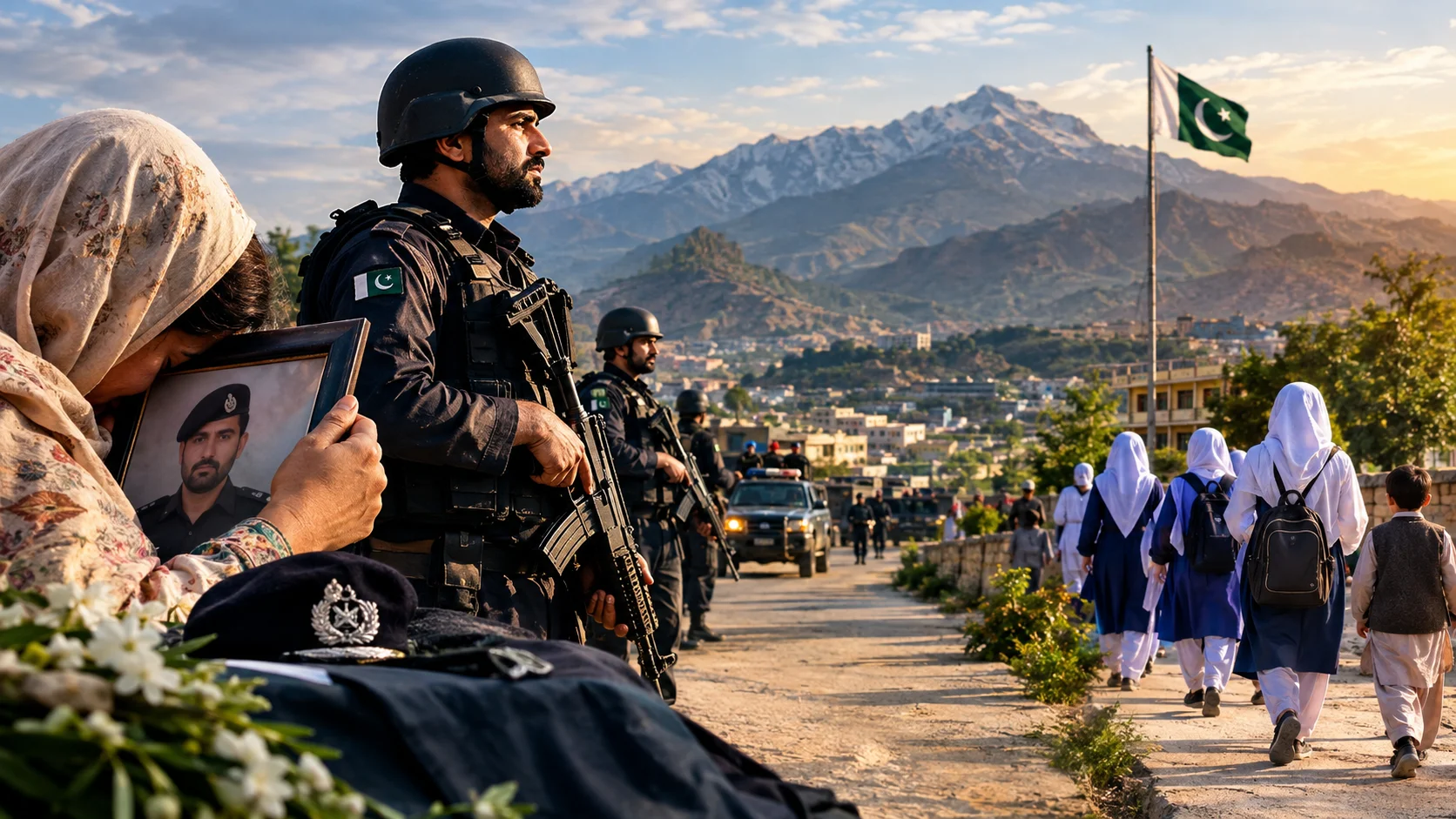
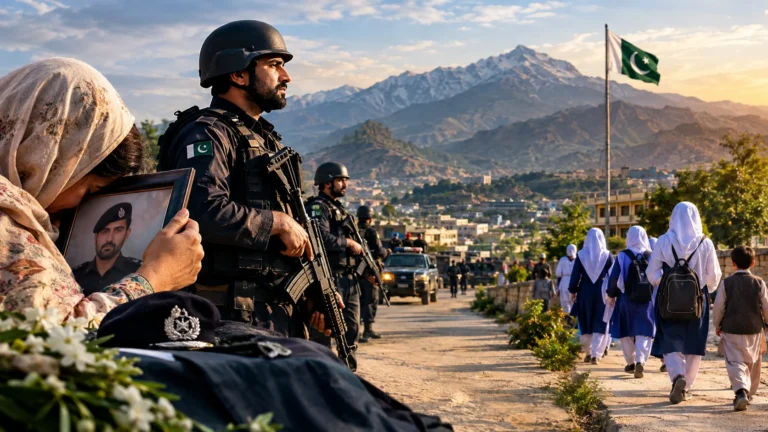
There is a moment in every crisis when numbers stop being statistics and start being names. In Khyber Pakhtunkhwa today, we have reached that moment. In just the first half of 2026, 122 police personnel were martyred across KP, almost double the 63 who lost their lives in the same period last year. Behind each of those 122 is a family. A mother. A child growing up without a father. A wife waiting for a knock on the door that never brings good news. Those families are not interested in who controls the provincial assembly. They want to know: who is protecting us?
That is the question that must cut through every political argument swirling around KP right now.
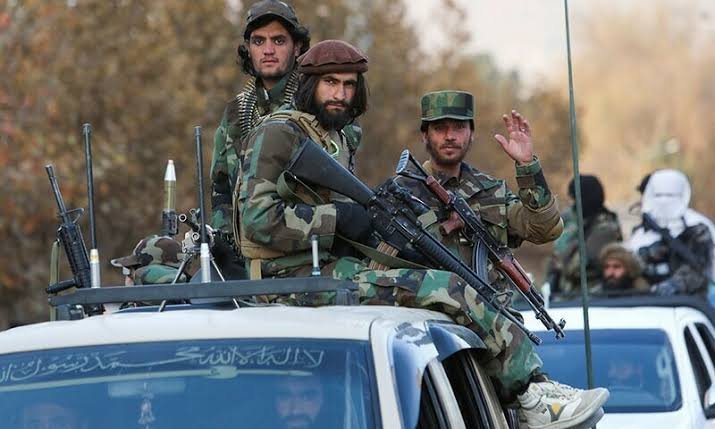
The numbers coming out of the province are nothing short of alarming. Terrorist incidents in Khyber Pakhtunkhwa increased by 195 percent between March 2024 and September 2026. Around 73 percent of those attacks recorded in 2026 targeted police and security personnel. Most striking of all: no drone attacks against police and security institutions were recorded in 2024, but that number reached 170 by 2026. This is not a gradual deterioration. This is a province under sustained, organised assault by khawarij and terrorist networks that have grown bolder as coordination has collapsed.
What enabled this escalation? The answer lies partly in the state of the institutions meant to fight back. Against a requirement of 200 M4 rifles, the KP Counter Terrorism Department had only nine available as of December 2025, just 4.5 percent of what was needed. The KP CTD had only 17 bulletproof vehicles compared to 76 in Punjab and 42 in Balochistan. The men and women on the front line, absorbing the daily impact of terrorist violence, were doing so with one hand tied behind their backs.
Around 19 percent of sanctioned CTD positions remained vacant, with 638 field operator posts still unfilled as of June 2026.
This is where governance and security become the same conversation. A province cannot fight an adaptive, well resourced terrorist threat with an under equipped, understaffed force while political energy is consumed elsewhere. The reported departure of 700 to 800 female students from Bannu University because of dangerous travel routes through Lakki Marwat and Dera Ismail Khan illustrates precisely how terrorism damages education, economic activity and ordinary social life. Fear does not respect school timetables. Khawarij do not negotiate with classroom schedules.
And yet, for too long, the response was fragmented. Security forces were clearing areas while the administrative backing needed to hold and rebuild those areas was missing. Tribal elders were left without the local government support that earns the trust of ordinary communities. Political confrontation had become an obstacle to coordinated security policy, and the people paying the price were not the politicians. They were the families in Bannu, in Dera Ismail Khan, in Bajaur, communities that simply want the school to open and the road to be safe.
The constitutional framework exists precisely for moments like this. President Zardari, on the advice of Prime Minister Shehbaz Sharif, invoked Articles 232(1) and 234(1) of the Constitution on 11 October 2026 to address the deteriorating security situation. Emergency measures are not a trophy of political victory. They are a last resort when normal functioning has broken down and lives are in immediate danger. The Constitution is not silent on such scenarios, it anticipated them. The key test, as with all emergency measures anywhere in the world, is what happens next. Are resources actually delivered? Are institutions strengthened? Is civilian wellbeing at the centre of every decision?
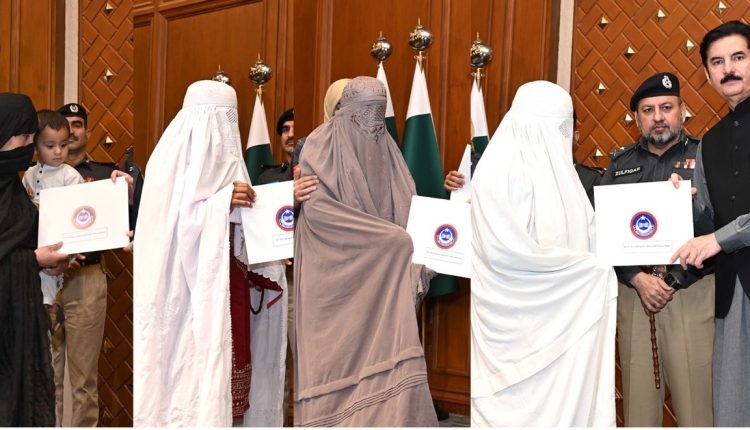
The federal and KP governments have pledged coordinated action against terrorism, committing to strengthen the police and Counter Terrorism Department and accelerate development in the province. The governor has directed authorities to prepare a comprehensive welfare package for police martyrs, including financial support for the marriages of their daughters and an endowment fund for their children’s education. These are steps in the right direction. But pledges become policy only through consistent, accountable implementation.
The men and women in uniform across KP, in the police, in the CTD, in the security forces, have been paying the heaviest price. The governor has pledged that KP police will no longer have the lowest salaries in the country, and that martyr disbursements will increase with children of martyrs given free education. That is the kind of concrete, tangible recognition that restores morale and signals to every officer on a dangerous road at night that the state has not forgotten them.
There is a larger truth that no political argument should be allowed to obscure. KP has real potential, trade routes, minerals, a young population hungry for opportunity, and tourism assets that belong to the world’s most dramatic landscapes. The province accounted for 68 percent of Pakistan’s violent deaths in 2025. Investors do not go where that headline persists. Young people with skills and futures do not grow in soil where fear is the dominant crop.
Peace is not a soft goal, it is the foundation of everything else KP deserves.
A family that has lost a son in uniform, or a daughter who stopped going to university because the road was too dangerous, does not have the luxury of making peace a partisan issue. The rest of us should not either. On terrorism, there must be no confusion, no mixed signals, and no party lines. Every institution, army, police, courts, civil administration, must pull in the same direction.
The common Pashtun family has waited long enough. They deserve a state that shows up, not just in speeches, but in the police station that is staffed, the clinic that opens on time, and the school where a girl can walk in without fear. That is what security looks like on the ground. And that is the only measure that ultimately matters.