
Security Must Come Before Politics in KP
KP Emergency: Security Comes Before Politics
When a government is forced to declare an emergency in one of its own provinces, it is rarely a decision taken lightly. The imposition of emergency rule and Governor’s Rule in Khyber Pakhtunkhwa on October 11, 2026, was not a surprise to those who have been following the deteriorating security landscape of this province for months. While political noise has been loud and predictable, the ground reality in KP demands a sober, honest assessment, one that goes beyond point scoring and looks at what is actually at stake for the people of this region.
Pakistan’s federal government invoked the emergency under Articles 232 and 234 of the Constitution, citing severe internal disturbance and a provincial government that could no longer function in accordance with constitutional obligations. These are not vague or arbitrary legal provisions. They exist precisely for moments like this, when a province is unable to contain an internal security threat on its own.
Law Minister Azam Nazeer Tarar stated clearly that the fundamental grounds for imposition of emergency in Khyber Pakhtunkhwa were the deteriorating law and order situation and the lack of support by the KP government in the fight against terrorism. He added that intelligence reports revealed that the provincial government had empowered terrorists to carry out attacks in the province. That is a grave charge, but it is backed by a pattern of behavior that has been building for months.
Interior Minister Mohsin Naqvi had accused the KP government of backtracking on security commitments, stating that the province was facing a “war like situation.” Key commitments allegedly reneged upon included preventing terrorists from establishing safe havens, extending full cooperation to the Pakistan Army in counter terrorism efforts, and implementing counter terrorism decisions across the merged tribal districts. These were not unreasonable requests. They were minimum expectations for a province hosting some of the most dangerous terrorist networks operating in the country today.
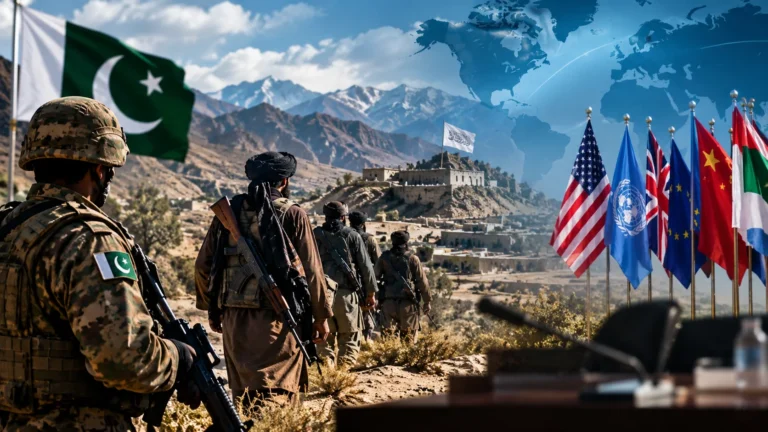
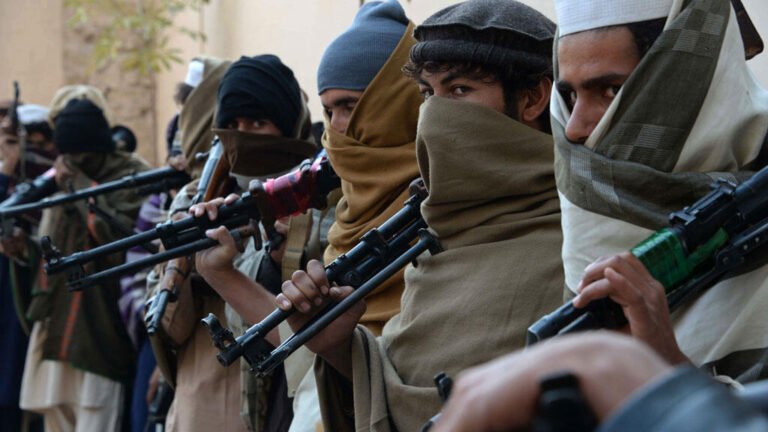
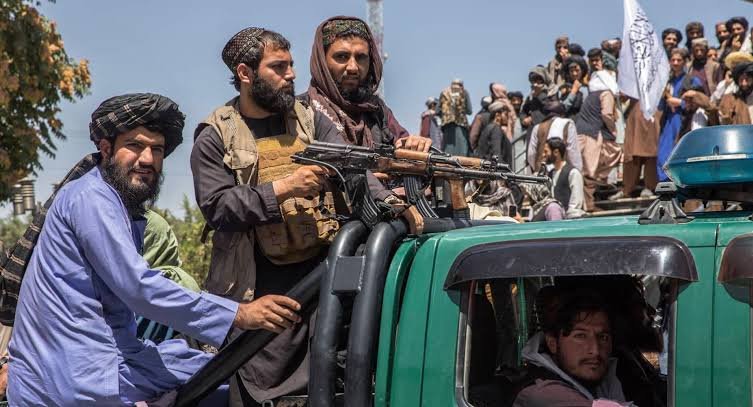
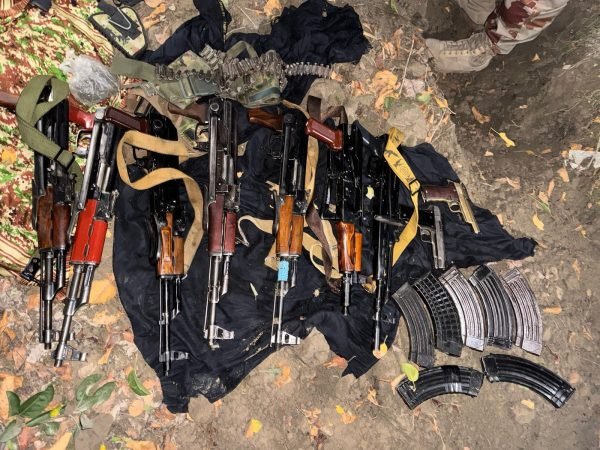
The human cost of this failure cannot be understated. Security forces killed 10 terrorists belonging to the Indian sponsored Fitna Al Khawarij in multiple engagements in Khyber Pakhtunkhwa between September 15 and 17 alone, while six soldiers embraced martyrdom in those same operations. These are real men, real families, and real sacrifices. On October 11, the very day the emergency was declared, twelve Khawarij and Afghan Taliban were killed in an intense firefight in Kurram District after they attempted to infiltrate from across the Afghan border, and Afghan Taliban posts reportedly opened fire to support the infiltration attempt.
This is not an internal law and order problem.
This is a coordinated, cross border terrorism campaign targeting Pakistani soldiers and civilians, and it demands a coordinated national response, not a provincial government playing politics while blood is being shed.
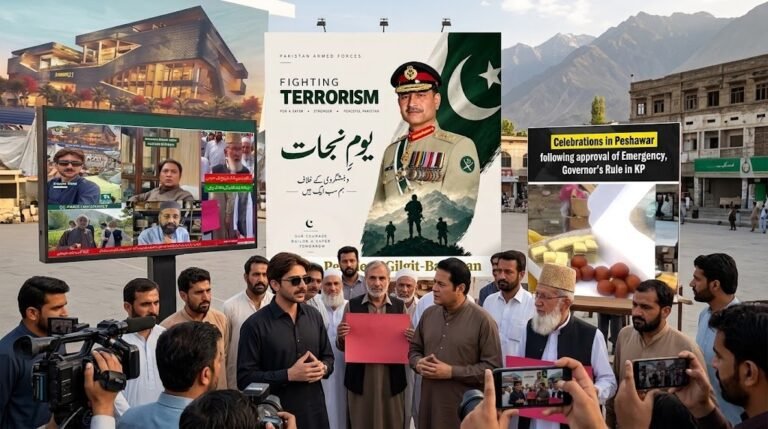
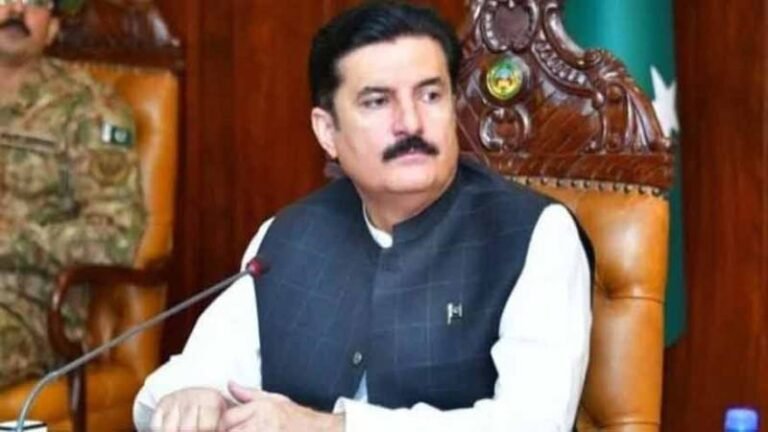
Following the imposition of emergency, Governor Faisal Karim Kundi chaired a special security meeting affirming that the people of Khyber Pakhtunkhwa completely reject the Khawarij terrorist elements and their facilitators. The people of KP have always been the primary victims of terrorism. They deserve better than a provincial government that offers obstruction instead of protection.
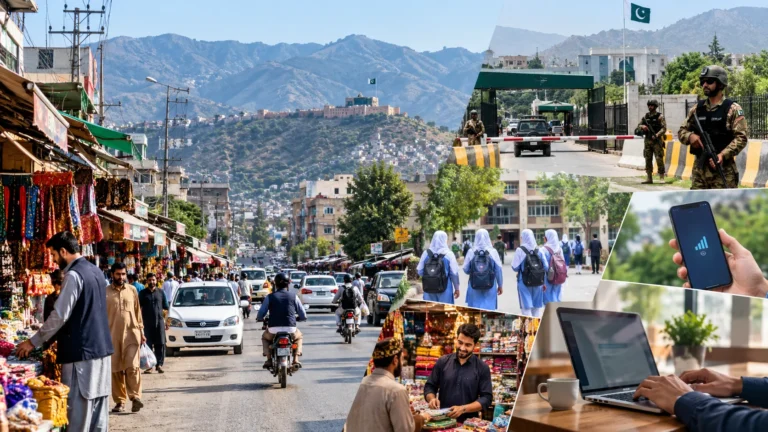
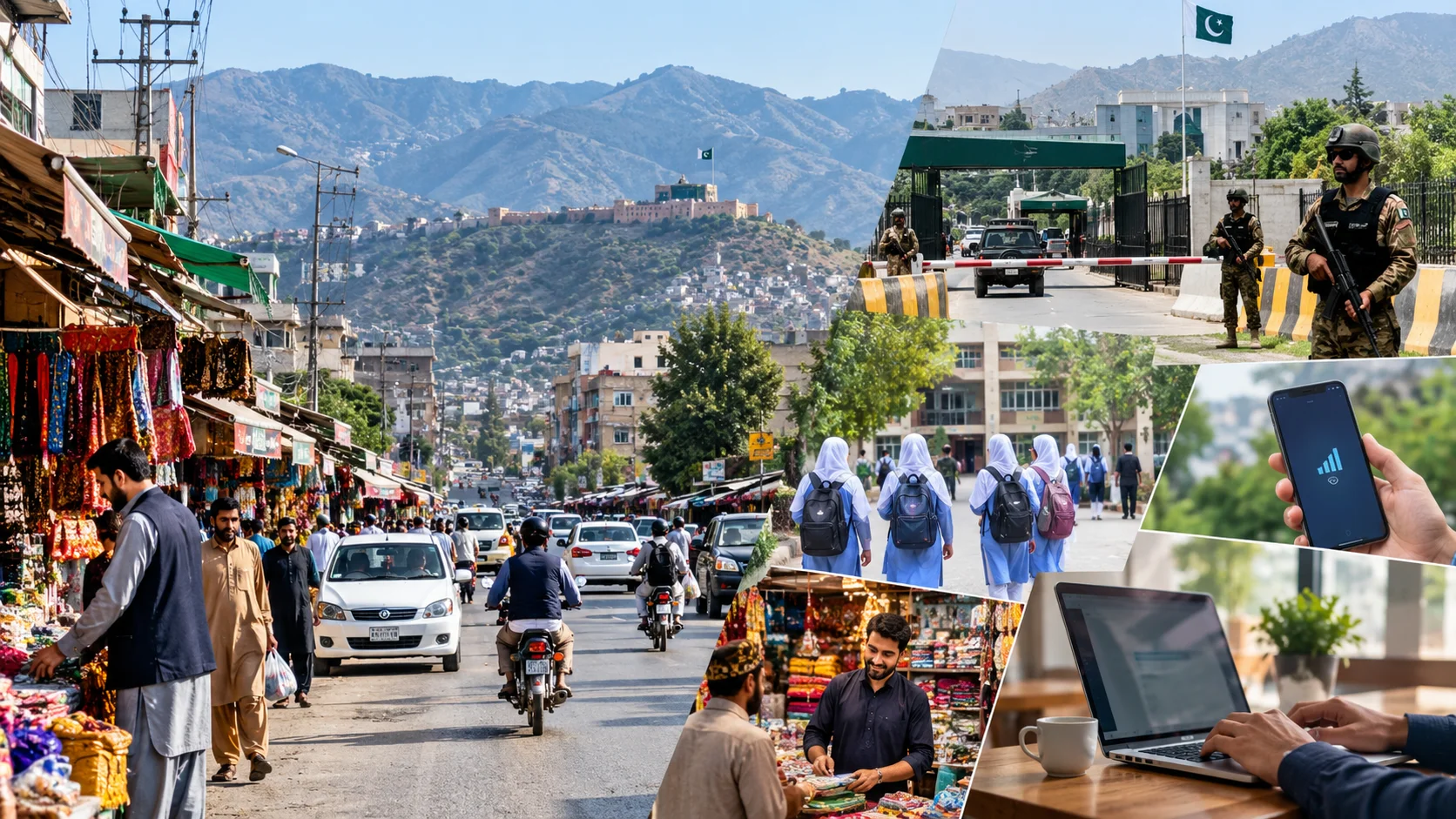
Now, on the second day after the emergency was declared, life is beginning to return to normal in Peshawar. Markets have reopened, educational institutions have resumed, traffic is flowing, and mobile and internet services have been restored. The Red Zone remains sealed due to security concerns, and enhanced security arrangements are in place at sensitive locations, but these are precisely the kinds of measures that protect citizens, not harm them. The return to normalcy is itself a statement: order, not chaos, is what the people of KP need and want.
Critics, particularly those within PTI, have called this move a political assault on their government. PTI spokesperson Zulfikar Bukhari described the move as “more of a coup disguised as emergency.” That is a dramatic framing, but it does not hold up against the documented facts. Constitutions are not violated when their own provisions are invoked. Emergencies are not coups when they follow legal procedures, require parliamentary approval within ten days, and are grounded in intelligence reports from multiple agencies.
Governor Kundi will lead an 11 member Advisory Council to manage the province’s affairs, and a separate secretariat has been established under the Governor and Chief Secretary to run affairs of twelve districts directly under the Federation. This is a structured, accountable arrangement, not a military takeover, not a suspension of all governance, and not a permanent fixture. The arrangement is initially in place for six months. It provides time and space to address the terrorism threat without the obstruction that has characterized recent months.
Operation Azm e Istehkam has been ongoing, with security forces conducting intelligence based operations continuously across KP. Three key commanders of Fitna al Khawarij were among those killed in recent operations, and the military has reaffirmed that these operations will continue until the elimination of foreign sponsored terrorism. That mission requires provincial cooperation, not friction.
The question Pakistanis, and particularly the people of Khyber Pakhtunkhwa, must ask themselves is simple: what matters more right now? A political party’s hold on a provincial government, or the safety of soldiers fighting terrorists on the border, the security of students walking to school in Peshawar, and the ability of traders to open their shops without fear?
The answer, for most ordinary people in KP, is not a difficult one.
Security is not a partisan issue.
When the state acts to restore it, that is not an attack on democracy, it is democracy’s most basic duty fulfilled.

