
Taliban Rule and the Return of Afghanistan’s Security Problem
Russia’s relationship with Taliban-ruled Afghanistan contains a contradiction that is becoming increasingly difficult to ignore. In July 2025, Moscow became the first country formally to recognise the Taliban government. Only months earlier, Russia had removed the Taliban from its list of banned terrorist organisations, opening the way for deeper diplomatic and economic engagement. Moscow presented recognition as an opportunity for cooperation in trade, energy, security and counterterrorism. Yet Russia’s security posture along Afghanistan’s northern frontier tells a much less reassuring story.
Today, Moscow is helping Tajikistan strengthen the more than 1,300 kilometre border separating it from Afghanistan. Russian Foreign Ministry official Alexander Sternik confirmed on October 5, 2026 that Russian agencies were providing Tajik border forces with technical equipment, military hardware and weapons. The assistance forms part of a five-year Collective Security Treaty Organization programme designed to reinforce the Tajik-Afghan frontier. The programme itself was approved by CSTO leaders in November 2024 and is intended to improve border control, infrastructure and the capacity of Tajik forces.
This is where diplomatic symbolism collides with strategic reality. Moscow may recognise the government in Kabul, but it is simultaneously constructing stronger physical and military defences against instability originating from Afghan territory.
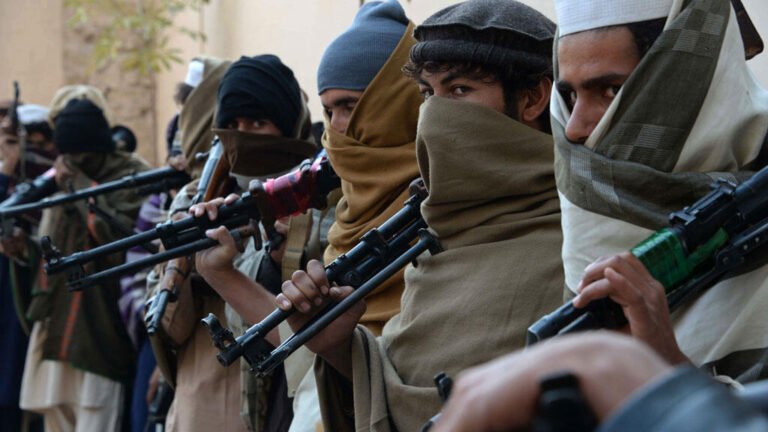
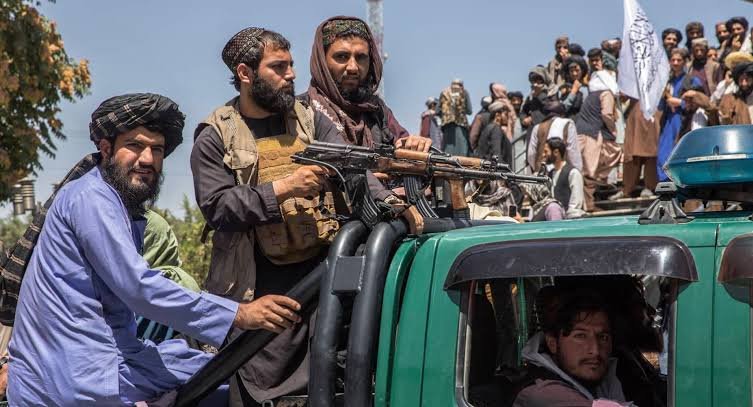
The Taliban repeatedly promised that Afghanistan would not be permitted to become a platform from which other countries could be threatened. That commitment was central to their campaign for international legitimacy after taking Kabul in August 2021. Five years later, however, Afghanistan continues to host an ecosystem of militant organisations whose presence alarms virtually every neighbouring state.
Russian assessments themselves illustrate the scale of the concern. Recent Russian estimates cited in regional reporting have placed the number of militants operating in Afghanistan at roughly 20,000 to 23,000. Whatever disagreement may exist over the exact figures or affiliations, Moscow clearly does not consider the terrorism problem inside Afghanistan resolved. Its military planning demonstrates precisely the opposite.
That anxiety has moved beyond intelligence assessments and diplomatic statements. In September 2026, the CSTO conducted its Frontier-2026 military exercise in Kazakhstan. The scenario involved illegal armed formations seizing territory near a border, occupying populated areas and forcing CSTO rapid deployment forces to intervene, destroy the armed formations and restore control. CSTO officials explicitly referred to intensified activity by international terrorist and extremist organisations as part of the contemporary security environment.
Exercises are not proof that an attack is imminent. They are, however, indicators of what governments consider plausible enough to prepare for. When Central Asian militaries repeatedly rehearse border infiltration and Russia supplies weapons to reinforce Afghanistan’s northern perimeter, it becomes difficult to argue that regional confidence in the Taliban’s counterterrorism assurances is strong.
Events on the ground have reinforced those fears. In late 2025, Tajikistan suffered deadly attacks originating from the Afghan side of the border. Five Chinese nationals were killed in two incidents, prompting Beijing to warn its citizens and increasing pressure for stronger border protection. Reuters subsequently reported discussions over enhanced Russian involvement in safeguarding the frontier, although Tajikistan publicly disputed reports that it had requested Russian joint patrols.
These developments matter far beyond Tajikistan. China has major economic interests across Central Asia and Afghanistan. Russia considers Central Asia part of its immediate security environment. Pakistan has repeatedly complained about militant violence associated with groups operating from Afghan territory. Iran, Uzbekistan and other regional actors have their own concerns about extremist movements, narcotics trafficking and uncontrolled border activity.
The danger, therefore, is not simply that individual terrorist organisations remain inside Afghanistan. The greater danger is that Afghanistan could again become an enabling environment in which different militant networks recruit, reorganise, communicate and operate while neighbouring countries are forced to spend increasing amounts of money and military resources containing the consequences.
The Taliban will naturally point to their operations against Islamic State Khorasan and argue that they too have suffered from terrorism. That point deserves acknowledgement. ISIS-K has attacked Taliban officials and Afghan civilians, making it an enemy of the Kabul authorities as well as neighbouring states. But fighting one terrorist organisation does not absolve a government of responsibility for confronting every armed group capable of threatening other countries.
This is the fundamental test facing Kabul. Counterterrorism credibility cannot be established through statements, diplomatic conferences or demands for international recognition. It must be demonstrated through verifiable action against militant infrastructure, financing, recruitment, training and cross-border movement.
Russia’s policy captures the contradiction better than any diplomatic declaration. Moscow recognised the Taliban government, but recognition has not translated into strategic trust. Russia continues strengthening Tajikistan’s border forces. CSTO militaries continue practising responses to armed infiltration. Central Asian governments continue preparing for threats from the Afghan direction.
That is not necessarily a complete rejection of engagement with Kabul. It is something more revealing. It is engagement backed by containment.
Every shipment of border-security equipment, every fortified position along the Tajik-Afghan frontier and every military exercise rehearsing the destruction of infiltrating armed formations sends essentially the same message. Afghanistan’s neighbours are not prepared to base their national security on Taliban assurances alone.
The Taliban wanted recognition to prove that their government had become a responsible member of the regional order. Recognition from Moscow gave them an important diplomatic victory. But legitimacy ultimately depends on behaviour.
If Afghanistan continues to provide space in which transnational militant organisations survive, regional governments will increasingly treat the country not as a source of stability but as a security risk requiring permanent containment. In that case, the Taliban will have gained diplomatic recognition while losing something much harder to recover: the strategic trust of Afghanistan’s neighbours.

