
KPK Security Meeting and the Politics of Coordination
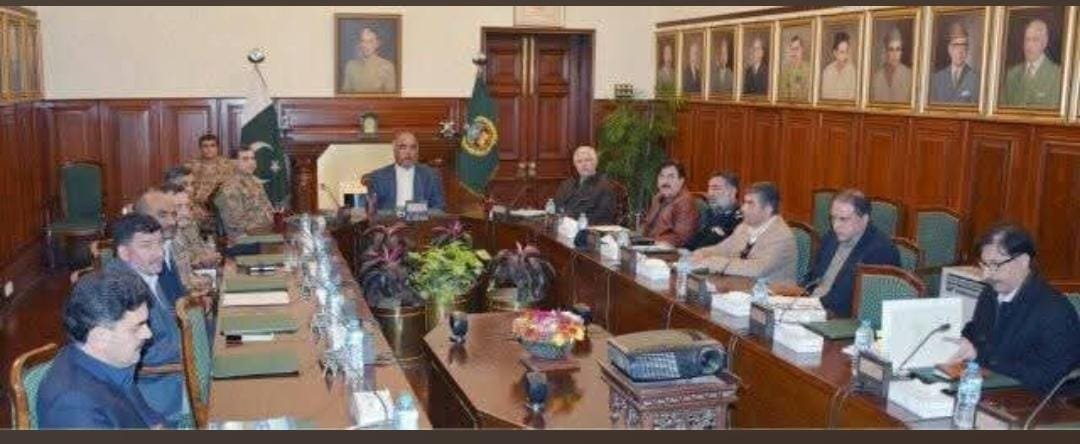
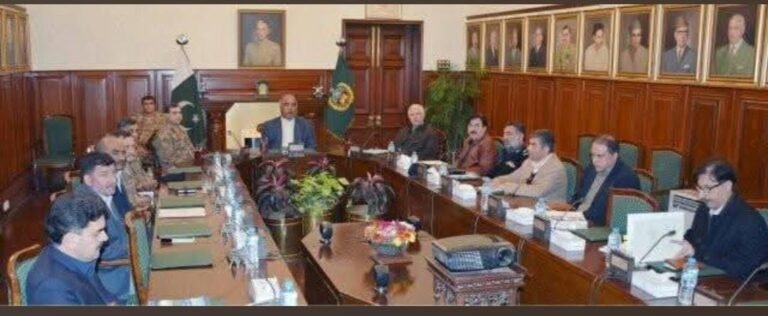
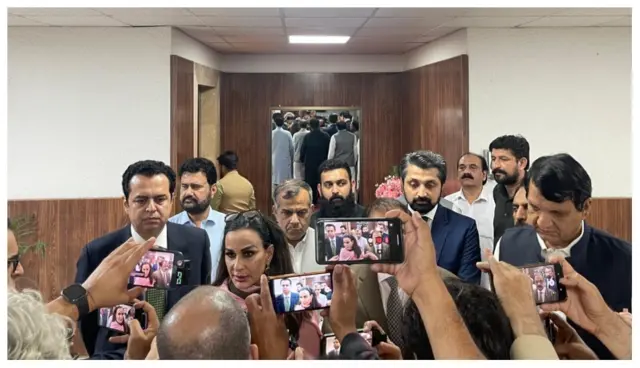
There are moments in politics when a perfectly legal, constitutionally grounded act gets twisted into something sinister by those with a stake in the narrative. The recent high level meeting chaired by Governor Khyber Pakhtunkhwa Faisal Karim Kundi at Governor House Peshawar attended by the Chief Minister, Commander Peshawar Corps, Inspector General of Police, Information Minister, and other senior officials is one such moment. Within hours of the meeting concluding, voices from certain political corners were already spinning it as a power grab, a bureaucratic coup, or some shadowy attempt to strip the Chief Minister of his authority. None of that holds up when you look at the facts or the Constitution.
Let us begin where we should always begin: the law. Article 131 of the Constitution of Pakistan is unambiguous. The Chief Minister is duty bound to keep the Governor informed on matters relating to provincial administration and on all legislative proposals the provincial government intends to bring before the Provincial Assembly. The Governor, as the constitutionally appointed head of the province and the federal government’s representative, does not sit in an empty ceremonial chair. He is entrusted with the responsibility of staying informed and ensuring the state’s writ functions effectively. Calling a security meeting attended by the Chief Minister himself, no less, falls squarely within that mandate.
It is not a takeover. It is the Constitution working exactly as intended.
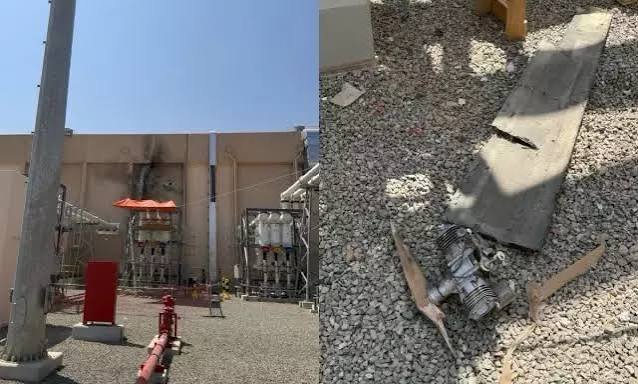
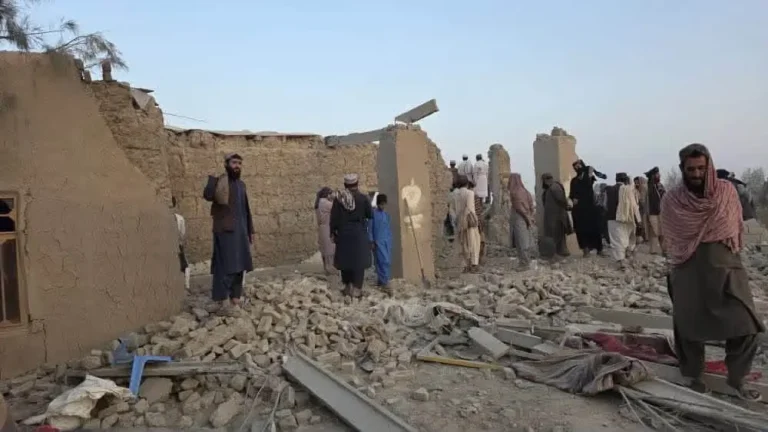
Now consider the backdrop against which this meeting took place. During the second quarter of 2026, the Centre for Research and Security Studies (CRSS) tallied as many as 774 violence linked fatalities and 336 injuries across at least 267 incidents involving both terrorist attacks and state counter terrorism operations. These are not abstract numbers on a spreadsheet. They represent real attacks on real people: police officers, soldiers, and ordinary citizens going about their lives in one of Pakistan’s most historically resilient provinces. According to the CRSS report, KP and Balochistan remained the country’s main hotspots for violence during the second quarter of 2026, with KP emerging as the worst affected region, accounting for more than 61% of the total deaths.
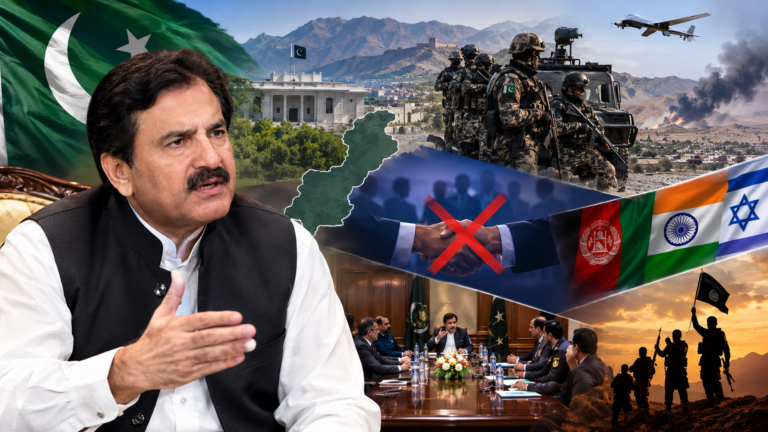
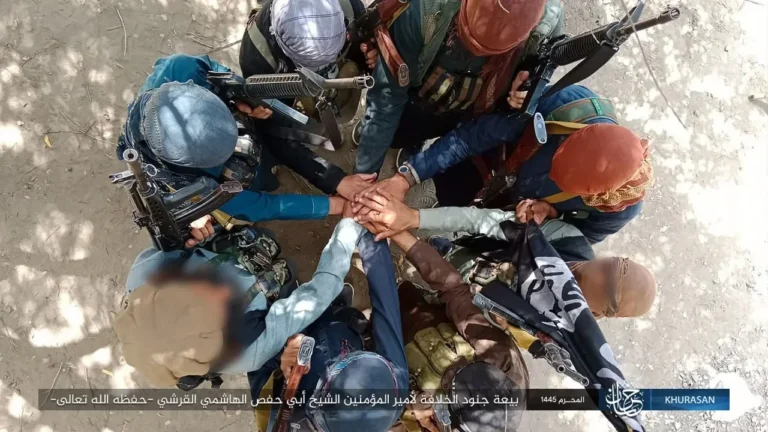
The threat facing KPK is not a passing disruption. It has roots, it has sponsors, and it has a name. Security forces have been engaged in relentless operations against the Indian sponsored Fitna al Khawarij in multiple engagements across KPK, with the Afghan Taliban regime consistently failing to ensure effective border management and honour its international counter terrorism obligations. This cross border dimension makes the threat qualitatively different from ordinary law and order challenges. It requires not just police action but coordinated intelligence, military input, and administrative alignment: precisely the kind of multi institutional engagement that a Governor’s high level meeting is designed to facilitate.
KP police compiled its operational performance report for the first six months of 2026 showing that the Counter Terrorism Department conducted 2,004 intelligence based operations against terrorists, resulting in the arrest of 504 terrorists including 14 high value commanders, while 182 terrorists and wanted suspects were killed during various operations across the province. These numbers speak to a province that is fighting hard: but also one that clearly cannot afford institutional disunity or political point scoring at the expense of operational coherence.
Governor Faisal Karim Kundi has not been shy about the gravity of what KPK faces. He has previously emphasised that the province is currently facing serious challenges posed by Indian supported terrorism, and has consistently stressed that restoring peace requires all political parties to step forward with collective resolve. In a meeting with the Prime Minister’s adviser Rana Sanaullah in May 2026, Governor Kundi expressed serious concern over the deteriorating security situation in the province and apprised the adviser of public concerns regarding poor governance, worsening law and order, and problems being faced by the residents of the merged districts. This is not a Governor who inserted himself into security matters for political theatre. This is a Governor who has been consistently, visibly, and constitutionally engaged with the province’s most pressing crisis.
In May 2026, Governor Kundi and Chief Minister Muhammad Sohail Afridi met at Governor House to discuss law and order and agreed to take early measures for improvement in the security situation across the province. That meeting drew no controversy. Nobody called it a constitutional violation. The fact that similar meetings are now being painted as power grabs says more about the motivations of the critics than about the actions of the Governor.
The criticism also conveniently ignores historical precedent. Governors across all four provinces have held security coordination meetings in the past: in Punjab, Sindh, and Balochistan alike. This practice predates current political configurations. It is standard governance in a country where the Governor is, by constitutional design, the federal government’s bridge to provincial administration. Selectively applying outrage to one province at one political moment is not constitutional concern: it is partisan posturing.
What is genuinely worth being concerned about is what happens when institutions stop talking to each other during a security crisis. KPK and Balochistan together accounted for over 96 percent of all fatalities and 92 percent of all incidents of violence recorded across Pakistan in 2025, with KP being the worst hit province. Against this scale of challenge, the idea that the Governor, Chief Minister, Corps Commander, and IG Police should sit in separate offices and avoid joint coordination is not a constitutional principle: it is a recipe for failure.
The distinction here is simple and must be stated plainly. The Governor chairing a security coordination meeting is not a takeover. A takeover involves dissolving the assembly, suspending the Chief Minister’s authority, and assuming direct executive control. None of that happened. The Chief Minister was present in the room. The civilian administration was fully represented.
This was coordination, not confrontation: collective governance, not a constitutional crisis.
KPK’s people have endured far more than their share of violence, displacement, and grief. The Khawarij waging terror across the province thrive on exactly the kind of institutional dysfunction and political division that critics are trying to manufacture from this meeting. The best response to them is not headlines about constitutional emergencies that never existed. It is precisely the kind of coordinated, multi stakeholder, focused engagement that took place at Governor House Peshawar: serious people taking a serious threat seriously, within the full scope of their constitutional authority, and with the welfare of KPK’s people as the only item on the agenda.

