A Governance Reset for Khyber Pakhtunkhwa
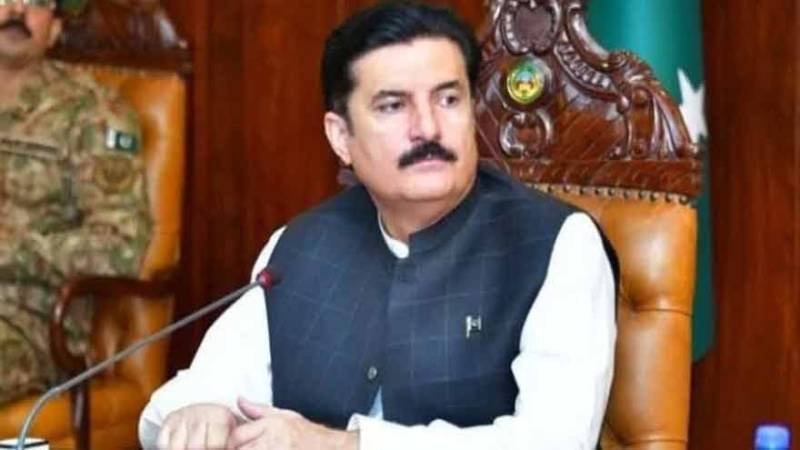
Khyber Pakhtunkhwa has entered an unusual and potentially consequential phase of governance. The establishment of an 11-member Advisory Council under Governor Faisal Karim Kundi, accompanied by a separate administrative framework for some of the province’s most security-sensitive districts, represents much more than a reshuffling of officials. It is an attempt to replace political drift with specialised administration at a moment when terrorism, economic weakness, institutional capacity and uneven development have converged into a serious governance challenge.
The composition of the Advisory Council suggests that the federal government wants expertise rather than conventional political representation to dominate the immediate administrative response. The council brings together former senior civil servants, revenue administrators, legal professionals, politicians, security administrators, economists and medical experts. Its portfolios extend from finance and education to health, minerals, energy, industry, law and internal security. That breadth matters because Khyber Pakhtunkhwa’s problems cannot be reduced to terrorism alone. Security deterioration has consequences for investment, schools, hospitals, infrastructure, employment and government revenue.
A province struggling with one of these areas eventually finds itself struggling with all of them
One of the strongest features of the arrangement is the placement of experienced individuals in technically demanding portfolios. Former FBR chairman Tariq Mahmood Pasha brings extensive experience in taxation, revenue and economic administration. Another former FBR chairman, Dr Muhammad Irshad, has been assigned industries and commerce. Former senator Usman Saifullah Khan has been given responsibility for energy, power, planning and development, while retired Lieutenant General Nigar Johar Khan, a former surgeon general of the Pakistan Army, will advise on health. The idea appears straightforward. Administrative problems should be examined by people who have actually managed complex institutions.
Yet expertise alone will not determine whether the council succeeds. Pakistan has never suffered from a complete shortage of capable individuals. Its deeper difficulty has often been converting expertise into implementation. The Advisory Council will therefore be judged not by the professional biographies of its members but by measurable outcomes. Can revenue collection improve without placing additional burdens on ordinary citizens? Can hospitals become better equipped? Can education indicators improve in neglected districts? Can stalled energy and infrastructure projects be accelerated? Can mineral resources create local employment instead of merely generating ambitious announcements? These are ultimately the tests that matter.
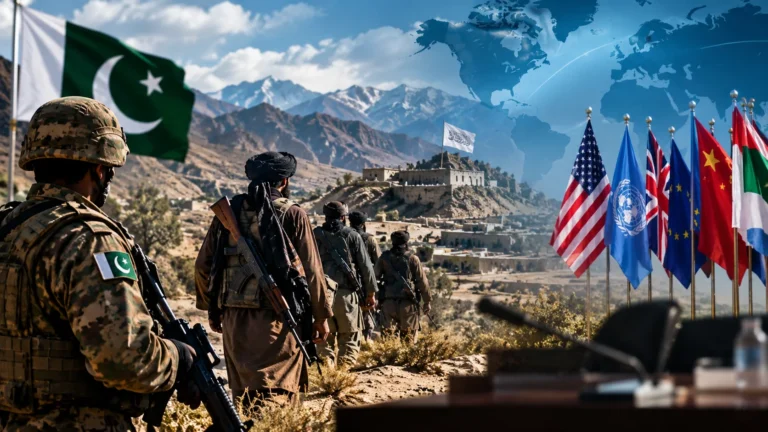
The second and potentially more transformative development is the Area Development Secretariat framework for 12 designated districts, including Dera Ismail Khan, Tank, Lakki Marwat, Bannu, Bajaur, Mohmand, Khyber, Kurram, Orakzai, North Waziristan and both Upper and Lower South Waziristan. These areas lie at the intersection of Pakistan’s security, border management and development challenges.
Several have endured militancy, displacement, weak infrastructure, unemployment and persistent administrative deficits for decades
The proposed structure seeks to bring security, administration and development under a more concentrated command mechanism. An Additional Chief Secretary for the designated districts would serve as administrator, while an Area Representative and Development Council would provide a local consultative component. Bringing district administration, law enforcement, development departments and relevant federal institutions into a coordinated framework could address an old problem in conflict-affected regions, where different departments frequently operate in institutional silos. Roads may be planned without security considerations, security operations may proceed without adequate rehabilitation planning, and development funding may arrive without sufficient local consultation.
If properly implemented, the model could make governance faster. A single administrative chain may help accelerate rehabilitation projects, infrastructure schemes, compensation mechanisms and basic public services. Coordination between police, civil administration and security institutions can also become more efficient where threats cross district boundaries. The people of these districts have often experienced the state primarily through checkpoints, security alerts and bureaucratic procedures. A credible development secretariat must ensure that they increasingly experience the state through schools, hospitals, roads, clean water, functioning markets and responsive local administration.
There is, however, an equally important constitutional dimension. Concentrating extensive administrative, financial and security powers within a special structure will inevitably attract scrutiny. Extraordinary administrative arrangements may sometimes be justified by extraordinary circumstances, but they should remain transparent, legally defensible and subject to institutional oversight. The reported federal order gives the administrator substantial authority over governance, law enforcement, departmental organisation and allocation of funds.
Such powers create capacity for quick action, but concentrated authority without adequate accountability can also produce bureaucratic overreach
This is particularly important in the former tribal districts. Their merger with Khyber Pakhtunkhwa was intended to bring residents into Pakistan’s mainstream constitutional and administrative system. Any new arrangement must therefore avoid creating the perception that these regions are once again being governed through a parallel system detached from ordinary provincial institutions. Local representation through the proposed Area Representative and Development Council can help, but representation must be meaningful rather than ceremonial. Tribal elders, elected representatives, professionals, business communities, women, youth and civil society should have channels through which local priorities reach decision makers.
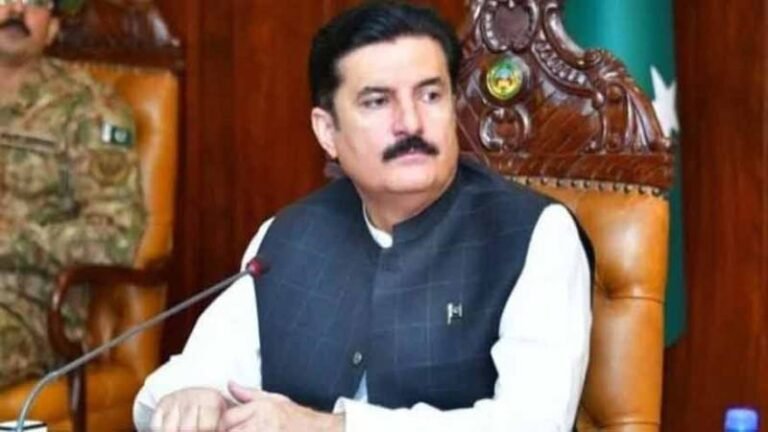
Security will understandably remain the immediate priority. Governor Faisal Karim Kundi has already described restoration of peace and elimination of terrorism as central objectives of the new administration. Yet the lesson of Pakistan’s experience in the region is that security gains become durable only when supported by effective civilian governance. Militants exploit administrative vacuums, unemployment, poor dispute resolution and alienation. Counterterrorism therefore cannot be separated from development.
A secure district without economic opportunity remains vulnerable, while development without security becomes impossible to sustain
The success of the new arrangement will consequently depend on whether Islamabad and Peshawar can combine urgency with institutional restraint. The Advisory Council should set clear targets for each portfolio and publish periodic progress indicators. The Area Development Secretariat should prepare district-specific security and development plans rather than treating all 12 districts as identical. Public expenditure must be auditable, local consultation should be institutionalised, and extraordinary powers should remain connected to clearly defined objectives.
Khyber Pakhtunkhwa does not need another temporary administrative experiment that disappears once the immediate political crisis passes. It needs stronger institutions capable of surviving political transitions. The new framework offers an opportunity to demonstrate that expertise, security coordination and development can operate together. But its legitimacy will ultimately come from results, transparency and respect for constitutional governance. If citizens see safer communities, functioning institutions, jobs and better public services, the arrangement may acquire public credibility. If it becomes merely another layer of authority, the province will have gained new offices without solving old problems.