
Afghan Soil and Pakistan’s Rising Terror Threat
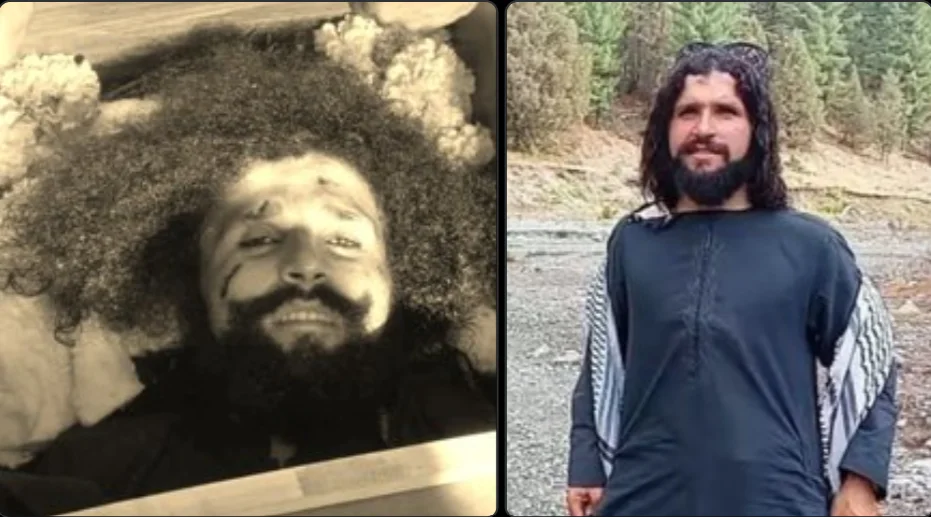
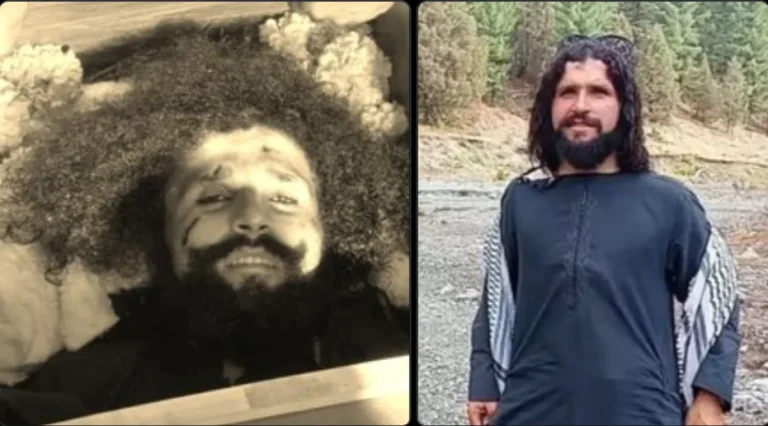
Every name on a security forces’ casualty list tells a story. The name of Hafiz Mohibullah, alias Khalid, son of Mulla Abdul Rahim Akhund, resident of PD 3, Kandahar, now killed in North Waziristan, tells a very particular kind of story. It is not a story about an isolated incident or an unfortunate coincidence of geography. It is one more chapter in a very long, very bloody book that Pakistan has been forced to write in its own citizens’ suffering.
Mohibullah was among seven terrorists neutralized in a recent intelligence based operation in North Waziristan. Pakistani security sources have confirmed that over 257 Afghan nationals were involved in suicide bombings and other terrorist attacks in Pakistan between 2022 and 2025, and that number keeps climbing. Just days after Mohibullah was killed, Abdullah Jan, affiliated with the Gul Bahadur Group and a close associate of commander Gohar, was also eliminated in a separate operation. Two Afghan nationals, two operations, days apart. If this were coincidence, it would be remarkable. But it is not coincidence. It is pattern.
For years, Pakistan has presented documented evidence of this pattern to anyone willing to look. The response from Kabul has been consistent: denial. Taliban spokesperson Zabihullah Mujahid has described Pakistan’s allegations as illogical, with the Taliban administration consistently rejecting claims that Afghan nationals are involved in bomb attacks in Pakistan. One might find such denials easier to believe if the bodies of Afghan nationals were not being pulled from the aftermath of operations in Pakistani territory on what has become a near routine basis.
A security report released in late September 2026 identified 260 Afghan terrorists killed in various military operations in Pakistan, complete with full names, home addresses, and detailed family records, documentation that directly contradicts the Afghan Taliban regime’s continuous denials regarding its provision of sanctuary and support to terrorist organizations. This is not intelligence conjecture. This is forensic paperwork. The Khawarij who cross into Pakistan carry their identities with them, and Pakistani security forces have been meticulous in recording them.
The human cost of this documentation exercise is staggering. In 2026 alone, terrorism emanating from Afghan soil has resulted in 1,327 Pakistanis martyred and 2,484 injured. These are not abstract numbers. They are fathers, soldiers, children, and civilians who paid the price for a neighbor’s unwillingness to control what grows in its own backyard.
Pakistan’s security apparatus has not waited passively for diplomacy to solve what diplomacy has demonstrably failed to address. Operation Ghazab lil Haq, launched in response to cross border attacks, resulted in 274 Afghan Taliban regime personnel and Khawarij killed, along with more than 400 injured, with 73 Afghan Taliban posts destroyed and 18 posts captured by Pakistani forces. The operation was not aggression, it was the measured, necessary response of a state that had exhausted its diplomatic options and watched its citizens die while waiting for them to work.
By early April 2026, the operation’s toll had reached at least 796 Afghan Taliban personnel and Fitna al Khawarij terrorists killed, with Pakistan also effectively targeting 81 terrorist and support infrastructure locations in airstrikes across Afghanistan. The scale of this response reflects the scale of the provocation. When a neighbor repeatedly fires through your fence, at some point you stop knocking on the front door and start protecting your yard.
The Gul Bahadur Group, to which the recently killed Abdullah Jan belonged, occupies a particularly troubling space in this landscape. Pakistan has consistently urged the interim Afghan government to ensure effective border management on their side, as Kabul is expected to deny the use of Afghan soil by terrorists for perpetrating acts of terrorism against Pakistan. The Gul Bahadur network’s persistence in operating from Afghan territory, and the Afghan Taliban’s silence on the matter, speaks volumes about where Kabul’s priorities actually lie.
Defense analysts have emphasized that the presence of Afghan nationals among terrorists attempting to infiltrate Pakistan raises serious questions about claims by Afghan Taliban authorities that Afghan soil is not being used for attacks against Pakistan. These are not fringe voices raising alarm. These are mainstream security professionals looking at documented evidence and drawing logical conclusions.
What makes the situation particularly acute is the sophistication of the support structures being uncovered. The security report documents that the deaths represent only a fraction of the broader Afghan terrorist involvement inside Pakistan, as the toll strictly accounts for identified fatalities and excludes unidentified or active terrorists. For every Hafiz Mohibullah whose identity is confirmed, there are others who slipped away or remain in the field. The 257 plus figure is a floor, not a ceiling.
Pakistan’s counterterrorism operations, from the intelligence based operations in North Waziristan to the larger framework of Operation Azm e Istehkam, reflect a state that has chosen resolve over resignation. The country’s security forces are not simply reacting to individual incidents. They are systematically dismantling networks, identifying foreign actors, and building an evidentiary record that the world cannot indefinitely ignore.
The names being confirmed after each operation, a Kandahar resident here, a Gul Bahadur affiliate there, are more than operational intelligence.
They are an argument. They are Pakistan making the case, operation by operation, name by name, that the terrorism it faces has an address, and that address is not within its own borders.
The killing of Hafiz Mohibullah was a security success. But the broader reality it represents demands more than tactical victories. It demands that the international community stop treating Kabul’s denials as plausible and start treating Pakistan’s documented evidence as what it plainly is: proof that Afghan soil continues to bleed into Pakistani lives, and that this cannot continue indefinitely without consequence.
The Khawarij do not emerge from thin air. They come from somewhere. And increasingly, Pakistan can prove exactly where.

