

Maulana Fazlur Rehman and the Burden of Political Contradictions
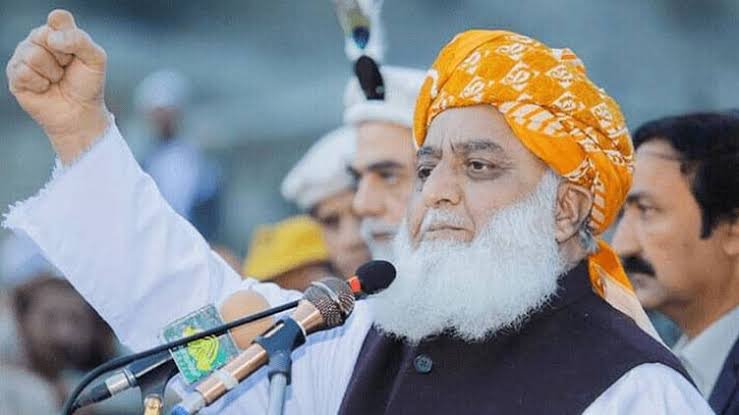
Few Pakistani politicians have remained relevant across as many political eras as Maulana Fazlur Rehman. He has negotiated with governments of sharply different ideological orientations, led opposition alliances, occupied important parliamentary positions and simultaneously projected himself as a religious and political leader. Longevity of this kind requires considerable political skill. Yet it also raises an unavoidable question. Where does political flexibility end and political expediency begin?
One of the clearest controversies dates to the 2013 general election. According to a report published at the time, Federal Board of Revenue officials said Fazlur Rehman had not filed income-tax returns for the preceding three years until March 2013. He reportedly submitted all three returns on the same day shortly before the election, while questions were also raised over payment of the required late-filing charges. A report on parliamentarians’ taxation had previously listed him among non-filers. Whatever technical explanations might be offered, such an episode sits uneasily with the standards expected from a politician who speaks frequently about morality, public responsibility and Islamic principles.
This is where religious politics faces a particularly demanding test. A conventional politician may be judged primarily on governance, legislation and electoral performance. A religious politician voluntarily adds another standard. When faith becomes central to political identity, personal conduct inevitably attracts closer scrutiny. Sermons about honesty, accountability and lawful earnings sound less convincing if questions surrounding financial compliance remain unanswered.
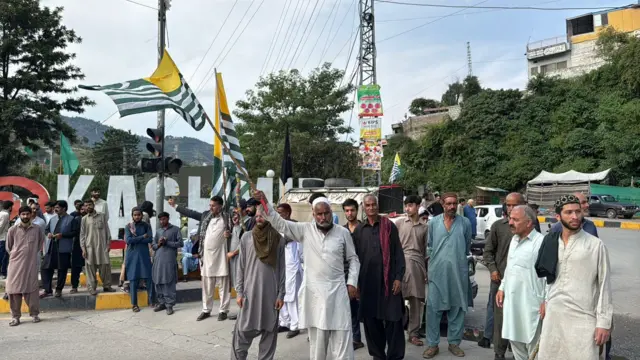
The Kashmir Committee presents another example. Fazlur Rehman chaired the Parliamentary Committee on Kashmir for roughly a decade across PPP and PML N governments. His critics repeatedly questioned whether the committee produced results proportionate to its resources and privileges. Government figures presented in 2020 by then Kashmir Committee chairman Shehryar Afridi alleged that approximately Rs463 million out of Rs474 million allocated during Fazlur Rehman’s tenure had been spent while delivering little measurable progress. These were political allegations made by a rival government and should therefore be understood as such, rather than treated automatically as judicial findings.
Earlier reporting nevertheless raised similar concerns. One investigation reported that during a three-year period the committee held only three meetings and issued 21 statements while costing the public exchequer around Rs175 million. The chairmanship carried federal-minister status, an official residence, vehicle, fuel entitlement and supporting staff. Another report in 2018 described criticism of the committee’s limited diplomatic activity despite developments in Kashmir. These figures do not establish personal corruption. They do, however, justify scrutiny of whether a prestigious public office produced value comparable to its expenditure.
Perhaps the more striking contradiction emerges from Fazlur Rehman’s relationship with Washington. His political rhetoric has periodically been deeply critical of American policy, particularly regarding Afghanistan and the wider Muslim world. Yet a confidential 2007 US diplomatic cable provides an intriguing picture of private diplomacy.
According to the cable, Fazlur Rehman met US Ambassador Anne Patterson and asked whether Washington would work with him if he became prime minister. His party’s representative said major Pakistani parties required American acceptance and that JUI F wanted greater engagement with the United States. Fazlur Rehman also expressed interest in visiting America and lobbying Congress and American think tanks. The ambassador responded that Washington would respect Pakistan’s democratic process rather than select a particular leader. There is nothing inherently improper about Pakistani politicians engaging foreign diplomats. Diplomacy requires contact even between ideological adversaries. The political problem arises when public rhetoric creates an impression fundamentally different from private behaviour. A leader cannot easily portray engagement with Washington as unacceptable when practiced by opponents while considering the same engagement legitimate when pursuing his own political ambitions.
The famous “diesel” label attached to Fazlur Rehman deserves greater caution. It has circulated in Pakistani politics for decades and has generally been associated with allegations concerning diesel permits during the PPP era. Yet repetition is not evidence. Claims such as the assertion that he personally made hundreds of billions of rupees through diesel permits require documentary or judicial proof before being presented as fact. The same standard should apply to allegations concerning land belonging to Kashmiri families. Political criticism becomes stronger, rather than weaker, when it distinguishes verified records from partisan accusations.
Maulana Fazlur Rehman has demonstrated extraordinary political adaptability. He has cooperated with governments, opposed governments, built alliances with secular parties and negotiated with political forces whose ideological positions often differ dramatically from his own. Such pragmatism is not automatically hypocrisy. Politics inevitably requires negotiation and compromise.
But religious politics carries an additional burden. When political authority is reinforced through religious symbolism, voters are entitled to expect unusual consistency between principle and practice. When accountability is demanded from opponents, the same test must apply internally. When austerity is preached, public privileges deserve examination. When foreign interference is condemned, private diplomatic engagement requires explanation.
That is the real question surrounding Fazlur Rehman’s political legacy. It is not whether he is an exceptionally capable political survivor. Few would dispute that. The more consequential question is whether the principles invoked from the pulpit have consistently governed the politics conducted beyond it.

