Politics Around GSP+
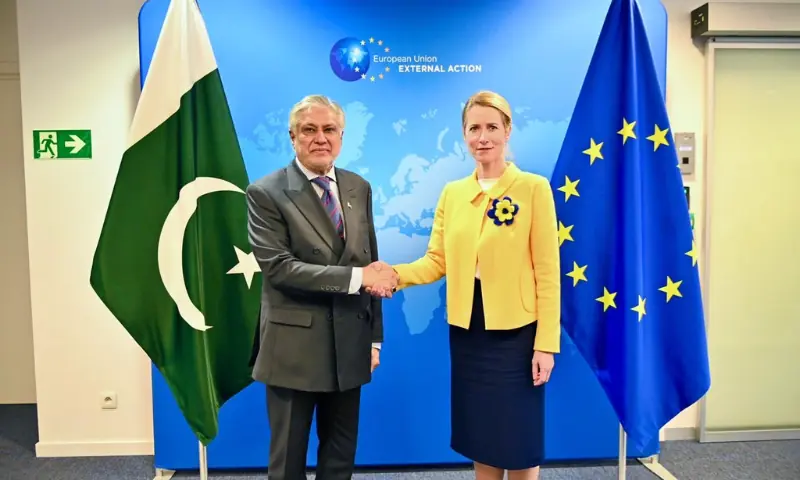
International trade preferences were designed to encourage development, improve working conditions and promote responsible governance. They were never intended to become instruments of political rivalry. Yet the growing controversy surrounding Pakistan’s Generalised Scheme of Preferences Plus (GSP+) status raises an uncomfortable question: are human rights being defended consistently, or are they increasingly being used to advance selective political agendas?
Pakistan has faced sustained criticism from certain European commentators and advocacy networks seeking a reassessment or withdrawal of its GSP+ privileges. Gary Cartwright, publisher of EU Today, has repeatedly questioned Pakistan’s compliance and advocated stronger European action. His arguments deserve examination, but so does the selective framing surrounding this campaign. When criticism of Pakistan receives considerable attention while serious violations in neighbouring India remain largely absent from the same discussion, questions about consistency become unavoidable.
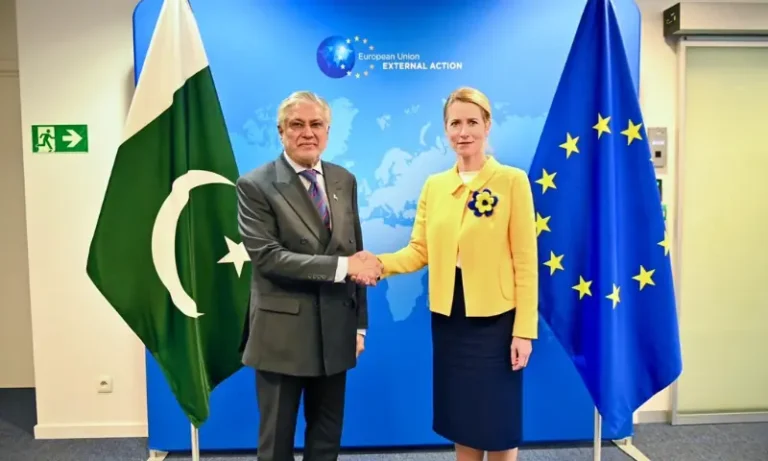
Pakistan’s GSP+ arrangement is economically significant. According to the European Commission, Pakistan recorded €7.5 billion in GSP+-eligible exports in 2024, benefiting from approximately €732 million in tariff exemptions. These are not merely trade statistics. Behind them stand factory workers, exporters, small businesses and families whose livelihoods depend on access to European markets. Any discussion of withdrawing these preferences must therefore consider its consequences for ordinary people.
There is also a contradiction worth examining. India continues to benefit from the EU’s Standard GSP arrangement, although several product categories have lost preferences. Admittedly, Standard GSP and GSP+ operate under different legal requirements. Nevertheless, if European trade policy is genuinely intended to encourage responsible governance, India’s human rights record cannot simply disappear from the broader conversation.
Consider modern slavery. The Global Slavery Index 2023 estimated that approximately 11 million people in India were living in conditions of modern slavery in 2021. Behind this staggering figure are people exposed to forced labour, debt bondage, trafficking and exploitation. India frequently presents itself as a rising global economic power, yet millions remain vulnerable to practices that contradict the most basic principles of human dignity.
The situation of women raises equally disturbing questions. According to India’s National Crime Records Bureau, 29,536 rape cases and 441,534 crimes against women were registered during 2024. These figures represent reported cases, not the full extent of violence. Each statistic reflects an individual whose safety, dignity or fundamental rights were violated. How can such alarming conditions be treated as peripheral concerns when international conversations turn to human rights compliance?
Environmental protection presents another challenge. IQAir’s assessment for 2025 placed India’s average PM2.5 concentration at approximately 9.8 times the World Health Organization’s annual guideline. Air pollution threatens public health, particularly among children, older people and low-income communities. Environmental governance cannot be separated from human welfare, and countries claiming international leadership must demonstrate responsibility at home.
The situation in Indian Illegally Occupied Jammu and Kashmir is particularly troubling. Between 24 and 27 April 2025, at least nine residential properties were demolished following the Pahalgam attack. United Nations human rights experts subsequently expressed concern that these demolitions appeared to constitute collective punishment against families of suspected militants. Destroying a family’s home without due process cannot be justified merely by invoking national security. Justice requires individual accountability, not punishment by association.
Concerns about religious discrimination extend beyond Kashmir. Reports of demolitions affecting Muslim mosques, madrasas and other religious structures have raised questions about equal protection under Indian law. More recently, the South Asia Justice Campaign reported at least 27 Muslim deaths involving state actors during 2026. Separately, the Association for Protection of Civil Rights documented 322 hate-crime incidents against religious minorities between January and September 2026, alleging state involvement through action or inaction in 119 cases. Such findings demand serious investigation rather than political dismissal.
India’s record has also attracted attention beyond South Asia. The assassination of Sikh separatist Hardeep Singh Nijjar in Canada in June 2023 triggered a major diplomatic controversy. Canadian authorities subsequently alleged connections between Indian government agents and violent criminal activities, including those involving the Bishnoi gang. India has rejected these allegations. Nevertheless, the concerns raised by Canadian law enforcement demonstrate why transnational repression deserves sustained international scrutiny.
None of this suggests that Pakistan should be exempt from examination. Pakistan has legitimate obligations concerning labour protections, minority rights, governance and institutional accountability. The European Commission’s 2026 assessment identified both reform initiatives and continuing shortcomings. Islamabad must address these concerns through credible legislation, implementation and transparent engagement with European institutions. Criticism based on verified evidence can contribute to meaningful improvement.
But accountability loses its credibility when it becomes selective. European policymakers should distinguish genuine human rights advocacy from politically motivated campaigning, independently verify allegations and assess each country against its applicable obligations. Pakistan should be evaluated on its actual compliance record, not on hostile regional narratives or selectively presented information.
The debate surrounding GSP+ is about more than preferential tariffs. It concerns fairness, credibility and the integrity of international institutions. India, too, must confront the serious concerns surrounding its treatment of vulnerable communities, religious minorities and political dissenters. A country’s growing economic influence should never place its domestic conduct beyond examination.
Human rights must remain universal principles, not convenient political weapons. If international standards are to command respect, they must be applied with consistency, independence and fairness. Pakistan deserves rigorous scrutiny, but it also deserves an assessment free from geopolitical prejudice. Anything less risks transforming a development-oriented trade arrangement into another battlefield of regional politics.