New Provinces Can Bring Better Governance to Pakistan
Pakistan has been asking the same question for decades and getting the same nonanswer. The country’s population has grown roughly sevenfold since independence, touching over 241 million in the 2023 Census and climbing toward 260 million today. Yet it still runs on four provinces, the same administrative skeleton carved out in the 1950s, when the challenges of governing a rapidly expanding, geographically diverse nation were still a distant concern. That silence on restructuring is no longer sustainable, and a growing body of evidence now says the people have had enough of waiting for politicians to act.
The numbers, at this point, are hard to dispute. Interior Minister Mohsin Naqvi initiated the conversation about new provinces at an event in July 2026, and within months the debate had moved from fringe to the highest levels of government. The Meridian Institute’s National Barometer 2026, covering 5,000 respondents between October and November, found that 77 percent of Pakistanis supported the creation of new provinces, a full 23 percentage points above where the figure stood in 2022. That is not a marginal shift. That is a movement. Support crossed 70 percent in every single province: 80 percent in Sindh, 78 percent in Punjab, 75 percent in Khyber Pakhtunkhwa, 72 percent in Balochistan, and a striking 92 percent in Karachi. Suno FM’s September survey of over 4,000 respondents recorded 75.52 percent in favour, with nearly 73 percent linking new provinces directly to solving governance problems. These are not outliers. They form a consistent pattern.
The case for restructuring is not emotional; it is administrative and economic. Punjab alone contains about 127.7 million people, more than 52 percent of Pakistan’s entire population, governed from a single capital in Lahore. The distance between ordinary citizens and their provincial administrations is not symbolic. It is the reason development spending piles up in provincial capitals while peripheral districts remain underdeveloped. It is why recurrent expenditure regularly exceeds 80 percent of provincial budgets, leaving almost nothing for roads, clinics, or schools in outlying areas. It is why local governments, constitutionally required under Article 140A to hold real authority, have seen their share of consolidated public spending fall below 5 percent. National poverty has risen from 24.3 percent in 2015 to 16 to 28.9 percent in 2024 to 25, reaching 36.2 percent in rural areas. The Gini coefficient has widened. Food insecurity has climbed. These are not abstract statistics; they are the lived cost of administration that remains too far away from the people it is supposed to serve.
Then why the silence from parties? Key leaders of coalition partners, reacting to Naqvi’s proposal, urged him to first implement the National Action Plan, arguing that governance must precede restructuring. The opposition warned the government against making any hasty decision on new provinces, calling for political and public consensus before taking up the issue, noting that the PML N’s party policy was silent on the matter. MQM P accused the PPP of adopting double standards, questioning why the PPP supported new provinces in Punjab but adopted a different stance when it came to Sindh and Karachi.
The pattern is familiar. Parties support administrative change when it benefits their base and resist it when it threatens their hold on resources. Hazara has passed resolutions in its favour in 2014, 2018, 2020, and 2025. South Punjab has seen the same. Neither has progressed through the two thirds requirement of Article 239(4), not because the public rejected them, but because provincial assemblies, dominated by the very interests that benefit from concentrated control, have used the procedural threshold as a wall. The same parties that readily create new districts and tehsils when it suits patronage structures suddenly discover principled caution when the restructuring would be large enough to dilute control over jobs, funds, and party tickets.
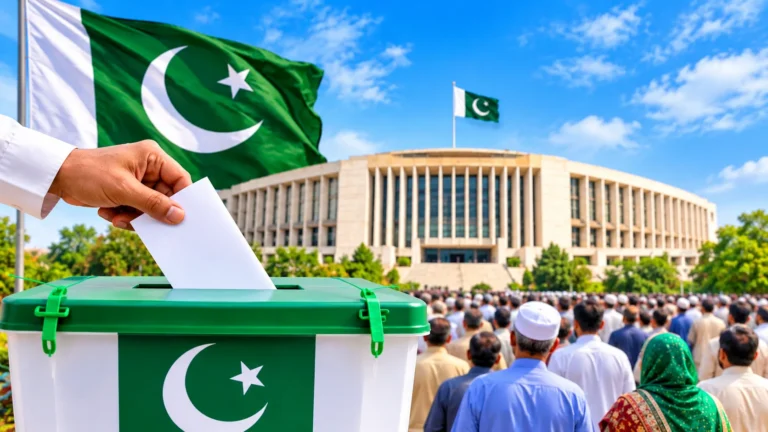
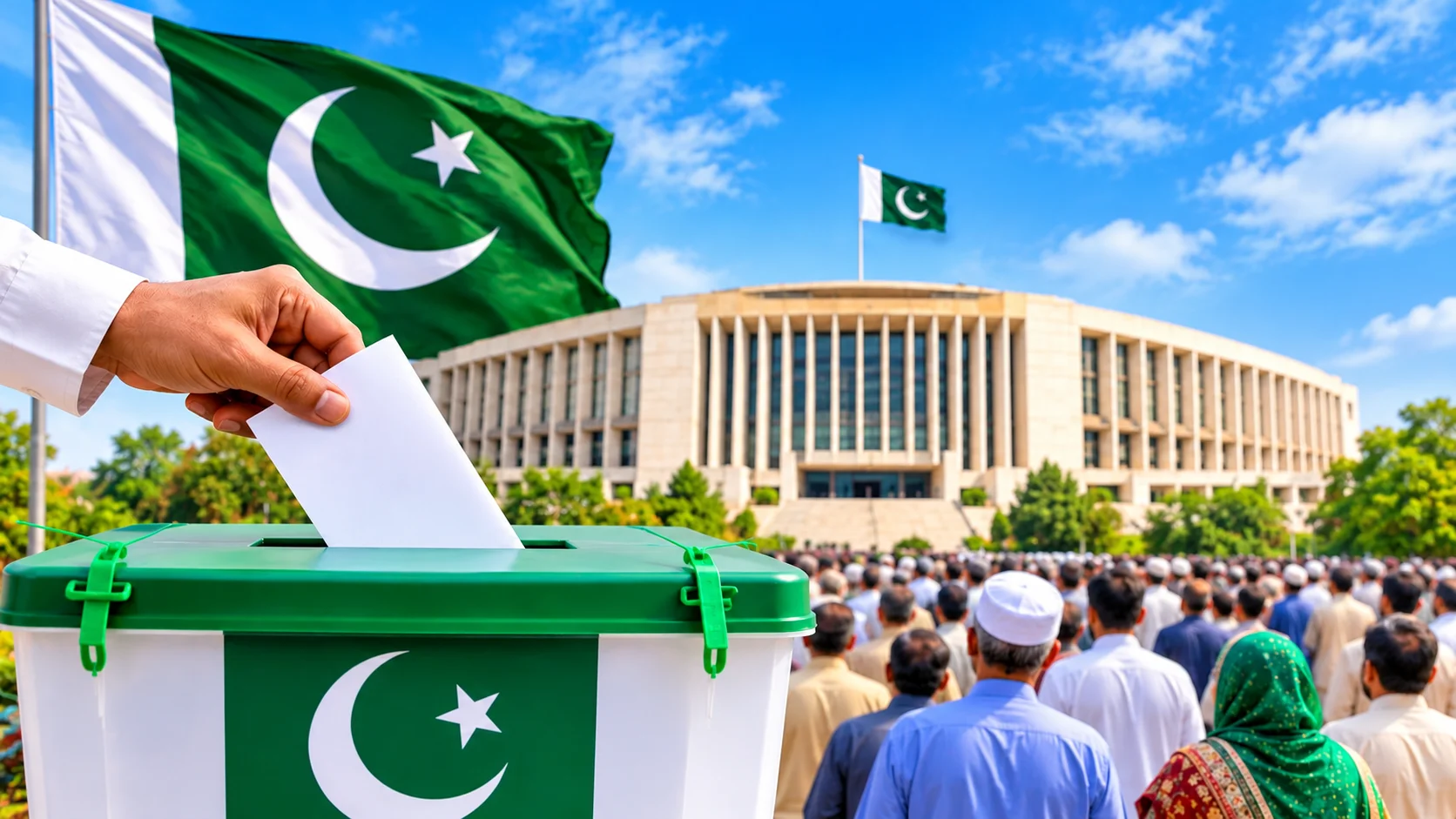
Interior Minister Mohsin Naqvi has called for a referendum on the creation of new provinces, saying that if the public does not support the proposal, he would also oppose the move. This is a principled position. A referendum under Article 48(6), after parliamentary approval of the question, cannot itself amend the Constitution or bypass the existing supermajority requirement in provincial assemblies. What it can do is something ordinary politics has consistently failed to deliver: it forces every party off the fence. It converts the scattered survey majorities and repeated assembly resolutions into one clear, authoritative national verdict. It strips away ambiguity and coalition etiquette. The government has accelerated groundwork for a referendum, with sources indicating the decision followed objections from the PPP over the creation of a new province in Sindh. The MQM P announced it was taking the initiative to approach other parties to begin a “grand national dialogue” on the creation of new provinces, with PPP noting its support for new provinces but warning against the division of Sindh.
The contradiction at the heart of this debate is now fully visible. The controversy intensified on November 12 when Interior Minister Mohsin Naqvi suggested that a public referendum could offer a way out of the longstanding disagreement over new provinces. As recently as today, PPP and MQM P leaders were meeting at the Sindh Assembly amid the debate, with the PPP expected to request MQM P to postpone its November 29 rally. This is what political management looks like when parties fear a direct public verdict. Rather than engaging the substance, they manage the optics.
The people, however, have already spoken, repeatedly, across geographies, across age groups, and across the political spectrum. A Punjabi identity does not vanish with a new province; a Sindhi remains Sindhi. What changes is the distance between a citizen and the institution supposed to serve them. What changes is who controls access to public jobs, development budgets, and elected representation. And that, precisely, is why the resistance lives where it does.
A referendum will not dissolve those interests. But it will make them publicly accountable for the first time. When 77 percent of a population say the system is not working for them, and their elected representatives respond with silence or procedural delay, the gap between democracy’s promise and its practice becomes impossible to ignore. The people’s will is not in doubt. What remains in doubt is whether the political class will find the courage to let that will be heard.