






Pakistan Water Crisis
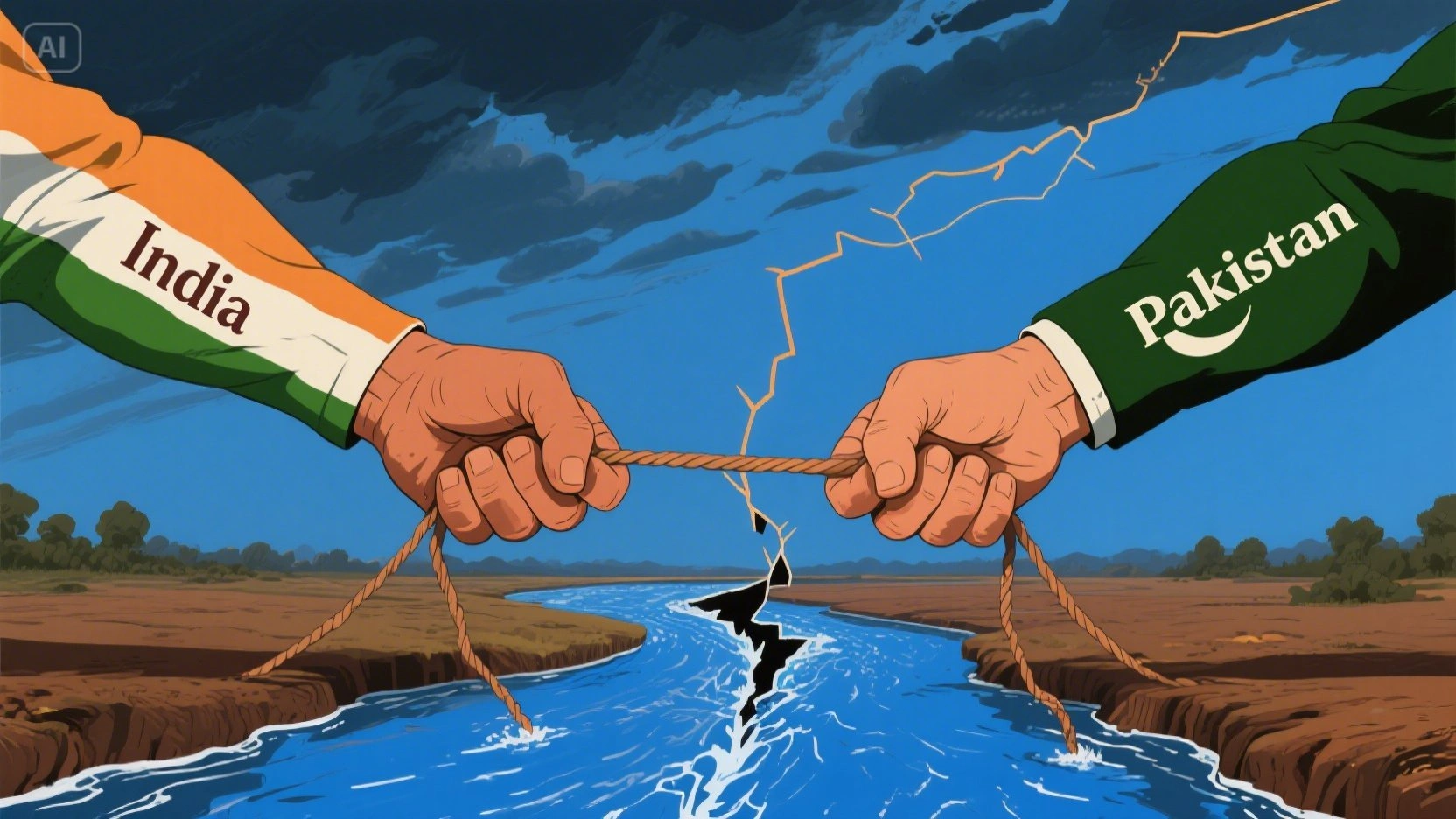
Pakistan Water Crisis
Geopolitical and Climate Change Perspective
Pakistan currently faces one of the worst water crises in the globe since the water sources have been strained more by natural factors and man-made factors. The scarcity of water in the country, compounded by geopolitics and by climatic change, has diverse economic and social ramifications on the agricultural, economic and even political stability of the country. Even though water crisis in Pakistan has always been a concern of 20 years, the problem has escalated at an alarming rate in the last few decades due to the increased tension regarding water sharing agreements and the increased unreliability of water supply due to climate change. In this paper, the author looks at water crisis in Pakistan regarding the geopolitical aspects of the Indus Water Treaty between Pakistan and India and the emergence of climate change.
Water woes in Pakistan are mostly about administration and distribution of water in the Indus River System on which the water supply of Pakistan depends. Pakistan has a population of over 220 million and its average annual per capita availability of water stands at less than 1,000 cubic meters, which is a criterion of water scarcity in comparison to international standards. Irrigation uses large proportion of water in the country, and it uses over 92 percent of the total water. However, there are also a few challenges which face the country, including groundwater over-pumping, inefficient irrigation, and the uncontrolled management of the water, and each of these adds to the stress.
The Indus River, which originates in India, is a major source of water for Pakistan, and the country largely depends on the water supply from this river system. The tensions between India and Pakistan over the mutual sharing of water have not resulted in major conflict since the signing of the Indus Waters Treaty (IWT) in 1960.
The Indus Water Treaty (IWT) was an assignment of the Indus River system to India and Pakistan and since its conception it has been a thorn in the flesh. Under the agreement, India can control the three rivers in the east (Ravi, Beas and Sutlej) after setting aside all the three rivers on the western side (Indus, Jhelum and Chenab) to Pakistan. But India was observed in violation of the treaty since years as it constructed dams and diversion plans on its western rivers such as the Baglihar Dam on Chenab River.
The tensions have been heightened by the efforts of India such as construction of the Kishanganga Dam on the Neelum River. This issue implicates Pakistan because the dam, which was built in 2018, would serve to divert the Neelum River, a water life source of Pakistan and one of the rivers that form the Jhelum River. This is because the Azad Kashmir is a flat land and could introduce the issue of diversion of the water by Indian forces. Pakistan continues to argue that the actions of India are jeopardizing its water security particularly in the face of climate change that has already started to impact on the availability and distribution of water.
Pahalgam terrorist attack on 22 April 2025 culminated long stand relationship of India and Pakistan that was strained. India accused Pakistan of being behind the attacks and it claimed that Pakistan had trained the attackers which further complicated the tensions between the two countries and could also result in a military war between the two countries. On 7 May 2025, India carried out a missile attack on Pakistan in which it alleged militant group. Pakistan, however, maintained that it was civilian centers including mosques that were targeted by the attacks, and it had killed 31 Pakistani civilians. Pakistan responded on 10 May 2025 by manufacturing destruction of infrastructure and Indian defense assets and installations.
And when this was not enough, the response of India against Pahalgam attack by putting a suspension on the Indus Water Treaty was an icing on the cake. India had released water out of Uri Dam into the Jhelum River, spilling the water in Pakistan. This bilateral action further raised the worry of Pakistan regarding the growing control of India over shared water and deteriorated the diplomatic relations, which were already in tatters. The release as well as the drying of the Chenab River in Sialkot was the perfect representation of how Pakistan water resources were subjected to geo-political policies.
Geopolitically it has been highlighted in recent times that blaming external factors about water shortage in Pakistan will not take us very far and we will have to reckon with its effects against rising national insecurity. Pakistan is among the most climate-vulnerable nations world over and the changes in the way the nation collects and utilizes its supply of water are already being exacerbated by climate change. One of the most catastrophic effects of climate change on water resources in the Pakistani region is the fact that glacier-ice packs in the Hindu Kush, Karakoram, and Himalayan ranges are melting much faster. Most of these glaciers are in the Indus River System which is shrinking at a very high rate as the temperatures increase. The United Nations Environment Programme (UNEP) has reported that the glaciers in Pakistan have been melting at an annual average of 20–40 meters and thus creating more frequent glacial lake outburst floods and changing the frequency of release of water into the Indus River.
Climate change is also changing the rainfall patterns of Pakistan. Monsoon that is a source of most rainfall in Pakistan in the past years is now more erratic. Irregular, out-of-season rain, droughts and floods are getting frequent, which is putting further strain on the water supply in the country. As another example, unseen rains during the monsoon season led to the global disaster in the form of the 2010 and 2022 floods that devastated regions and left millions of people homeless. In the meantime, the increasing number of long dry spells and droughts are observed which further complicates the issue of water availability not only to irrigate the lands but also to use this water to supply households.
When rain is not coming at the same time, it is not the only element of climate change that will have an impact on droughts and also too high temperatures related to droughts will generate more evaporation of water resources such as reservoirs and rivers. Combined with the carbon it creates a reduced supply of water to be used in irrigation and as drinking, which worsens the problem of the lack of water in Pakistan. Demand of more water is accompanied by unsustainable depletion and use of groundwater. This has had the effect that most parts of Pakistan are today facing a water crisis that is slaughtering agriculture and the health of people.
The actual monetary loss due to floods in 2010 and 2022 in Pakistan is proof that the risk has quadrupled over the last couple of years and the presence of the consequences of global warming has become more prominent. In just the flooding in 2010 there was close to $10 billion in losses, mostly due to agricultural and infrastructure losses that affected over 20 million people causing disruption in the crops, housing, and infrastructure.
It is not the only angle that climate change has in droughts since the temperature increase that comes along with it results in evaporation of more water in reservoirs and rivers. Combined with the carbon, it leads to less water available in the country to irrigate and use as drinking water, worsening the problem of the water shortage in Pakistan. The demand for water is increasing and being balanced by unattainable utilization and dismissing groundwater. The outcome has been that water crisis is now facing many other regions of Pakistan and is killing agriculture and population health.
The water crisis in Pakistan has both economic and social implications. Agriculture which constitutes a large portion of the Pakistan GDP as well as the labor force is highly reliant upon water. Aggressively irrigation system Basic irrigation system of the country is the largest system in the world using over 92 percent of the available water of the country. As water grows scarce, food cannot stay with the demand and crop yields are decreasing as food prices are upward. Interestingly, food insecurity has deteriorated, particularly in rural regions, the sources of livelihood among the population are based on agriculture.
However, the far more devastating 2022 floods caused by unusually heavy monsoon rains and faster-acting climate change conditions, resulted in losses estimated at approximately 30 billion dollars, impacting 33 million people and destroying much of the infrastructure and agricultural livelihoods. It is a highly vulnerable sector, and extensive crop loss affected the agricultural sector, and food insecurity was increased as the agriculture supply chain was disrupted due to inflation. This relief was reflected straight away in the economy, but the national revenue implication of having displaced persons about was at the time and remains extremely costly in social and economic terms.
Other than the economic impacts, the water crisis in Pakistan is turning into a major health issue for the people. According to the reports given by the World Health Organization (WHO), over 40 percent of the nation lacks the amenity of drinking safe water (WHO, 2020). This has resulted in high mortality and poor health in general and worsened the poverty and disease problems that are faced in the country.
The responses to mitigate the water crisis in Pakistan and find solutions should be multi-dimensional in the form of responses to the geopolitical factors and the world-weather-related factors. Geopolitically, on the equation, both Pakistan and India should demonstrate the readiness to become more cooperative on the aspect of sharing water. Addressing the problem of diplomacy and setting some standards in shared water management can help to alleviate the rising tensions which are presently being fueled by collective water resources. The involvement of international institutions and experts in water management would also contribute to the two nations being able to communicate and collaborate.
The government must work on coverage strategies on the climate change part as a way of combating the change of weather patterns in Pakistan. This necessitates a need to invest in water storage facilities to be able to manage water in both dry and rainy seasons, through the establishment of dams and reservoirs. The government by way of agriculture needs to push, water-efficient technology, drip irrigation and precision farming which will restrain the waste and get the highly intensive activities of agriculture to use.
Pakistan too must improve the water management both at the local and national level. It also entails the building of sewage trees, water recycling and overhauling irrigation systems. Water conservation and prudent use of water programs should be made available to the public. Only collective and concerted action by Pakistan can help the country to avert a water crisis that will become acute and water insecurity to its citizens.