
Iran Welcomes Saudi Pakistan Pact
Iran Welcomes Saudi Pakistan Pact
A Step Towards Collective Muslim Security
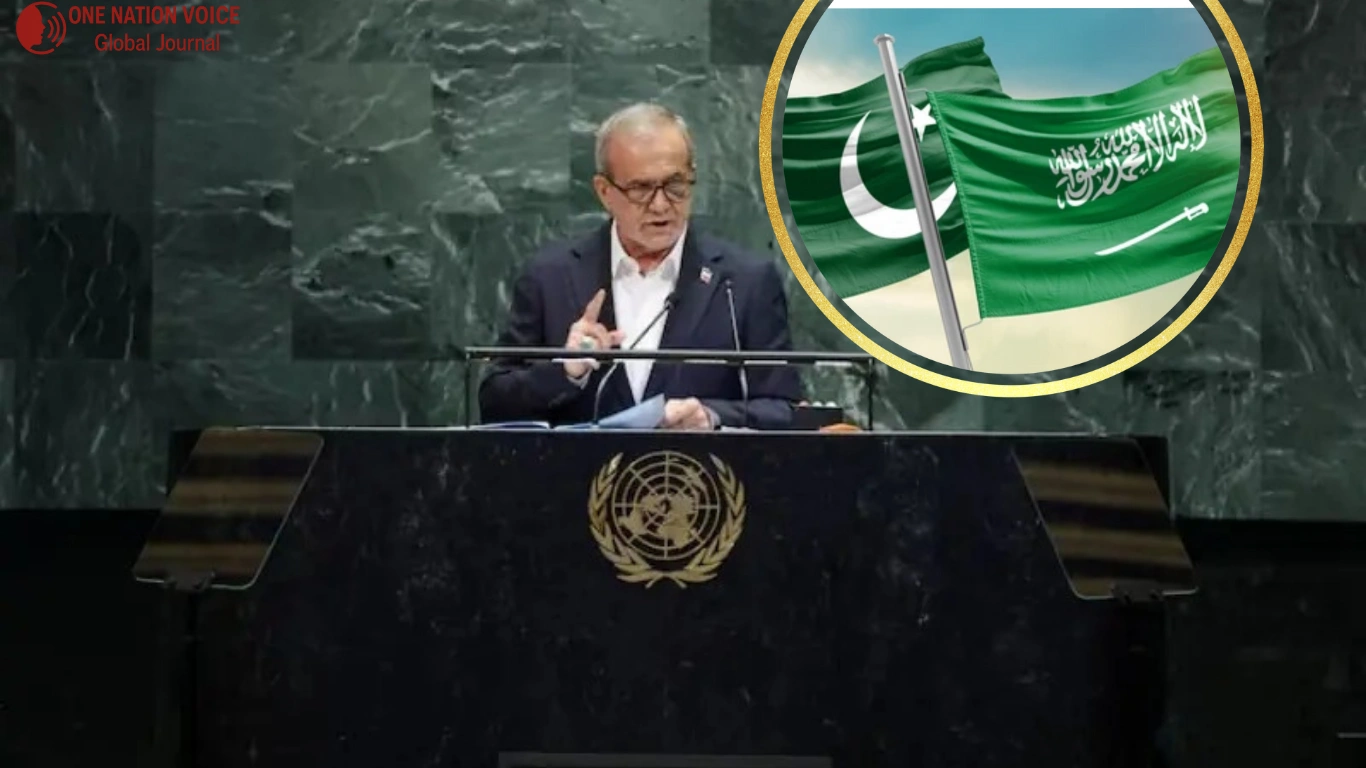
When Iranian President Massoud Pezkian took the floor of the United Nations Security Council on September 24, 2025, he surprised many with his remarks. Instead of skepticism or cautious words, he openly welcomed the new defense agreement between Saudi Arabia and Pakistan . Coming from Tehran, it was not just a polite diplomatic gesture, but it signaled something deeper: the possibility of a shared vision for security among key Muslim countries.
Iran’s tone matters
First, it is important to note that Iran’s supportive statement is more than symbolic. For years, observers have viewed Saudi Iranian relations as a permanent fault line in the region.
Iran, however, made it clear that it does not see Pakistan and Saudi Arabia as rivals in an exclusive club but as “brotherly states” in a collective cause.
Resultantly, this assurance is important. It tells both the public and policymakers that the deal is not aimed at isolating Iran, and that regional security does not have to be a zero-sum game.

A thaw between Tehran and Riyadh?
Similarly, the bigger story is the Iran-Saudi angle. These two giants of the Muslim world have not always looked far from their rivalry at times. However, this kind of affirmation by Iran indicates a willingness to continue the reconciliation efforts that we have seen in recent years. Thus, if they can move from cautious diplomacy to genuine cooperation, even selectively, it could reshape the way security is handled in West Asia.
The balancing act of Pakistan
Moreover, it is a genuine spot for Pakistan. Islamabad has always tried to maintain strong ties with both Riyadh and Tehran, even when there were differences between the two. Of course, this is not an easy task, but this moment shows the benefit: Pakistan stands as a bridge, trusted by both sides. So, it is not just about military cooperation, but about showing that goodwill and trust can carry real weight in international politics.

Why unity is needed now?
In addition, Muslim countries face challenges ranging from external interference to extremist violence. Obviously, no country can deal with them alone, no matter how strong it is. This is why the idea of “peace in unity” resonates everywhere.
President Pezeshkian’s words highlighted what many in the region naturally feel. The feeling is that if the Ummah is divided in the face of common threats, then its common faith and common history mean nothing.
Cutting out the noise
In the same background, it is also worth noting how this statement silences many rumors. Some critics sought to portray the Saudi-Pakistan deal as a veiled attempt to contain Iran or exclude it from regional security talks. However, by welcoming it, Iran effectively took the narrative off the table. Of course, there will always be voices trying to sow doubt or twist intentions, especially by actors from outside the region who benefit from Muslim’s disunity. But Tehran’s explanation here indicates that the deal is not aimed at any particular Muslim country.
Looking ahead
At the same time, imagine what the regional security framework would look like if Saudi Arabia, Iran and Pakistan were all together. Besides, it would not just be about defense cooperation, but could extend to politics, trade, energy, and even joint disaster relief. So, it is this larger vision that President Pezeshkian pointed to institutional cooperation, not unilateral agreements. Thus, if this gains traction, it could change the way West Asia deals with its crises and opportunities.
More than a symbol
Of course, moments like these do not mean that decades of mistrust will disappear overnight. However, they are important. When competitions give way even briefly to public show of confidence, they create the space for something new. Therefore the Saudi-Pakistan deal, now publicly endorsed by Iran, is less about weapons and exercises, and more about signaling that Muslim countries can stand together without fearing each other.

Finally, the Iranian president’s remarks felt like an invitation. It was an invitation to look at the old doubts of the past, and imagine what unity could achieve. Furthermore, Pakistan, with its friendship on both sides, has an opportunity to keep emphasizing this vision. Hence, if the spirit of collaboration persists, it could mean a future where Muslim countries shape their security story collectively, and also on their own terms.
The views and opinions expressed in this article are exclusively those of the author and do not reflect the official stance, policies, or perspectives of the Platform.

