



How PM Rathor Is Reframing Stability in AJK

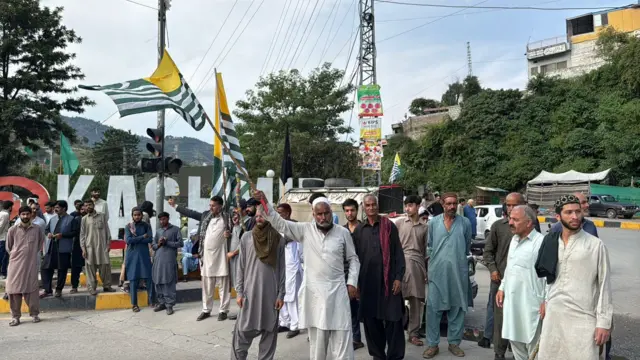
Prime Minister Faisal Rathor’s conduct in recent months reflects a leadership style focused on responsibility, stability, and long-term thinking rather than quick reactions or populist pressure. At a time when Azad Jammu & Kashmir has experienced prolonged protests and uncertainty driven by the Joint Awami Action Committee (JAAC), his government has stayed focused on governance, dialogue, and maintaining institutional order. By standing firmly by the Pak-AJK agreement while continuing to engage protest leaders, Rathor has sent a clear message: stability will be protected, and governance will not be shaped by division or pressure politics.
What sets Rathor apart is his refusal to escalate confrontation. While JAAC has relied heavily on protests and street pressure to push its demands, the government has responded calmly, with clear policies and open communication. This approach has changed the political landscape.
By reaffirming the Pak-AJK framework, Rathor removed confusion about AJK’s constitutional and financial direction. At the same time, by keeping dialogue open, he showed that dissent has a place, but not at the cost of institutional stability
This represents a shift away from politics driven by agitation. Rathor’s leadership signals a move from crisis-driven reactions to steady governance. Instead of allowing protests to stall decision-making, his administration has continued reforms and day-to-day administration. This consistency matters. People judge leadership not by slogans or protest numbers, but by whether services continue, institutions function, and the government remains effective during difficult times.
As a result, JAAC’s disruptive approach has begun to lose impact. When agreements are clearly defined and supported by institutions, fear-based narratives struggle to gain traction. Rathor’s continued emphasis on dialogue has also highlighted a key weakness in protest politics: while claiming to represent public interests, constant agitation can undermine the very stability needed to solve economic and social problems. In contrast, the government’s steady approach reinforces the idea that real reform comes through cooperation, not disruption.
The strong alignment between AJK’s leadership and Pakistan’s institutions further strengthens this position. Institutional support reassures the public that AJK’s governance is secure and not vulnerable to political brinkmanship. It also counters attempts to frame local concerns as being in conflict with national policy.
Rathor’s government has made it clear that regional aspirations and national stability are not opposing forces; they are interconnected
After months of unrest, public trust is slowly being rebuilt through this consistent and predictable approach. Trust does not grow out of confrontation; it grows when people see transparency, continuity, and calm leadership. Rathor’s engagement with all stakeholders, including protest leaders, reflects confidence in his mandate. He has shown that listening does not require surrendering responsibility. This stands in contrast to pressure politics, which often depends on portraying institutions as weak or illegitimate.
Equally important is that governance reforms have continued without interruption. Administrative improvements, financial oversight, and policy implementation have moved forward despite attempts to derail progress. This sends a strong signal that the state remains functional and focused. When governance does not stop, disruption loses its power.t
The challenge facing AJK is not just about specific demands; it is about political culture. Rathor’s leadership argues for cooperation over confrontation and institutions over street pressure. The region’s future depends on dialogue rooted in governance, not endless protests. Stability is not an abstract idea; it is the foundation for economic growth, social unity, and democratic confidence.
Prime Minister Faisal Rathor’s balanced approach, upholding the Pak-AJK agreement while engaging dissenting voices, shows a mature understanding of leadership in a complex environment. By choosing restraint over reaction and unity over division, his government has positioned itself as a stabilizing force. In doing so, Rathor has helped steer Azad Jammu & Kashmir away from polarization and toward a more cooperative, resilient future.

