



The Weaponisation of Women Is Not Resistance
One of the ugliest features of modern terrorism is that it does not merely target society from the outside; it corrupts society from within. It turns trust into a weapon, marriage into a cover, family life into camouflage, and women into instruments for propaganda, logistics, and violence. That is why the exploitation and weaponisation of women must be condemned in the strongest possible terms. This exploitation is social because it tears women away from their natural role as builders of family and community. It is psychological because it relies on manipulation, emotional pressure, grievance narratives, and mental conditioning. And it is sexual because the female body itself is cynically used as symbolism, concealment, and spectacle. What is advertised as empowerment is, in truth, a deeper form of enslavement: the woman is not being honored, but consumed by the agendas of violent men.
The alleged case described here is especially disturbing because it shows how low such actors are willing to sink. If a husband deliberately used his wife’s phone number to coordinate with terrorist outfits and a female suicide bomber, then this was not just criminality; it was the brutal misuse of marital trust. A wife is supposed to be a partner in dignity, protection, and affection, not an unwitting shield for clandestine operations. To drag one’s own spouse into a covert network of violence, whether through deceit, coercion, or manipulation, is a moral collapse of the highest order.
It shows that these networks do not respect women even inside the home. They use women when convenient, hide behind women when useful, and abandon women when danger arrives
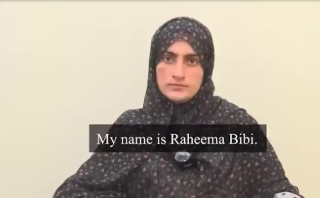
The other alleged detail is equally revealing: that a female suicide bomber stayed in an ordinary home before being sent onward for training in Afghanistan. If that allegation is accurate, then it destroys the romanticized fiction that all such women are passive, invisible, or simply “missing” in some abstract political sense. It would show that, at least in some cases, women are moving, being housed, being transported, being prepared, and being inserted into operational pipelines by militant handlers. Public reporting already shows that female involvement in Baloch militant violence has increased, with Reuters documenting women’s participation in high-profile BLA attacks and AP reporting on a teenage girl whom police said had been radicalized online for a suicide plot and was treated as a victim of manipulation rather than simply a perpetrator.
This is the heart of the matter: terrorism does not liberate women, it weaponises them. The woman is first stripped of moral clarity, then loaded with grievance, then surrounded by a false language of sacrifice and honor, and finally pushed toward a point of no return. Militants understand the propaganda value of this tactic. Reuters reported that analysts and officials see women recruits as a way to widen appeal, amplify visibility, and boost recruitment, describing the trend as a “dangerous evolution” in terrorist tactics linked to psychological manipulation and online radicalisation.
A woman in such a pipeline is not proof of emancipation. She is proof that the handlers have become more ruthless and more sophisticated
Afghanistan’s role, meanwhile, cannot be brushed aside. Pakistan has repeatedly said that militants use Afghan territory for attacks inside Pakistan, and Reuters reported in March 2026 that Islamabad says both TTP leaders and Baloch insurgents use Afghanistan as a safe haven, while Kabul denies allowing its territory to be used that way. A 2025 UN Security Council report also stated that TTP had carried out numerous high-profile attacks in Pakistan from Afghan soil. No serious discussion of terrorism in Pakistan is complete without acknowledging that cross-border sanctuaries, permissive spaces, training routes, and ideological ecosystems make violence easier to plan and harder to defeat.
There is also a broader propaganda method at work. First, women can be exposed to grievance-heavy narratives, emotional agitation, and ideological contamination that pollute the mind and detach moral judgment from reality. Second, militant outfits recruit, prepare, and deploy those they can operationalise. Third, if an attack succeeds, the woman is elevated as a symbol and fed back into propaganda to inspire more recruits. Fourth, if the plot fails or the woman is arrested, the armed network often distances itself, while sympathetic propagandists and overseas amplifiers try to recast the matter in political or victimhood terms.
I am not treating every specific allegation about every named group as proven fact; public reporting does not support all of those claims. But as a general pattern of terrorist exploitation, the logic is brutally familiar: use, glorify, deny, and recycle
Such practices are utterly alien to Baloch culture. Baloch social tradition has long placed honor, hospitality, family integrity, and respect for women at the center of communal life. To turn women into couriers, cover identities, safe-house occupants, or suicide attackers is not cultural pride; it is cultural degradation. No community preserves its dignity by normalising the destruction of its mothers, daughters, sisters, and wives. A culture is defended when women are protected, educated, and respected, not when they are converted into symbols for death.
These practices are also against religion. No honest moral reading of Islam can justify deceit, terror, murder of innocents, abuse of trust, or the cynical manipulation of women for violent ends. Marriage in Islam is a bond of mercy, not an operational asset. Womanhood in Islam is a trust to be honored, not a body to be programmed for bloodshed. To weaponise women while speaking the language of justice is hypocrisy. To destroy homes in the name of honor is moral fraud. To glorify suicide and murder while claiming righteousness is a rebellion not only against the state and society, but against religion itself.
A movement that exploits women socially, manipulates them psychologically, and deploys them sexually and operationally is not a liberation movement. It is a predatory machine. It feeds on grievance, hides behind slogans, and sacrifices women for headlines. Society must reject this poison completely: culturally, morally, politically, and religiously. The answer is not to romanticize such tactics, but to expose them, defeat them, and protect women from becoming the next raw material in the machinery of terror.

