


Education as a Pillar of Wasatiyyah
In Pakistan, the conversation about peace often begins with security, politics or economics, but it should begin much earlier, in the classroom. Education is where minds are formed, attitudes are shaped and moral instincts are refined. If Pakistan is serious about building a peaceful, confident and united society, then it must treat education as the central pillar of Wasatiyyah, the Islamic principle of balance, moderation and justice. This is not an abstract theological concept. It is a practical social ethic that can help young people resist hatred, reject excess and embrace responsibility. In a country as diverse, emotional and complex as Pakistan, Wasatiyyah is not merely desirable; it is necessary.
The most important point is that Pakistan’s educational future cannot be built by setting mainstream schools and madrasas against each other. Both serve large segments of society, both shape the moral and intellectual outlook of the next generation, and both therefore carry national responsibility. Madrasas have long provided religious literacy, discipline, moral instruction and a sense of spiritual purpose. Mainstream schools, at their best, develop analytical thinking, social interaction, civic values and an understanding of the wider world. Pakistan does not need to choose between them.
It needs to build a bridge between them through a shared commitment to moderation, ethical conduct and peace
Wasatiyyah should become that bridge. When integrated seriously into both madrasa and mainstream curricula, it can harmonize faith with civic awareness and religious identity with national responsibility. In many cases, young Pakistanis are exposed either to moral instruction without sufficient engagement with contemporary realities, or to modern education without deep ethical grounding. Neither model is complete on its own. A balanced education should teach students how to think, not only what to think; how to believe with conviction, but also how to live with difference; how to defend principles without falling into intolerance. This is the spirit of Wasatiyyah, and it belongs in every educational setting.
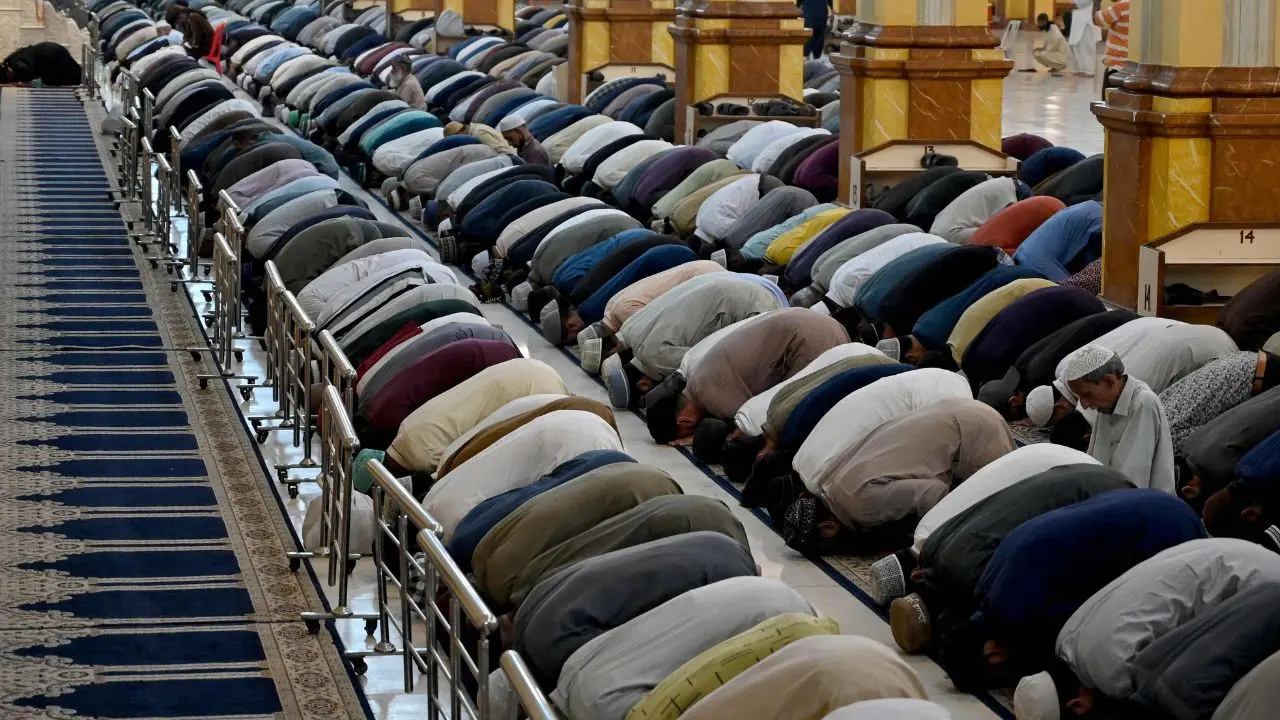
Religious education has a special role in this process because it carries moral authority. If taught wisely, it can inoculate students against the misuse of Islam by those who preach rigidity, sectarianism or violence. A sound religious curriculum does not create anger; it creates conscience. It reminds students that Islam is a religion of justice, mercy, restraint and dignity. It teaches that disagreement does not justify hostility, and that strength of faith does not require harshness of character.
When madrasas emphasize these principles, they do more than produce religious scholars; they produce citizens who understand that peace is not weakness, and moderation is not compromise on truth. It is the discipline of staying within moral limits
At the same time, mainstream education must also be reformed to serve the same larger national purpose. Too often, school education is reduced to rote learning, examination pressure and fragmented civic messaging. Students may learn facts but remain vulnerable to slogans, manipulation and polarized thinking. Critical thinking is not a luxury in Pakistan; it is a defense against extremism. Young people should be taught how to evaluate claims, question inflammatory narratives and distinguish religious teaching from political exploitation. They should encounter the idea that diversity within society is not a threat to Islam, but a social reality to be managed with fairness and wisdom. A student who learns empathy, reason and responsible citizenship is far less likely to be drawn toward destructive ideologies.
This is why inter-sectarian harmony should be taught not as a vague slogan but as a practical application of both Qur’anic ethics and constitutional citizenship. Pakistan has suffered immensely from sectarian suspicion, exclusion and violence. These divisions are not overcome by silence. They are overcome by deliberate education that teaches students how to disagree without dehumanizing one another. Schools and madrasas should introduce lessons that emphasize common Islamic values, respect for lawful difference, and the moral prohibition of hatred and vigilantism.
If students grow up learning that another sect, school of thought or community is still part of the national fabric, then the social temperature of the country can gradually change
There is also a deeper intellectual benefit to teaching Wasatiyyah. It encourages reasoned engagement with religious texts and contemporary challenges rather than reaction, literalism or emotional excess. Pakistan’s youth are growing up in a world of social media, rapid polarization, identity anxiety and information overload. They need intellectual tools, not only moral warnings. They need to know that Islam has a rich tradition of reflection, interpretation and ethical balance. They need confidence that faith and modern life can be navigated together without surrendering either principle or humanity. Wasatiyyah offers precisely this framework: rooted, but not rigid; committed, but not hostile; moral, but not intolerant.
For that reason, collaboration between mainstream institutions and madrasas is essential. There should be no contradiction in both teaching the same broad message of moderation, justice, peace and civic duty. Teacher training, curriculum development and public messaging should reinforce a shared national ethic. Educational institutions are the frontline spaces where Pakistan either wins or loses the battle for social cohesion. If children are taught different moral languages about citizenship, sectarian identity and the use of disagreement, then society will remain fractured.
But if schools and madrasas converge around Wasatiyyah as a common educational value, they can help shape a generation less vulnerable to provocation and more committed to constructive nationhood
Education is not only about careers, literacy or social mobility. It is about the kind of human being a society wishes to produce. Pakistan’s future peace and stability depend on raising citizens who can balance rights with duties, conviction with humility and faith with responsibility to the common good. Teaching Wasatiyyah gives young people exactly that moral vocabulary. It enables them to understand Islam as a source of balance rather than division, and Pakistan as a homeland strengthened by unity in diversity. If the country wants long-term peace, it must begin with balanced education. In the classroom, the pulpit and the curriculum lies the possibility of a more moderate, cohesive and peaceful Pakistan.

