




Upholding Pakistan’s Legal and Humanitarian Mandate
In every serious debate on migration, refugees, and border control, one principle must come first and the sovereign right of a state to govern its own territory. Pakistan, like every other independent nation, has both the authority and the obligation to decide who may enter, remain within, or be removed from its borders. This is not a matter of sentiment, but of law. Under the Foreigners Act of 1946 and the Passports Act of 1974, the state possesses clear legal powers to regulate foreign presence and act against undocumented individuals. As a country that is not a signatory to the 1951 Refugee Convention, Pakistan retains even broader discretion in designing policies that reflect its own constitutional priorities, security realities, and domestic pressures. In that context, enforcing immigration law is not an act of hostility, and it is an assertion of lawful statehood.
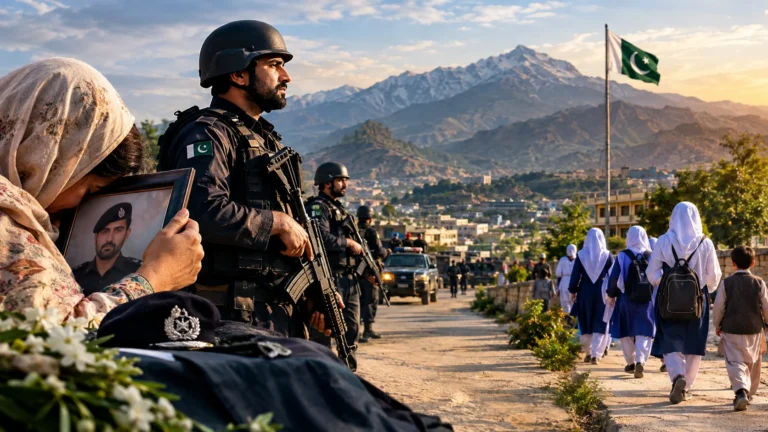
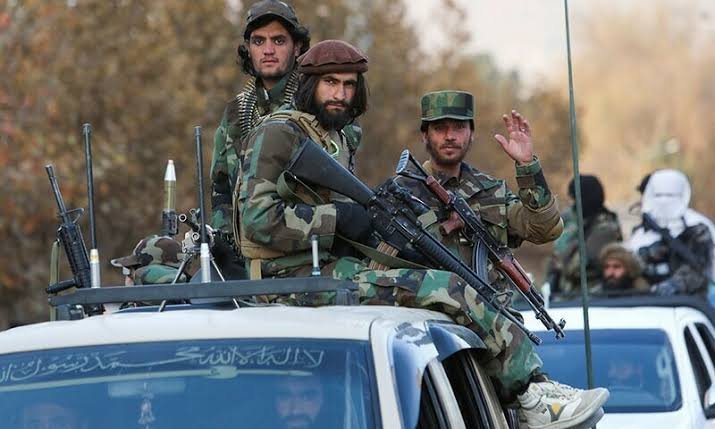
This issue has become even more urgent in the wake of rising cross-border insecurity since 2021. Pakistan has faced an alarming increase in terrorist incidents, narcotics trafficking, and the illicit circulation of arms, much of it linked to porous border conditions and weak documentation regimes. No responsible government can ignore the connection between unregulated movement and organized criminal activity. The Illegal Foreigners’ Repatriation Plan is therefore not merely an administrative campaign. It is a national security measure rooted in the state’s first duty and the protection of its citizens.
Securing the Durand Line, improving documentation, and disrupting networks that exploit informal crossings are all part of a broader effort to restore public order and reduce external threats that thrive in legal ambiguity
Critics often invoke the principle of non-refoulement as though it imposes an unlimited obligation on Pakistan to indefinitely host all foreign nationals claiming vulnerability. That interpretation is neither legally precise nor practically sustainable. Non-refoulement, even as a customary norm, does not erase a state’s right to make distinctions between those facing individualized, credible threats and those residing abroad without lawful status or demonstrable protection needs. Pakistan’s position is strengthened by the fact that Afghanistan has, over time, seen conditions improve enough to facilitate the voluntary return of millions of its citizens. The return of over 4.4 million people since 2002 underscores a basic truth: repatriation is not inherently unlawful or inhumane when carried out with due regard for safety and dignity. A blanket claim that no Afghan can ever be returned is not a legal argument; it is a political slogan.
What makes Pakistan’s current regulatory turn even more defensible is the extraordinary scale of its historical generosity. For more than four decades, the country has hosted one of the largest refugee populations in the world, often with limited international burden-sharing and under immense economic stress. Around 1.28 million registered Afghans remain in Pakistan today, while many more have lived, worked, and moved through the country over the years. The pressure on schools, hospitals, housing, labor markets, and law enforcement has been immense. Yet Pakistan continued to accommodate this population long after many wealthier states closed their doors or imposed harsh restrictions. To portray Pakistan’s effort at regulation as cruel is to ignore the immense humanitarian commitment it has already demonstrated.
A nation cannot be expected to carry an open-ended responsibility forever, especially when that burden affects its own vulnerable citizens
The misuse of documentation has further complicated the matter. The Proof of Registration system was introduced as a temporary protective arrangement, not as a permanent substitute for a functioning immigration regime. When cardholders repeatedly cross back into Afghanistan and return to Pakistan without consistent legal scrutiny, the rationale for exceptional status becomes harder to sustain. Such patterns weaken the distinction between refugee protection and ordinary movement, and they create obvious gaps that can be exploited by smugglers, militants, and other criminal actors. Requiring passports, visas, and regular border procedures is not an extraordinary demand. It is the global norm. Pakistan is fully justified in insisting that cross-border movement occur through verifiable, lawful channels rather than through systems that have outlived their original purpose.
Importantly, Pakistan has not approached this issue through chaos or mass exclusion. On the contrary, it has repeatedly invested in documentation and regularization. The large-scale registration efforts conducted with international support, including the IOM-Pakistan initiative between 2017 and 2019 that recorded nearly 880,000 previously unregistered Afghans, demonstrate a consistent attempt to bring order to a complex reality. These were not the actions of a state seeking indiscriminate expulsion. They were the actions of a government trying to distinguish between lawful presence, temporary protection, and irregular stay.
Today’s repatriation policies should be understood as the continuation of that same logic and after decades of emergency accommodation, the state is moving toward a formal, rules-based immigration framework
Nor is Pakistan acting outside global practice. Around the world, states detain, deport, and remove undocumented migrants under domestic law, especially where security concerns are involved. Developed countries that speak most loudly about rights often maintain some of the toughest border regimes, citing national security, demographic management, and public order. Pakistan should not be held to a double standard. Its use of intelligence-led operations to identify smuggling routes, facilitators, and undocumented foreign networks reflects a professional approach rather than an arbitrary one. The principle is simple: compassion cannot require a state to abandon control over its own borders.
At the same time, enforcement must remain humane. That is why dignified repatriation matters. Pakistan’s cooperation with UNHCR and related agencies, along with the voluntary return of more than 25,000 refugees in 2024 alone, shows that repatriation can be organized, documented, and conducted responsibly. The long-term answer to displacement cannot be perpetual exile for generations. It must include the restoration of normal citizenship and residence in one’s own homeland whenever conditions permit. A repatriation-first policy, when paired with due process and targeted protection for genuinely at-risk individuals, is both morally defensible and strategically necessary.
Pakistan’s policy, then, should be seen for what it is and not a retreat from humanitarianism, but an effort to reconcile humanitarian history with legal order and national security. Sovereignty is not the enemy of compassion. In fact, without sovereignty, compassion becomes unsustainable, inconsistent, and vulnerable to abuse. Pakistan has every right to say that hospitality must now give way to regulation, that temporary refuge cannot mean permanent disorder, and that the protection of its own citizens remains the highest duty of the state.

