

Youm e Takbeer 2026: Twenty Eight Years of the Shield That Never Sleeps
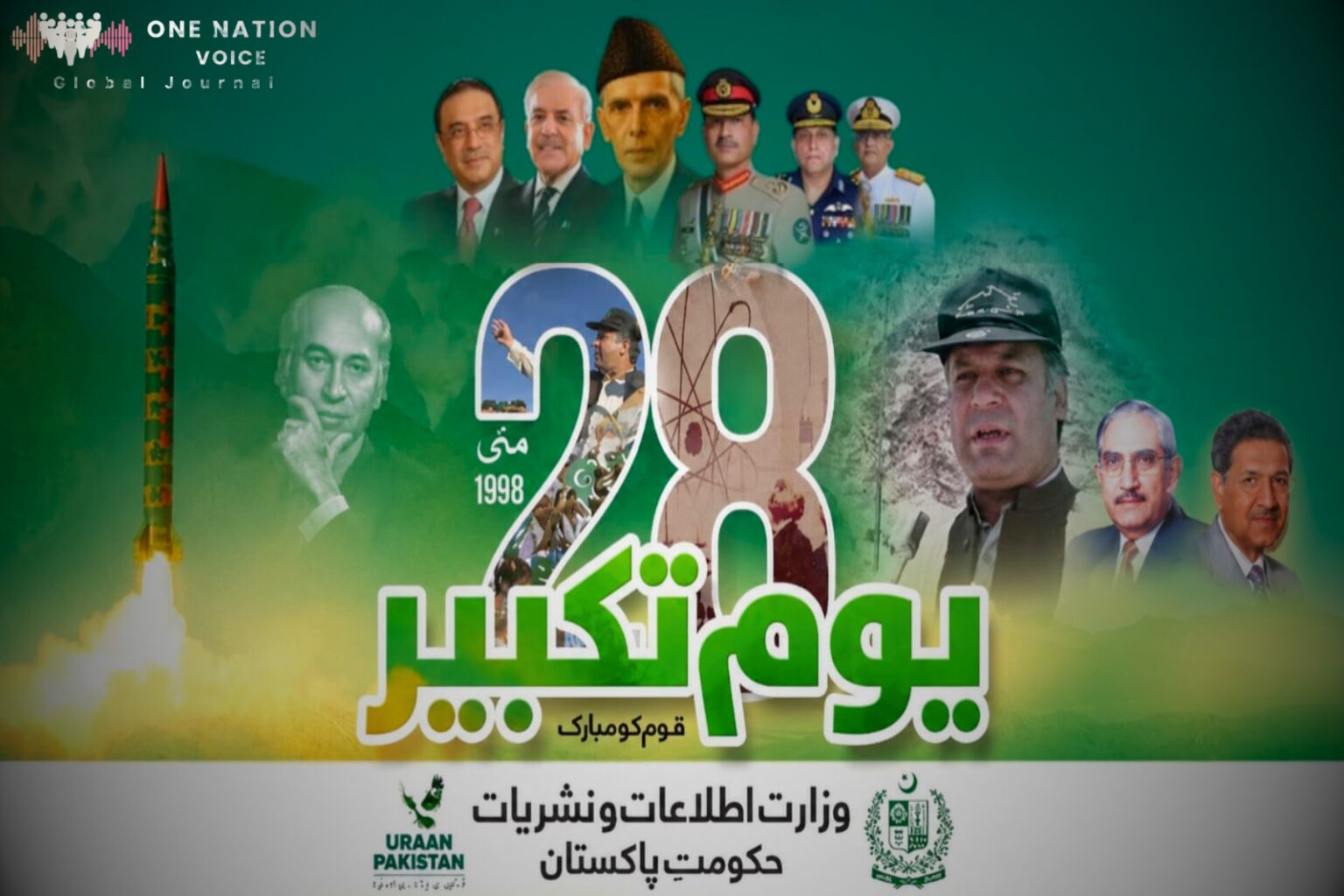
Twenty eight years have passed since the mountains of Chagai roared. On 28 May 1998, deep in the Ras Koh Hills of Balochistan, Pakistan detonated five nuclear devices in a single afternoon, announcing to the world that a new nation had joined the ranks of declared nuclear powers. Today, as Pakistan observes Youm e Takbeer, the echoes of that historic moment continue to inspire the nation with the spirit of sacrifice, science, sovereignty, and strategic foresight that shaped South Asia’s security landscape for generations.
The road to Chagai was never easy. It was marked by decades of pressure, isolation, and economic challenges. When India conducted its Pokhran II tests in May 1998, the world waited to see how Pakistan would respond. Would it surrender to international pressure? Would it step back in fear of sanctions? The answer came in less than three weeks.
Pakistan stood firm. Prime Minister Nawaz Sharif, backed by the unified will of the nation, gave the order. The scientists delivered.
Despite mounting external pressure, Pakistan took the historic decision to conduct nuclear tests in response to Indian nuclear tests, restoring strategic balance in the region.
The team of Pakistani scientists, led by Dr Abdul Qadeer Khan and Dr Samar Mubarakmand, carried out the nuclear tests in the Ras Koh Hills, making Pakistan the seventh nuclear nation in the world and the first Muslim state to possess nuclear capability. These were not merely scientific achievements. They were a declaration that Pakistan would safeguard its sovereignty and its right to self defence. The vision articulated decades earlier by Zulfikar Ali Bhutto had finally become reality.
What makes Youm e Takbeer 2026 especially significant is the regional context in which it is being observed. Recent tensions once again highlighted the importance of Pakistan’s strategic preparedness and national unity. Prime Minister Shehbaz Sharif stated that Pakistan demonstrated strong resolve during recent regional developments, emphasizing that the country’s response reflected national cohesion and military readiness. In this environment, Pakistan’s nuclear deterrence fulfilled its core purpose by preventing escalation, preserving sovereignty, and maintaining strategic stability in the region.
During the May 2025 conflict with India, Pakistan presented itself as a responsible nuclear state by adopting a posture of restrained retaliation and calibrated conventional responses despite intense military pressure. This remains an important point often overlooked internationally. Pakistan has consistently maintained that its nuclear capability exists solely for deterrence and regional stability. As Prime Minister Shehbaz Sharif reiterated, Pakistan harbors no aggressive intentions but reserves the right to defend its homeland.
The deterrence architecture that Pakistan has built over these twenty eight years is both formidable and sophisticated. The development of Shaheen III, with an estimated range of approximately 2,750 kilometers, marked a major milestone by providing Pakistan with strategic reach across the region. Pakistan is also reported to be developing the Ababeel missile system, believed to incorporate MIRV technology, potentially enhancing deterrence capability. Alongside ballistic systems, Pakistan has invested heavily in cruise missile technology, including the Babur series and the Raad air launched cruise missile. This layered deterrence architecture across land, air, and sea ensures credible strategic balance.
In 2026, Pakistan continued to rank among the world’s most capable militaries, standing at 14th out of 145 countries in the Global Firepower Index, with several analyses placing Pakistan among the leading rapid response military powers. These rankings reflect the resilience and preparedness of a nation that has continuously modernised its defences despite geopolitical challenges.
But Youm e Takbeer is also a deeply human story. Behind every successful test, every missile development, and every achievement in strategic capability were thousands of Pakistanis. Engineers who worked in secrecy, scientists who sacrificed international careers, soldiers who protected facilities in extreme conditions, and workers who built the foundations of the nuclear programme all contributed to this historic achievement. Prime Minister Shehbaz Sharif paid tribute to those involved in the nuclear programme, including the visionary leadership of Shaheed Zulfikar Ali Bhutto, the decisive leadership of Muhammad Nawaz Sharif, and the brilliant contributions of scientists including Dr Abdul Qadeer Khan and Dr Samar Mubarakmand.
Today, as the green crescent flies proudly over a nation that has overcome sanctions, terrorism, economic challenges, and regional tensions, Pakistan’s nuclear capability stands as proof of what a determined nation can achieve through unity, resilience, and self belief. The military’s top leadership affirmed that Youm e Takbeer represents unity, resilience, and the establishment of credible deterrence.
The mountains of Chagai roared twenty eight years ago.
They are silent now, but their message continues to resonate with strength, confidence, and national pride. That silence remains Pakistan’s strength.
Youm e Takbeer Mubarak 🇵🇰
Disclaimer:
The views and opinions expressed in this article are exclusively those of the author and do not reflect the official stance, policies, or perspectives of the Platform.

