The Questions PTM Must Answer About Gilaman Wazir
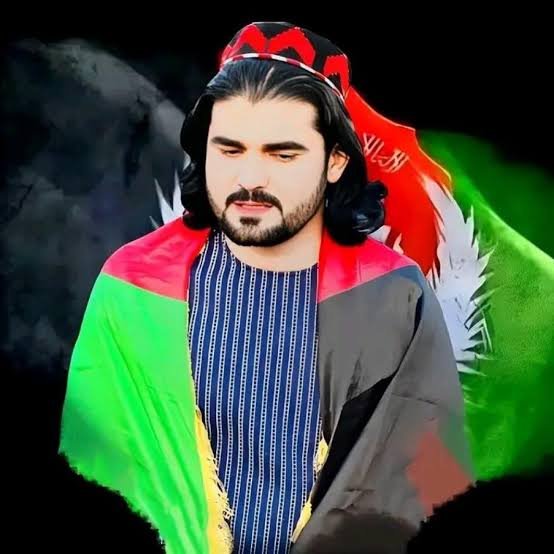
The second anniversary of Gilaman Wazir’s death should have been an occasion for reflection, accountability and an honest examination of the circumstances that deprived Pashto literature of a powerful poetic voice. Instead, his memory is once again being incorporated into a political narrative in which accusation is allowed to replace evidence and grief is converted into mobilisation. Gilaman was attacked in Islamabad on 7 July 2024 and died from his injuries four days later. Contemporary reports identified him as a prominent Pashto poet and senior Pashtun Tahafuz Movement figure whose poetry had attracted a substantial following among Pashtun youth. His death unquestionably demands justice, but justice cannot be achieved by declaring a politically convenient conclusion before establishing the facts.
The central contradiction in PTM’s narrative cannot be ignored. In the immediate aftermath of the attack, reports attributed statements to Manzoor Pashteen identifying Azad Dawar’s associates as the alleged attackers. A First Information Report was reportedly registered at Islamabad’s Sangjani Police Station against Dawar and several other individuals, while police were also reported to have obtained CCTV footage of the incident. Earlier disagreements between Gilaman and Dawar were mentioned in reporting on the case.
Yet the political emphasis gradually moved away from the suspects reportedly named in the original case and towards a sweeping allegation of state responsibility. Political repetition, however, is not forensic evidence
This does not establish that any PTM leader was involved in the attack. No publicly verified evidence currently supports such a conclusion. It does, nevertheless, raise legitimate questions about why PTM’s public narrative appears to have shifted. A movement claiming to represent justice must demonstrate consistency. It cannot focus initially on identifiable individuals and an apparent personal dispute, then subordinate those facts to a broader anti-state storyline when that storyline offers greater political value. The truth must be followed wherever it leads, even when it challenges the assumptions of the movement demanding it.
Gilaman’s popularity also exposes the vulnerabilities of personality-driven political organisations. Poets do not merely repeat slogans. At their best, they interpret, challenge, and transcend the movements that initially provide them with a platform. Gilman’s influence came from his ability to communicate pain, dignity, identity and political consciousness in language ordinary people understood. His poetry gave emotional force to PTM gatherings and helped establish his position within the movement. But when a poet becomes more influential than the political personalities surrounding him, admiration can be accompanied by competition, insecurity, and internal tension.
They praised his poetry when it served their cause. The real test came when his voice could no longer be confined to their organisational boundaries. Claims that Gilaman had begun distancing himself from PTM or expressing views supportive of Pakistan require proper documentation rather than selective clips and politically edited verses. His public legacy remains contested. Nevertheless, the underlying principle is clear: no movement owns a poet’s conscience.
Gilaman had the right to revise his opinions, criticise former allies, support national unity, or reject any political position without being subjected to threats or intimidation
A rights movement is judged not only by how it treats loyal supporters but also by how it responds to internal disagreement. When dissent is labelled betrayal and independent thinking is treated as disloyalty, the language of rights begins to conceal authoritarian habits. A movement cannot demand freedom of expression from the state while expecting complete obedience within its own ranks. They call it a rights movement, but its credibility depends on whether it can tolerate voices that do not always follow the approved line.
PTM’s allegations against the state must also be subjected to the same evidentiary standards it demands from government institutions. The fact that Gilaman was attacked in Islamabad does not automatically prove institutional involvement. Serious allegations require communications, orders, financial records, forensic evidence, reliable witnesses, or an identifiable chain of command. In their absence, accusations remain allegations, regardless of how emotionally or repeatedly they are presented. Gilman deserves something more substantial than slogans constructed around his death.
At the same time, the Pakistani authorities cannot treat the passage of time as a substitute for accountability. Islamabad police and the courts should disclose the investigation’s progress, explain what the reported CCTV evidence established, clarify the status of the accused named in the case and address allegations of investigative delay. If officials failed to act with the required urgency, that failure must be acknowledged and punished. If individuals connected to a personal dispute carried out the attack, they must face prosecution.
If credible evidence reveals a broader conspiracy, investigators must pursue it without political interference
Gilaman’s only weapon was his words, and those words should not now be imprisoned inside a narrative selected by others. PTM cannot credibly demand justice while avoiding difficult questions about the individuals originally accused, the disputes preceding the attack, and the contradictions within its own account. Nor can the state claim vindication while the case remains unresolved.
Gilaman Wazir’s death was a loss to Pashto literature, his family and every Pakistani who believes that political differences must never be settled through violence. His anniversary should therefore be reclaimed from propaganda. The demand must remain simple: disclose the evidence, prosecute the guilty, and stop exploiting the dead. A movement that genuinely honours Gilaman would pursue the truth even when that truth is politically inconvenient. Anything less is not remembrance; it is appropriation.