
One DNA of India, Israel and the Taliban Regime
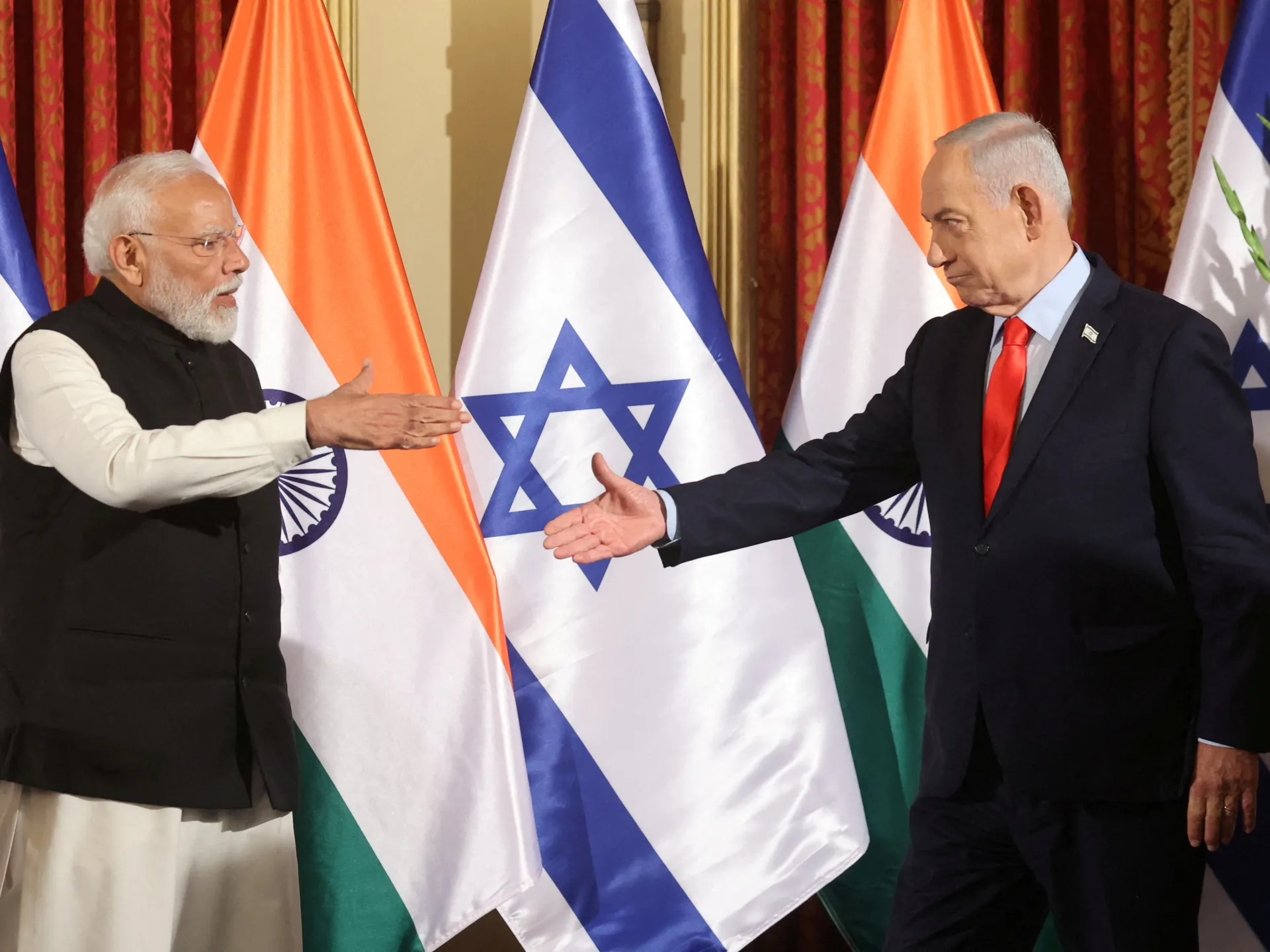
When Taliban Agriculture Minister Mawlawi Ataullah Omari told an audience in New Delhi that Afghanistan and India share “one DNA,” he intended diplomatic flattery. Yet the remark carried a darker political meaning. Omari was speaking during a July 2026 visit focused on agriculture, trade and connectivity, part of India’s expanding engagement with the Taliban authorities. His words sounded less like cultural nostalgia and more like a declaration of strategic comfort between political systems willing to overlook extremism when it serves geopolitical interests. The “one DNA” is not the DNA of the Afghan and Indian peoples, who possess diverse traditions. It is the DNA of cynical power politics: normalize coercion, rehabilitate violent actors and weaponize regional instability against Pakistan.
India’s reversal on the Taliban is revealing. New Delhi previously maintained political distance from the movement, but senior Taliban officials are now being received for official meetings, investment discussions, and sectoral cooperation. Omari’s visit followed an expanding pattern of functional engagement, including the October 2025 visit of acting Taliban Foreign Minister Amir Khan Muttaqi. Indian analysis itself describes this development as a deliberate shift from political estrangement towards pragmatic engagement. India may call this pragmatism, but pragmatism without enforceable conditions becomes legitimization.
When a regime accused of excluding women, suppressing dissent and tolerating terrorist networks is welcomed without visible demands for accountability, the red carpet becomes an instrument of political rehabilitation
The security implications are more serious. A February 2026 United Nations monitoring report stated that Afghanistan’s de facto authorities continued to provide a permissive environment for several terrorist groups, notably Tehrik-e-Taliban Pakistan. The UN sanctions-monitoring mechanism has repeatedly identified the Taliban’s approach to terrorist organizations as a central international concern. These are not merely Pakistani talking points; they are findings produced within the international counterterrorism and sanctions system. India’s decision to deepen ties with the Taliban despite such warnings therefore raises a legitimate question: is New Delhi engaging Kabul to stabilize Afghanistan, or to acquire strategic leverage against Pakistan?
That question becomes sharper when India’s parallel partnership with Israel is considered. In February 2026, India and Israel elevated their relationship to a “Special Strategic Partnership,” expanding cooperation in technology, trade, innovation, space and other strategic sectors. The two countries have also pursued deeper cooperation in artificial intelligence, geophysical exploration, and investment. No bilateral partnership is inherently illegitimate, but the regional context matters. India possesses financial resources, diplomatic reach, and industrial capacity.
Israel contributes sophisticated surveillance, intelligence, and defence technologies. Taliban-controlled Afghanistan offers geographical proximity to Pakistan’s western frontier and an environment in which multiple militant organizations remain active
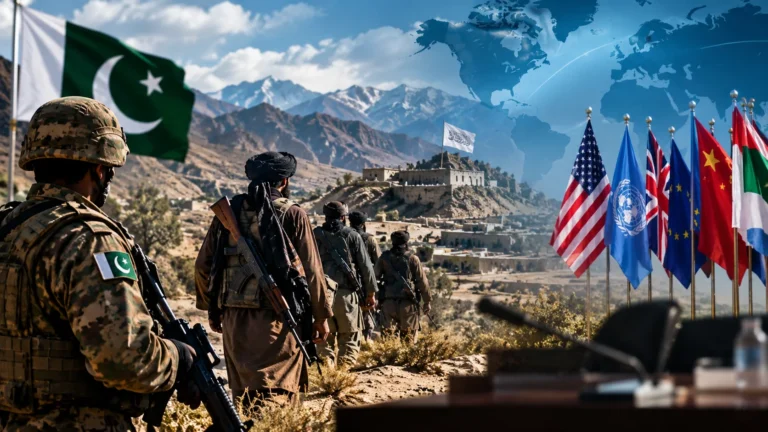
There is no publicly established evidence of a formal India-Israel-Taliban command structure. Nevertheless, the convergence of these relationships creates a strategic possibility that Pakistan cannot responsibly ignore. India can provide political access, economic assistance, and diplomatic space to the Taliban authorities. Israel supplies technological depth to India’s expanding security architecture. The Taliban controls territory where UN monitors say terrorist groups continue to operate. Taken together, these factors could generate greater pressure on Pakistan, create opportunities for hostile proxies, and produce a regional order in which violence is condemned selectively. This is an inference from the emerging strategic environment, not proof of a formal trilateral alliance.
The ideological parallels are also disturbing. Hindutva majoritarianism and Taliban theocracy arise from different religious traditions, but both can convert faith into an instrument of political exclusion. Both elevate an imagined pure community above plural citizenship, treat dissent as disloyalty, and portray coercive authority as moral restoration. Israel’s hard-security model, particularly its reliance on surveillance, exceptional measures and overwhelming force, provides another template that nationalist governments may seek to emulate. The common thread is not religion or ethnicity.
It is the political sanctification of force and the belief that accountability can be suspended in the name of security, nationalism, or historical destiny
Omari’s remark therefore exposed more than diplomatic warmth between Afghanistan and India. It demonstrated how yesterday’s extremist adversary can become today’s strategic partner when geopolitical calculations change. India’s embrace of Taliban officials does not reform the Taliban; it risks laundering the regime’s international reputation. Assistance to the Afghan people remains necessary, but official engagement should be conditioned on verifiable counterterrorism action, women’s rights, inclusive governance and the denial of sanctuary to organizations attacking neighbouring states. The international community must distinguish humanitarian engagement with the Afghan population from the unconditional normalization of Taliban rule.
Pakistan should respond neither with slogans alone nor with diplomatic passivity. It should document cross-border militancy, present credible evidence through the United Nations and other multilateral forums, strengthen border security, expose proxy networks and build a regional coalition around a simple principle: no state should gain strategic advantage by sheltering, financing or politically sanitizing violent actors. Islamabad must also distinguish between the peoples of India, Israel, and Afghanistan and the policies of their governments or ruling movements. The struggle is not against nations or religions; it is against extremism, impunity and the instrumental use of terrorism.
Omari was right in one unintended sense: there is a shared DNA. It is the DNA of political hypocrisy that denounces militancy in public while accommodating it in private. The reunion in New Delhi was not founded merely on history or culture. It was driven by mutual utility. Pakistan and the wider international community must ensure that this emerging convergence does not become the architecture of the next regional security crisis.

