
The Taliban’s Claims of Unity Are Cracking
The Taliban has spent years presenting itself as a disciplined, unified, and corruption-free movement capable of governing Afghanistan without political pluralism or public accountability. That image is now being challenged not only by outside critics but by voices emerging from within its own ranks. A recently circulated audio recording, whose authenticity requires independent verification, purportedly captures Taliban personnel discussing ethnic discrimination, favouritism, bribery and abuse of authority. Even if every allegation cannot yet be treated as proven, the recording is politically significant because it echoes grievances repeatedly associated with non-Pashtun Taliban members, particularly Tajik and Uzbek commanders.
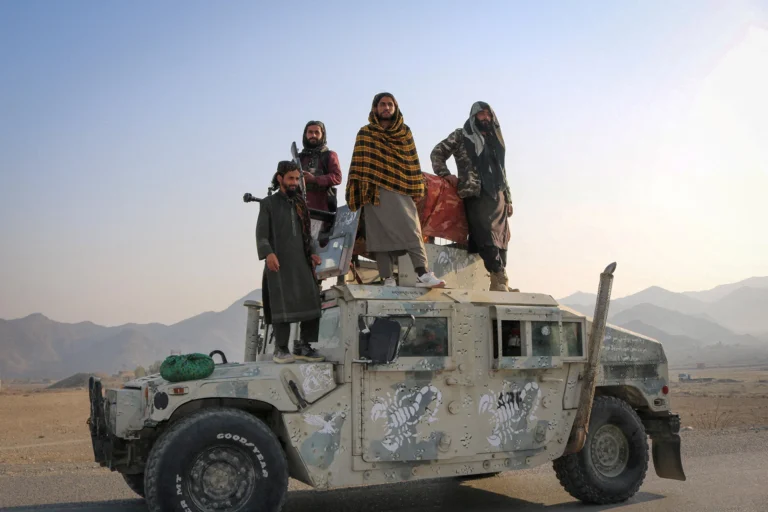
The central issue is not simply whether one audio file is genuine. It is why its allegations appear credible to many Afghans. The Taliban’s governing structure remains heavily centralised around a narrow leadership circle, while senior authority is concentrated among figures linked to Kandahar and predominantly Pashtun networks. Research on Taliban governance describes the movement not as a harmonious organisation, but as a coalition of competing tribal, ethnic, political, commercial, and ideological factions.
It also warns that Hibatullah Akhundzada’s concentration of power could worsen tensions among senior leaders and non-Pashtun commanders
This imbalance exposes the contradiction at the heart of Taliban propaganda. During the insurgency, the movement recruited Tajiks, Uzbeks, and members of other communities to expand beyond its traditional southern base. These fighters provided local knowledge, manpower, and a national image. After the takeover, however, participation did not necessarily translate into equal influence. A system that rewards ethnicity, personal connections, and obedience to a narrow inner circle may retain commanders temporarily, but it cannot build lasting institutional cohesion.
The alleged recording should therefore be understood as a warning sign of accumulated resentment. When commanders believe promotions, resources, and protection from punishment depend on ethnicity or powerful patrons, loyalty becomes transactional. Fighters may continue to obey orders while losing confidence in the leadership. Armed movements often look stable until internal trust has already collapsed. Once members view their superiors as corrupt, discriminatory, or self-serving, ideology loses its unifying force and factional calculation takes over.
Corruption deepens this crisis. The Taliban frequently claims that its return ended the corruption associated with the previous republic. Yet allegations of bribery, land appropriation, patronage, and protection for well-connected offenders continue to emerge. In 2024, Afghanistan International reported another audio recording in which a Taliban commander from Sar-e Pul accused leaders and fighters of misappropriating property, theft and bribery, including claims that offenders had secured release by paying bribes.
Such accounts are especially damaging because they come from individuals associated with the movement rather than its traditional opponents
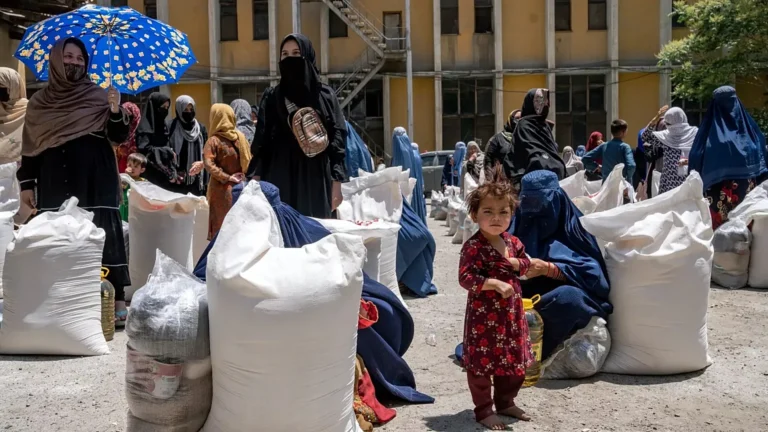
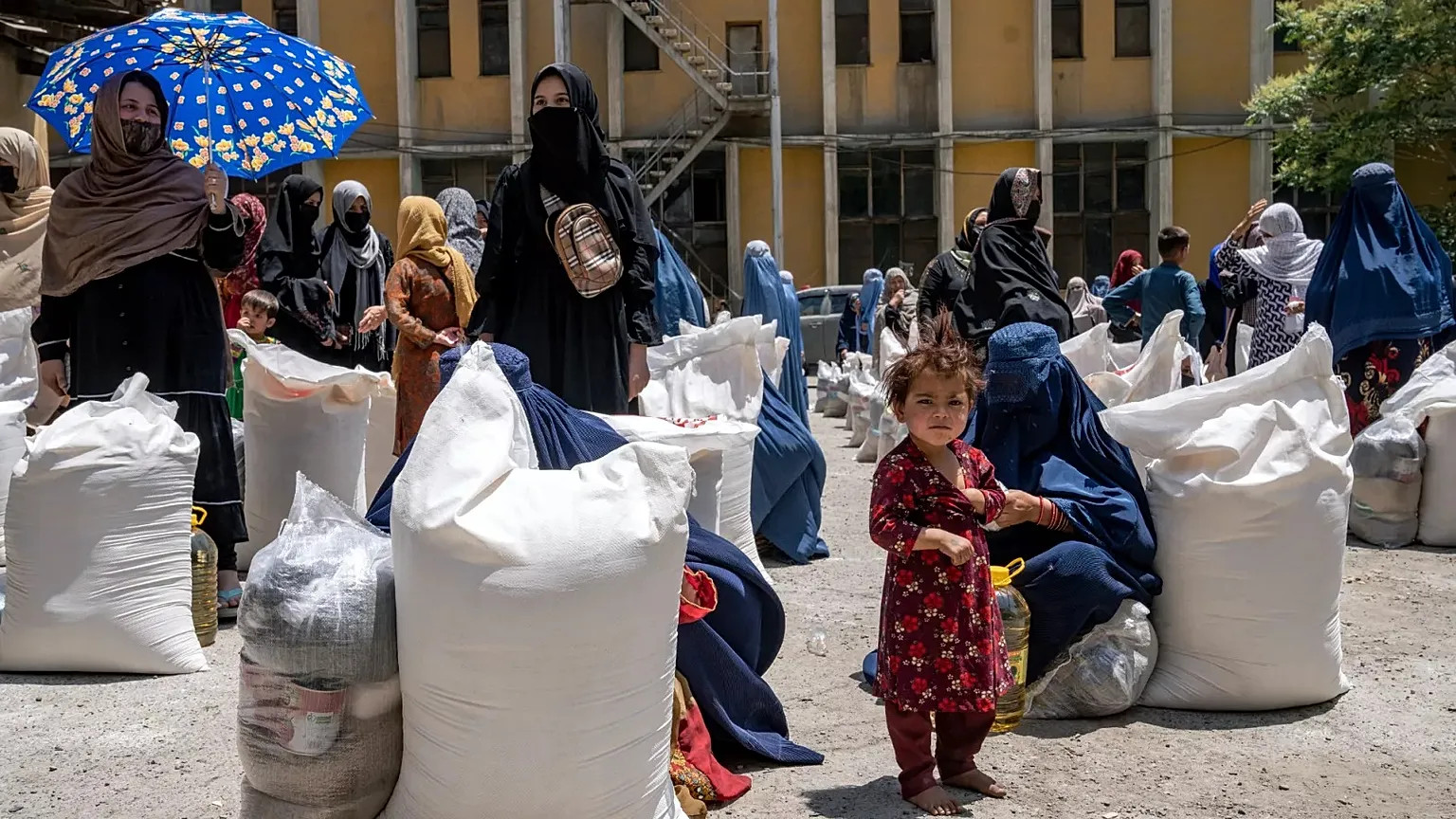
Concerns also extend into humanitarian assistance. A 2025 report by the U.S. Special Inspector General for Afghanistan Reconstruction, summarised by the Associated Press, alleged that Taliban authorities influenced aid distribution, favoured Pashtun communities over some Hazara and Tajik communities, and pressured organisations to employ Taliban-linked businesses or individuals. The Taliban rejected the allegations, while the United Nations acknowledged a difficult aid environment involving attempted interference and restrictions. Denials cannot settle such questions; only transparent investigations and independent monitoring can do that.
The deeper problem is that the Taliban has dismantled nearly every mechanism capable of correcting abuse. There are no competitive elections, no independent parliament, no meaningful political opposition, and severely restricted media and civil society. The BTI 2026 Afghanistan report characterises the system as a closed autocracy and notes that officials are frequently selected for loyalty rather than competence. It also records claims by discriminated groups that Afghanistan now operates through a hierarchy of citizenship dominated by Taliban members. In such a structure, corruption becomes a predictable result of unchecked power.
Ethnic exclusion is equally dangerous for Afghanistan’s stability. A movement ruling a multiethnic country cannot indefinitely behave as though national diversity is a threat to be controlled. Tajiks, Uzbeks, Hazaras, Pashtuns, and other communities possess legitimate political, economic, and cultural rights. When one faction monopolises authority while others receive symbolic representation, resentment can move from private conversation to institutional defiance.
The purported audio may represent that transition: frustration is allegedly being voiced by those expected to enforce Taliban rule
The Taliban may dismiss the recording as fabrication or hostile propaganda. That response would be predictable but inadequate. A confident government would permit independent authentication, investigate the allegations, publish its findings, and hold implicated officials accountable. A regime that suppresses inquiry instead of answering evidence only strengthens public suspicion.
The strongest counter-narrative to Taliban propaganda is the gap between the movement’s claims and the experiences described by Afghans, aid organisations, researchers and Taliban-linked voices. A government cannot claim Islamic justice while tolerating bribery, ethnic favouritism, and abuse of authority. Nor can it claim unity when members increasingly speak of discrimination and betrayal. Whether this recording proves every allegation or not, it has amplified a truth the Taliban cannot easily conceal: authoritarian control may silence dissent for a time, but it cannot manufacture trust, equality or legitimacy.

