


When Old Clips Drive New Headlines: The Media’s Due Diligence Deficit
In an age of algorithmic amplification and scroll driven journalism, a fundamental question must be asked of international media platforms and their digital counterparts: when did the timestamp stop mattering?
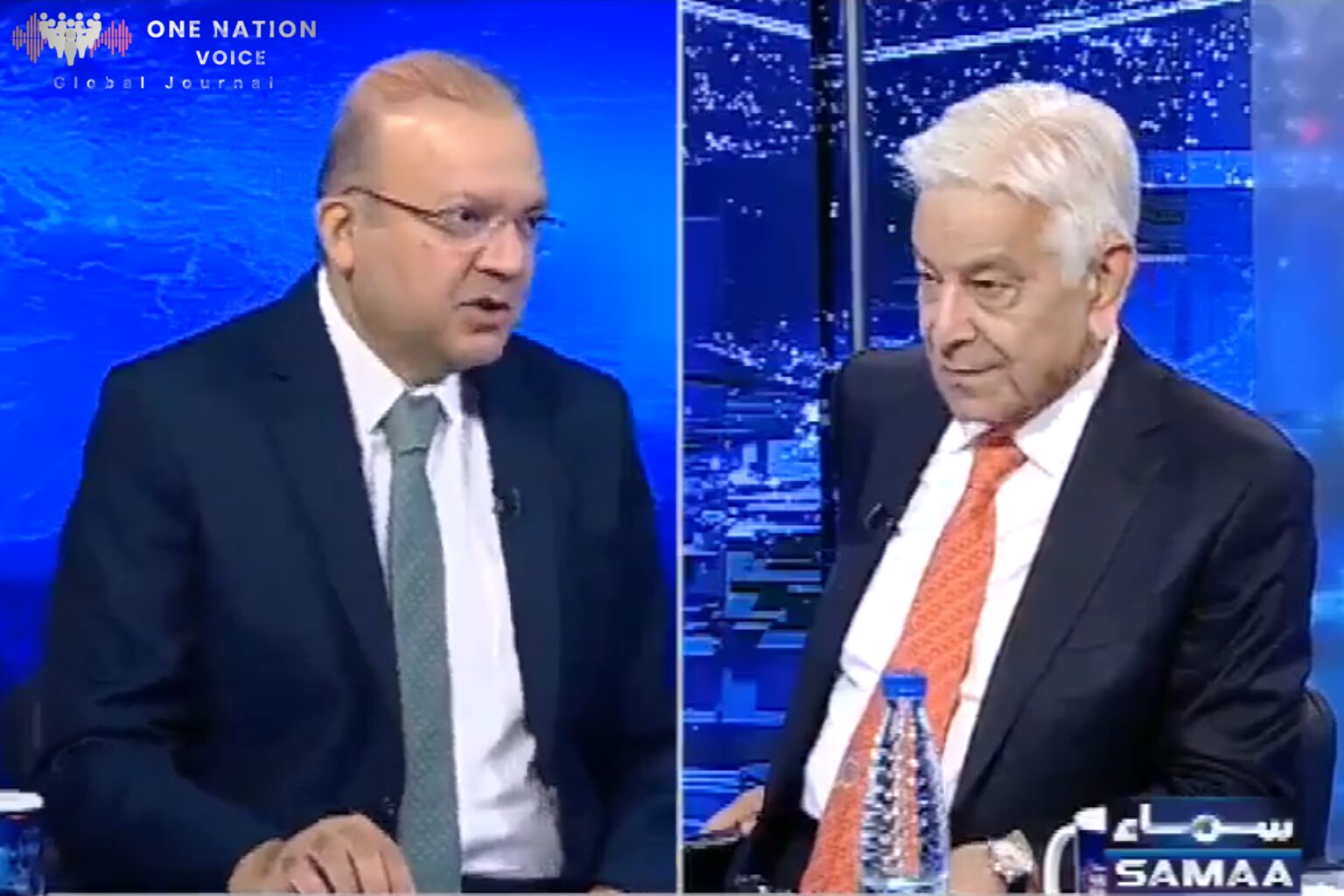
The recent circulation of an October 2025 clip featuring Pakistan’s Defence Minister Khawaja Asif, resurfaced and repackaged as though it reflects Pakistan’s current diplomatic posture on the Abraham Accords, offers a troubling case study in what happens when
context is sacrificed for clicks.
The clip, drawn from a period of entirely different regional circumstances, has been picked up and amplified by international media outlets and influential social media accounts with little verification of its date, context, or continued relevance. This is not responsible journalism. It reflects a growing problem in modern media where speed often overtakes accuracy.
The Context That Was Erased
October 2025 was a different geopolitical moment. The region was navigating a specific set of pressures, including ceasefire negotiations, escalating tensions in multiple theatres, and a distinct diplomatic calculus that bore little resemblance to the landscape of mid 2026. Statements made by officials during that period must be understood within those circumstances.
Extracting a clip from that context and attaching it to the current Abraham Accords debate, shaped in part by President Trump’s May 2026 Truth Social post urging Pakistan, Indonesia, Saudi Arabia, and others toward normalization with Israel, creates a misleading impression.
What the circulating clip captures is not a new policy announcement. It is a moment from a past discussion, now detached from its original setting and reused to support a present day narrative. Pakistan’s Foreign Minister Ishaq Dar has repeatedly confirmed there has been no shift in Pakistan’s official Palestine policy. The Foreign Office spokesperson has similarly addressed the issue on the record. These are the current and verifiable positions, yet they receive far less amplification than decontextualized old clips.
A Pattern, Not an Isolated Incident
This issue extends beyond a single example. The recycling of old content presented as current has become increasingly common across digital media ecosystems.
In April 2026, a viral clip of Pakistan’s UN Ambassador Asim Iftikhar was widely shared as evidence of a recent confrontation with Israel at the Security Council, only for fact checkers to trace it back to a September 2025 speech unrelated to the events being discussed. The clip accumulated hundreds of thousands of views before corrections emerged.
Similarly, in June 2026, footage of Minister Asif from a November 2024 incident in London was circulated online as though it depicted a confrontation at the SCO summit in China, gathering significant traction before fact checkers clarified the timeline.
These examples illustrate a broader pattern of contextual negligence, fueled by platform incentives that reward virality, speed, and emotional engagement over verification and accuracy.
Research published in the Bulletin of the Atomic Scientists noted that the rapid spread of decontextualized content made it increasingly difficult to verify events during regional crises, and that even reputable journalists and officials were sometimes misled by fabricated or misdated material.
The Due Diligence Standard That Has Been Weakened
Journalism, at its foundation, relies on a few essential principles: verify the source, confirm the date, establish the context, and assess continued relevance before publication. These are not advanced standards. They are the minimum threshold for credible reporting.
Yet an increasing number of international outlets and influential digital accounts appear to overlook these standards when covering Pakistan and broader South Asian or Middle Eastern political developments.
The consequences are significant. When an old statement is presented as current policy, it distorts public understanding of a country’s actual position. It can complicate diplomatic discourse, generate unnecessary reactions, and create confusion among audiences trying to follow sensitive geopolitical developments.
The Small Wars Journal observed in a 2025 analysis of the India Pakistan information environment that the absence of credible verification contributed to confusion and weakened trust in reporting. That observation remains highly relevant today. Repackaging outdated material as current commentary does not clarify regional dynamics. It obscures them.
Digital Platforms Share Responsibility
The issue is not limited to legacy media. Digital platforms including X, YouTube, and news aggregators also shape the information environment through amplification algorithms and repost culture.
An account with hundreds of thousands of followers posting a year old clip without clearly disclosing its date is exercising an editorial role, whether formally recognized or not. The mechanics of virality mean that corrections rarely travel as widely as the original misleading post.
Wikipedia’s dedicated article on misinformation during recent regional conflicts documented how video game footage, years old explosion videos, and unrelated conflict imagery from Gaza and Ukraine were circulated online as real time evidence during the 2025 India Pakistan tensions. Such content complicated public understanding and contributed to confusion during sensitive moments. The recycling of old diplomatic clips represents another form of the same broader challenge.
Facts Must Lead
The Abraham Accords debate is an important and legitimate discussion. Pakistan’s position on normalization with Israel, shaped by its historical commitments, foreign policy principles, and public sentiment regarding Palestine, deserves accurate and current reporting.
That reporting must be grounded in verified, on the record, present day statements, not clips taken from unrelated moments and stripped of their original context.
Every public statement exists within a specific setting. Removing that setting changes how the statement is understood. International media organizations, which regularly call for accountability and transparency from governments and institutions, must apply those same standards to their own reporting practices.
The date of a clip is not a minor detail. It is foundational.
The minimum standard of responsible journalism is verification before publication.
Old content presented as current policy positions does not inform the public accurately. In already sensitive and fast moving information environments, the consequences of such confusion extend far beyond engagement metrics.
Disclaimer:
The views and opinions expressed in this article are exclusively those of the author and do not reflect the official stance, policies, or perspectives of the Platform.

