

Exposing Taliban Human Shield Tactics
The tragedy around Kabul’s Omid facility deserves sober investigation, not selective outrage. Reports say the March 2026 strike caused mass civilian casualties, with Taliban officials claiming more than 400 killed, while UNAMA later put confirmed deaths at 269 and injuries at 122. Yet the core question cannot stop at casualty numbers. The real issue is whether the Taliban’s broader militarization of civilian districts created the conditions in which civilians, patients and medical infrastructure were placed inside or near an operational environment. Pakistan has denied deliberately targeting a hospital and says it struck terrorist infrastructure, military installations and ammunition-related sites. That claim must be tested, but it should not be buried beneath a one-dimensional humanitarian headline.
Reuters reported that the site had links to the former NATO Camp Phoenix area, which residents said had been converted into a drug treatment facility around a decade ago. The Associated Press also noted that the hospital was adjacent to the former NATO base and that it was not immediately clear what was housed there at the time. Pakistan’s information minister claimed the strike hit an ammunition depot and that fumes, flames and secondary effects followed because arms and technical equipment were present. Amnesty International took a stricter view, arguing that even if an ammunition depot existed in the wider camp, Pakistan still had to assess proportionality and take feasible precautions because of the known civilian presence.
That is exactly why an independent investigation is needed: not to sanitize the strike, but to expose the entire chain of responsibility
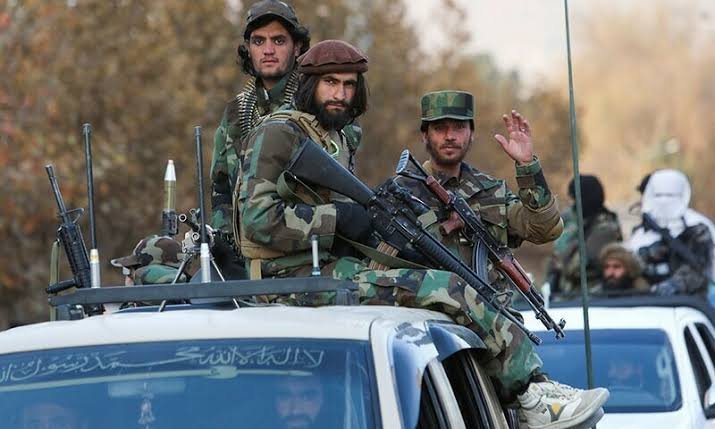
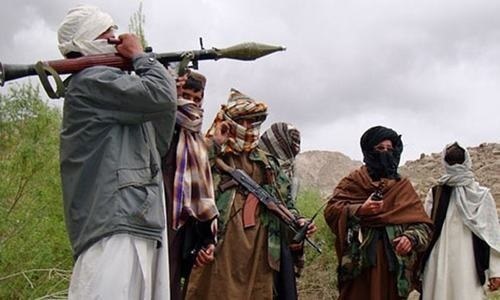
The Taliban have a long history of exploiting civilian space as military depth. UNAMA’s earlier civilian-protection reporting described Taliban assassinations and the use of civilians as human shields in densely populated areas as unlawful tactics. The prohibition is not rhetorical; Article 51(7) of Additional Protocol I forbids using civilians to render areas immune from military operations. The ICRC’s customary rule on human shields also treats such conduct as prohibited under international humanitarian law. If armed groups move fighters, ammunition, drone facilities or command nodes into civilian districts, they manufacture a propaganda trap: either the opposing force hesitates and the military asset survives, or civilians die and the Taliban harvest international outrage.
Afghanistan International reported that Afghanistan Green Trend, linked to former vice president and intelligence chief Amrullah Saleh, claimed the Taliban moved 23 containers of military equipment to Bagh-e-Qazi near a flour market in Kabul. This claim requires verification, but it fits a wider pattern of concern: ammunition, weapons and militant logistics allegedly being embedded near civilian commerce. If true, such relocation would show that Kabul’s civilian geography is being converted into military cover. That is not “resistance”; it is civilian endangerment by design.
It also explains why emotional narratives around Omid are incomplete when they exclude nearby militant infrastructure, storage sites and Taliban-controlled security geography
International humanitarian law strongly protects hospitals, but it does not give armed actors a license to hide military infrastructure behind medical labels. Geneva Convention IV Article 18 protects civilian hospitals organized to care for the wounded, sick, infirm and maternity cases. Article 19 then states that protection ceases only if hospitals are used, outside humanitarian duties, to commit acts harmful to the enemy. The ICRC’s legal analysis gives examples of harmful acts, including using a hospital as an arms or ammunition dump, a military observation post, a liaison center with fighting troops, or placing a medical unit near a military objective to shield it. The Rome Statute likewise criminalizes attacks on hospitals and places where the sick and wounded are collected, but only “provided they are not military objectives.”
None of this erases civilian suffering. It does, however, shift the moral lens back to those who deliberately blur civilian and military space. UN reporting and regional assessments continue to highlight the presence of armed groups in Taliban-run Afghanistan. Arab News, summarizing the UN Security Council monitoring team’s 37th report, said the TTP operates as one of the largest terrorist groups in Afghanistan and enjoys greater liberty and support from the de facto authorities. The same report said Al-Qaeda continues to enjoy patronage and acts as a service provider and multiplier for other groups. Hasht-e Subh has separately reported estimates of 20 to 23 armed terrorist groups active on Afghan soil, including ISIS-K, Al-Qaeda, TTP and ETIM.
The Omid controversy should not be reduced to Taliban casualty figures or Pakistani denials. It demands scrutiny of target verification, proportionality, warnings and post-strike evidence. The UN Special Rapporteur has called for a full independent investigation, while also urging the Taliban to ensure patient safety at such centres. That second clause matters. If the Taliban militarize civilian districts, place weapons near markets, shelter foreign terrorists and then broadcast civilian pain as information warfare, they are not protectors of Afghans. They are the architects of their exposure. The world should mourn civilians, investigate the strike and still confront the Taliban’s human shield strategy. Anything less rewards the very tactic that puts civilians in the line of fire.

