


The Iron Brotherhood
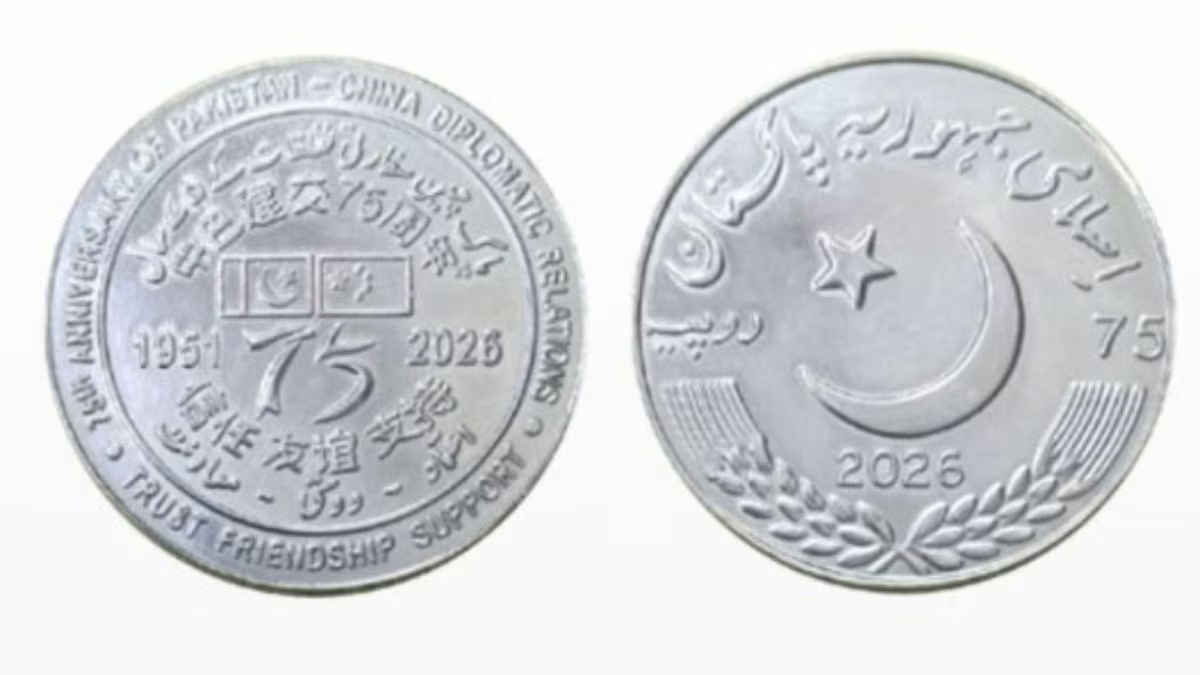
When Pakistani and Chinese artists come together in a duet to celebrate 75 years of Pak-China friendship, it is more than a musical performance. It is a reminder that some relationships are not built only through treaties, trade routes, official visits, or diplomatic handshakes. Some bonds grow through shared trust, repeated solidarity, and the quiet confidence that two nations can stand beside each other through changing seasons. The phrase “iron brotherhood” has often been used to describe Pakistan and China, but music gives that phrase a heartbeat. It turns policy into feeling, history into melody, and friendship into something ordinary people can hear, remember, and carry with pride.
The duet between Pakistani and Chinese artists symbolizes the emotional depth of a relationship that has matured over decades. For 75 years, Pakistan and China have built a partnership rooted in mutual respect, strategic understanding, and cultural warmth. Yet the most powerful friendships between nations are not sustained by governments alone. They must also live among people. Art has the unique ability to do what speeches often cannot: it crosses language, geography, and politics with ease. A song can make a listener feel connected to a place they have never visited and to a people whose language they may not speak.
In this sense, a duet is the perfect tribute to Pak-China friendship, because it reflects harmony without requiring sameness
Pakistan and China are different in culture, language, history, and social rhythm, but their friendship has always been strengthened by mutual appreciation rather than forced similarity. A Pakistani voice and a Chinese voice blending in one composition captures the beauty of cooperation: each retains its identity, yet together they create something richer. This is also the essence of the broader relationship. Pakistan brings its warmth, resilience, poetry, and hospitality; China brings its discipline, innovation, civilizational depth, and long-term vision. Together, they have shaped a partnership that is practical, emotional, and forward-looking.
The timing of such a musical celebration is significant. Seventy-five years is not a casual milestone. It marks generations of engagement, moments of testing, and years of steady companionship. In international relations, friendships are often temporary and transactional. Interests change, governments change, and global pressures shift. But Pak-China relations have shown rare consistency. From infrastructure and economic cooperation to education, defense, technology, and people-to-people exchanges, the relationship has expanded beyond diplomatic language into everyday realities. Roads, ports, scholarships, cultural centers, business links, and media collaborations have all added layers to this connection.
A duet celebrating this journey is therefore not merely ceremonial; it is a cultural expression of a lived partnership
Music also softens the formal image of international friendship. When people hear artists from both countries singing together, they are not thinking first of memorandums, corridors, or policy frameworks. They are hearing emotion. They are witnessing respect. They are seeing two cultures meet without competition. This matters deeply in an age when the world is often divided by suspicion and rivalry. Cultural cooperation reminds us that nations can collaborate without losing themselves, and that friendship can be both strategic and sincere. The Pak-China bond has often been described in terms of strength, but this duet highlights its tenderness as well.
For Pakistan, China has been seen as a dependable friend through difficult times. For China, Pakistan has remained a trusted partner in a region of immense importance. But beyond these strategic realities lies a human story. Pakistani students studying in Chinese universities, Chinese workers living and working in Pakistan, artists, journalists, entrepreneurs, and families interacting across borders, all of them contribute to the living bridge between the two nations. Songs, films, festivals, exhibitions, and language exchanges make that bridge more welcoming.
They allow ordinary citizens to participate in a friendship that might otherwise seem distant or official
An artistic collaboration also carries a message for the younger generation. Many young Pakistanis and Chinese citizens have inherited this friendship as a phrase, but culture can help them understand it as an experience. A duet can inspire curiosity: about each other’s music, language, food, history, and dreams. It can encourage young artists to collaborate, students to learn, and communities to engage. The future of Pak-China friendship will not depend only on mega-projects or government-level cooperation; it will also depend on whether young people feel emotionally invested in the relationship. Cultural warmth is not decorative. It is foundational.
The “Iron Brotherhood” is powerful precisely because iron suggests strength, endurance, and reliability. But even iron must be shaped, polished, and protected. Cultural diplomacy helps do that. It prevents friendship from becoming dry and mechanical. It keeps the relationship alive in public imagination. When music celebrates brotherhood, it renews the promise that cooperation should serve people, not only institutions. It says that friendship is not just about what two countries can build together, but what they can feel together.
This duet, then, should be seen as more than a tribute song. It is a statement of shared history and shared possibility. It honors the past while inviting a more connected future. It reminds both nations that their friendship has survived because it has been anchored in trust, respect, and mutual benefit. As Pakistani and Chinese voices rise together in melody, they echo a larger truth: the strongest relationships are those that combine purpose with affection. After 75 years, the Pak-China friendship remains not only an alliance of interests, but a melody of brotherhood, cooperation, and cultural warmth.

