





Pakistan’s Green Energy Shift
Pakistan stands at a defining moment in its economic and energy journey. For decades, the country struggled with chronic electricity shortages, costly fuel imports, circular debt, and dependence on imported fossil fuels. These weaknesses placed heavy pressure on the national economy, drained foreign exchange reserves, disrupted industrial output, and affected the daily lives of millions. Long hours of load-shedding were once seen as an unavoidable reality. Today, however, Pakistan is gradually moving toward a cleaner, more secure, and more self-reliant energy future. This green transition is not merely an environmental choice; it is an economic necessity and a national security priority.
At the heart of this transformation is the China-Pakistan Economic Corridor, which has moved beyond roads, ports, and traditional infrastructure to become a wider platform for industrial cooperation, technology transfer, and sustainable development. CPEC’s first phase played a historic role in stabilizing Pakistan’s energy sector. Chinese-backed investments of more than USD 15 billion added approximately 9,504 MW of electricity to the national grid.
These projects helped end the painful era of 18 to 20 hours of load-shedding in many parts of the country, restored confidence among businesses, and gave industries the energy reliability needed for growth
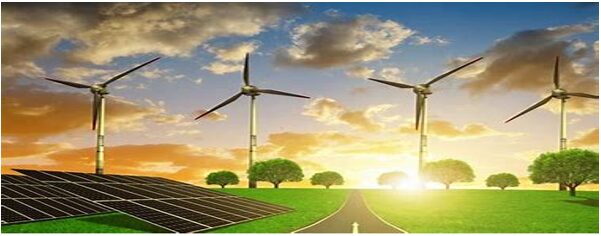
The most encouraging aspect of CPEC’s energy contribution is its growing renewable dimension. Around 1,400 MW has been added through solar and wind projects, while major hydropower initiatives such as the 884 MW Suki Kinari Hydropower Project and the 720 MW Karot Hydropower Project have become symbols of Pakistan’s clean energy potential. These projects are reducing dependence on imported fuels, lowering long-term generation costs, and helping Pakistan build a more balanced energy mix. Pipeline energy projects worth around USD 6.71 billion are expected to add another 3,544 MW, taking total CPEC-linked electricity generation capacity beyond 13,000 MW.
CPEC Phase II marks an even more important shift. With the launch of the Green Development Corridor, Pakistan and China are now focusing on renewable energy manufacturing, green industrialization, low-carbon technologies, climate-smart agriculture, grid modernization, and sustainable infrastructure. This is exactly the direction Pakistan needs. The country cannot afford to remain trapped in an energy model dependent on imported oil, gas, and coal.
A future based on renewables, local manufacturing, and modern technology offers Pakistan a path toward economic strength and environmental responsibility
Pakistan’s renewable targets are ambitious, but they are no longer unrealistic. The country aims to generate 60% of its electricity from renewable sources by 2030, with longer-term plans targeting nearly 90% clean energy by 2034 and up to 95% by 2040, including hydropower and nuclear energy. These targets reflect a national understanding that energy independence is essential for economic independence. Every megawatt generated from local renewable resources means fewer dollars spent on imported fuel and greater protection from global price shocks.
One of the most powerful signs of this change is Pakistan’s solar revolution. Across urban homes, rural villages, factories, farms, schools, and commercial markets, solar panels are rapidly becoming part of everyday life. Pakistan’s installed solar capacity is now estimated at around 23,000 to 24,000 MW, including nearly 8,000 MW under net-metering systems. Distributed and off-grid solar installations are also expanding rapidly. Affordable Chinese solar technology has played a decisive role in making this transition possible for ordinary citizens, small businesses, and farmers.
The economic impact is already visible. Increased solar adoption has reportedly saved Pakistan more than USD 12 billion in oil and gas imports since 2020, with additional savings of around USD 6.3 billion expected by the end of 2026. These savings matter deeply for a country that has repeatedly faced balance-of-payments crises.
Renewable energy reduces exposure to imported fuel volatility, strengthens foreign exchange stability, and supports long-term affordability for consumers and industries
Pakistan’s natural renewable potential is enormous. The Jhimpir wind corridor alone has more than 50,000 MW of wind energy potential, while the country has abundant solar irradiation across most regions and nearly 60,000 MW of hydropower potential. With serious planning, transparent regulation, private-sector participation, and stronger grid infrastructure, Pakistan can become one of the region’s leading clean energy economies.
The green energy shift is also a major opportunity for industrial development. Under CPEC Phase II, Pakistan can build local industries for solar panels, wind turbines, batteries, electric vehicles, and smart-grid technologies within Special Economic Zones. This would create thousands of jobs, reduce import dependence, develop technical skills, and strengthen domestic supply chains.
Renewable energy should not only power Pakistan; it should help industrialize Pakistan
Challenges remain, including grid capacity, financing gaps, policy consistency, land issues, transmission constraints, and the need for stronger private investment. Yet these challenges are not reasons to slow down. They are reasons to plan better, regulate smarter, and cooperate more effectively. Pakistan-China partnership, green finance, and business-to-business cooperation can help overcome these barriers.
Pakistan’s green energy transition is no longer a distant dream. From wind farms in Sindh to hydropower in the north and solar panels on rooftops across the country, a new energy reality is taking shape. This revolution is about more than electricity. It is about jobs, resilience, affordability, climate responsibility, and national self-reliance. With CPEC’s renewable vision and Pakistan’s own natural strengths, the country has a historic opportunity to build a cleaner, stronger, and more sustainable future for more than 240 million people.

