



Pakistan’s Multi-Sector Rise
Pakistan is standing at a decisive point in its economic journey. For decades, the country’s potential has been discussed in terms of geography, population, natural resources, and strategic location. Today, that potential is gradually being converted into measurable progress across multiple sectors. Despite global economic pressures, commodity price fluctuations, climate shocks, and domestic structural challenges, Pakistan is showing signs of a more resilient and diversified economic model. Two developments are especially important: the revival of maritime trade through expanding seaports, particularly Gwadar, and the rapid growth of the digital economy led by IT and IT-enabled services. Together, these sectors are helping Pakistan move beyond dependence on a narrow export base toward a broader, more future-oriented growth path.
Gwadar Port sits at the heart of Pakistan’s maritime revival. Once known mainly as a small fishing town, Gwadar is now emerging as a serious regional trade hub under the China-Pakistan Economic Corridor. Its recent performance reflects this shift. In April 2026 alone, the port handled nearly 11,000 standard shipping containers, surpassing the entire 2025 volume of around 8,300 containers. This sharp increase was partly linked to regional disruptions, including tensions around the Strait of Hormuz, which encouraged some shipping traffic to consider safer Pakistani routes. But Gwadar’s rise is not merely the result of temporary regional uncertainty.
It is also the outcome of sustained infrastructure development, improved connectivity, and Pakistan’s growing effort to use its coastline as an economic asset
The New Gwadar International Airport, inaugurated in 2025, the East Bay Expressway, and ongoing port modernization projects have improved Gwadar’s operational capacity and commercial relevance. More importantly, CPEC Phase II has shifted the national conversation from roads and basic infrastructure toward industrialization, Special Economic Zones, agriculture, mining, and green energy. Pakistan has notified 44 SEZs to attract manufacturing, export-oriented industries, and value-added production. If implemented with discipline, these zones can help transform ports from transit points into engines of industrial growth. Gwadar also complements Karachi Port and Port Qasim by reducing congestion and strengthening Pakistan’s trade links with Central Asia, the Middle East, and wider global markets.
This maritime expansion matters because trade infrastructure creates more than container movement. It generates employment in logistics, warehousing, fisheries, shipbuilding, transport, customs services, and coastal commerce. For Balochistan and Pakistan’s coastal communities, Gwadar’s development carries the promise of jobs, skills, and economic inclusion. The key challenge is to ensure that local populations benefit directly from this transformation. Ports should not become isolated commercial islands; they must be linked with education, vocational training, local enterprise, and public services. A successful Gwadar will not only move goods, it will uplift people.
At the same time, Pakistan’s digital economy is becoming one of the strongest pillars of national resilience. The IT and IT-enabled services sector has emerged as a reliable source of foreign exchange at a time when traditional exports often face pressure from global demand cycles, energy costs, and supply-chain disruptions. During the first nine months of FY2025–26, Pakistan’s IT exports reached $3.39 billion, showing nearly 20 percent year-on-year growth. Monthly figures have also been impressive, with exports touching $437 million in December 2025 and $413 million in March 2026.
These numbers signal that Pakistan’s digital economy is no longer peripheral; it is now central to the country’s economic future
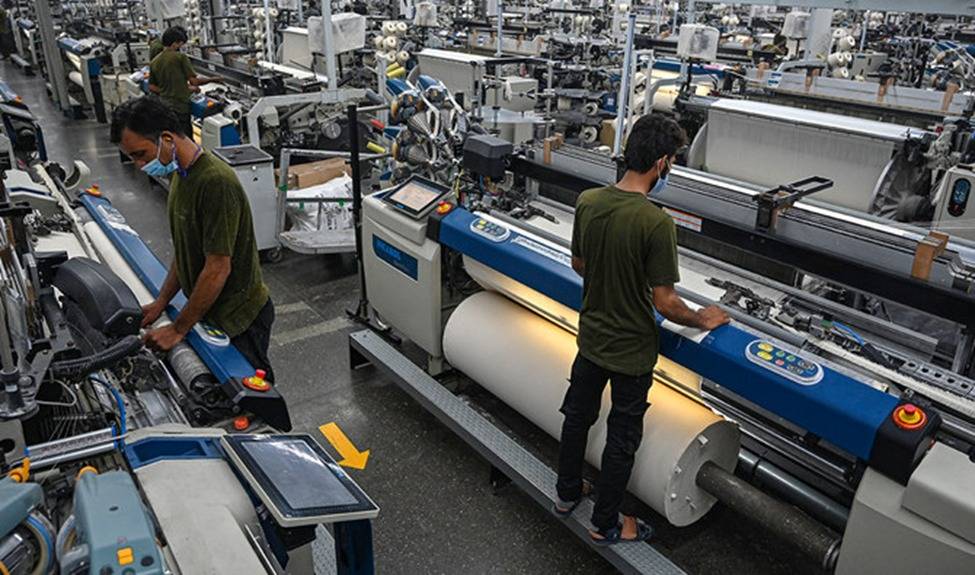
The strength of the IT sector lies in its low import dependency and high value addition. Unlike many goods-producing sectors, digital exports do not require large volumes of imported raw material. This allows the sector to generate a strong trade surplus and support the balance of payments. IT and ITeS now contribute about 45–47 percent of Pakistan’s total services exports. Full-year IT exports stood at $3.8 billion in FY2024–25, and the government is targeting $4.5–5 billion for FY2025–26. Longer-term ambitions of $10 billion by FY2028–29 are realistic if policy support, broadband expansion, digital payments, data protection, taxation clarity, and skills development remain consistent.
Pakistan’s greatest digital advantage is its people. A young, English-speaking, increasingly skilled workforce gives the country a competitive edge in software development, freelancing, business process outsourcing, cloud computing, artificial intelligence, and digital services. Hundreds of thousands of professionals are already directly employed in the IT sector, while freelancers earn substantial income through global platforms such as Upwork and Fiverr. This creates not only export earnings but also social mobility.
A young person in Lahore, Peshawar, Quetta, Karachi, or a smaller city can now serve global clients without leaving Pakistan. That is a powerful shift in economic opportunity
The combined rise of ports and digital exports points toward a more balanced national economy. Goods exports, estimated around $30–32 billion in FY2024–25, remain important, but Pakistan cannot rely only on textiles, agriculture, or remittances. A resilient economy needs multiple engines. Maritime trade strengthens physical connectivity, while IT exports strengthen knowledge-based competitiveness. Strong remittances, moderated inflation, and GDP growth projections of around 3.5–4 percent for FY2026 further support the case that Pakistan is stabilizing through diversification.
Pakistan’s economic story is not free of risks. Implementation gaps, policy inconsistency, energy constraints, governance issues, and security concerns can slow progress. But the direction is encouraging. From Gwadar’s rising container volumes to expanding IT exports, Pakistan is demonstrating that resilience comes from diversification, not dependence. CPEC Phase II and the Digital Pakistan vision offer the country a chance to connect geography with technology, infrastructure with innovation, and youth talent with global demand.
This is more than an economic transition. It is the story of a nation learning to use its ports, people, and position more strategically. With focused execution, Pakistan can build a stronger, export-led, shock-resistant economy that serves over 240 million citizens and positions the country as a rising economic force in the region and beyond.

Author

Mozammil Khan has a keen interest in politics and international economics. His academic work examines how infrastructure and geopolitical dynamics influence trade routes and regional cooperation, particularly in South and Central Asia. He is passionate about contributing to policy dialogue and sustainable development through evidence based research, aiming to bridge the gap between academic inquiry and practical policymaking.
