
Disinformation and Propaganda in Afghanistan Under Taliban Rule
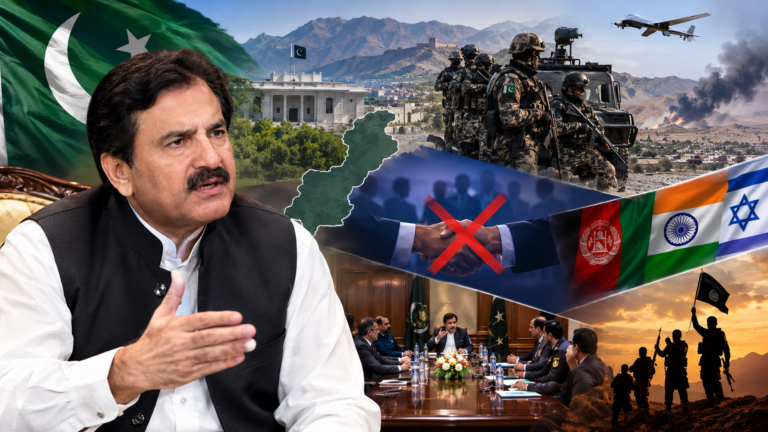
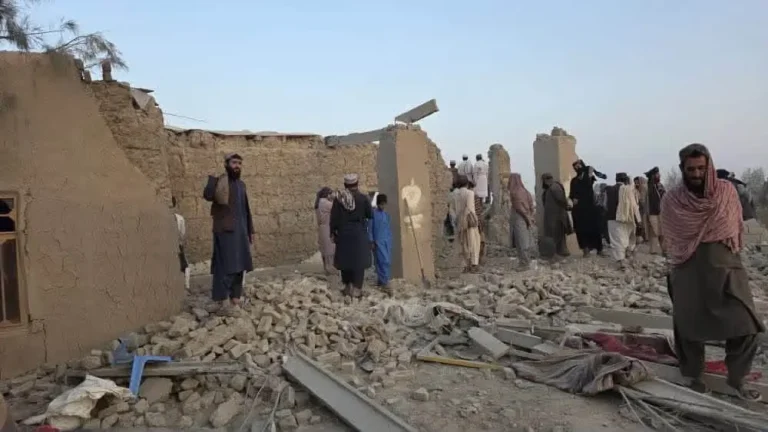
Afghanistan’s information space has entered a deeply troubling phase under Taliban rule. The recent wave of identical claims about an alleged airstrike in Ghazni, circulated by at least nine Afghan media and digital propaganda handles within just two hours and nineteen minutes, should alarm anyone who values verification, evidence and responsible journalism. Before any independent investigation, forensic assessment, satellite imagery or credible confirmation was available, blame was immediately placed on Pakistan. The speed, uniformity and emotional framing of these claims did not resemble normal reporting. It looked like a coordinated perception operation designed to shape public reaction before facts could intervene.
This pattern mirrors the Indian disinformation model that relies on instant accusation, emotional saturation and digital repetition to dominate the narrative before scrutiny begins. The method is simple: launch the allegation first, attach it to a politically useful enemy, flood the digital space with outrage, and treat every demand for evidence as denial or hostility. Once public emotion has been activated, facts become secondary.
In such an environment, truth is pushed aside by volume, speed and manufactured certainty
What is emerging under Taliban rule is not a free media culture but a centralized ideological and propaganda ecosystem. Afghan outlets and digital handles that should be asking difficult questions are increasingly amplifying anti-Pakistan narratives in a synchronized manner while ignoring contradictions and suppressing inconvenient facts. This is not journalism in any professional sense. Journalism begins with verification, context and accountability. Propaganda begins with a conclusion and then manufactures the emotional atmosphere needed to protect it.
The most dangerous feature of this trend is the normalization of an “accuse first, verify never” culture. When accusations of military action are made without evidence, the consequences are not limited to social media noise. Such narratives can inflame public opinion, fuel diplomatic hostility, harden regional tensions and provide cover for extremist actors. In conflict zones, misinformation is not harmless.
It can become a weapon as damaging as any conventional instrument of war, especially when used to misdirect attention away from the real sources of instability
Equally revealing is what these same propaganda networks choose not to discuss. The silence around TTP sanctuaries, cross-border terrorism, foreign terrorist presence and the militarization of civilian areas inside Afghanistan is striking. If the concern were genuinely for Afghan civilians, then militant infrastructure, extremist safe havens and the use of Afghan territory by violent groups would be central to the conversation. Instead, these issues are pushed to the margins while anti-Pakistan accusations are amplified with urgency. That selective outrage exposes the political function of the narrative.
The Taliban’s Afghanistan has become a space where information is tightly managed, dissent is restricted and ideological messaging is privileged over factual inquiry. In such a system, media cannot operate freely when it is pressured, coerced or aligned with ruling power structures. Digital propaganda fills the vacuum left by independent journalism. It creates an illusion of public consensus while hiding the machinery behind coordinated amplification.
Repetition makes the narrative appear organic, but coordination reveals intent
The apparent borrowing from Indian information warfare tactics makes this development more concerning. India’s regional strategy has often relied on narrative dominance: portraying Pakistan as the automatic villain, internationalizing accusations before evidence is tested, and using media ecosystems to convert allegation into perception. If Taliban-linked or Taliban-tolerated propaganda structures are adopting the same template, then Afghanistan’s digital space is being weaponized not for truth, but for geopolitical manipulation. It serves both to shield militant networks and to shape international opinion against Pakistan.
This is why the Ghazni claims matter beyond one incident. They reveal a broader struggle over truth, accountability and regional stability. A responsible media environment would have reported the allegation carefully, acknowledged the absence of independent verification, avoided premature blame and demanded evidence from all sides. Instead, the synchronized digital reaction suggests a pre-designed narrative waiting for activation.
That is the hallmark of narrative warfare: facts are not discovered; they are arranged around a political objective
Afghanistan’s people deserve better than propaganda disguised as journalism. They deserve media institutions that investigate, question and verify, not platforms that recycle ideological messaging. Regional audiences also deserve protection from manipulated outrage designed to distract from terrorism, militant sanctuaries and the failures of governance under Taliban rule. When misinformation is used to protect extremist ecosystems and redirect blame outward, it becomes part of the conflict itself.
The transformation of Afghanistan’s information space into an authoritarian propaganda apparatus should concern the entire region. A regime that replaces evidence with accusation, journalism with repetition and accountability with emotional manipulation becomes a source of instability beyond its borders. The issue is not merely one false claim or one coordinated campaign. The issue is the construction of a system where misinformation is routine, anti-Pakistan narratives are manufactured on demand, and truth is treated as an obstacle to power. That is not media. That is propaganda warfare.