


Pak-China Trade in Gilgit-Baltistan
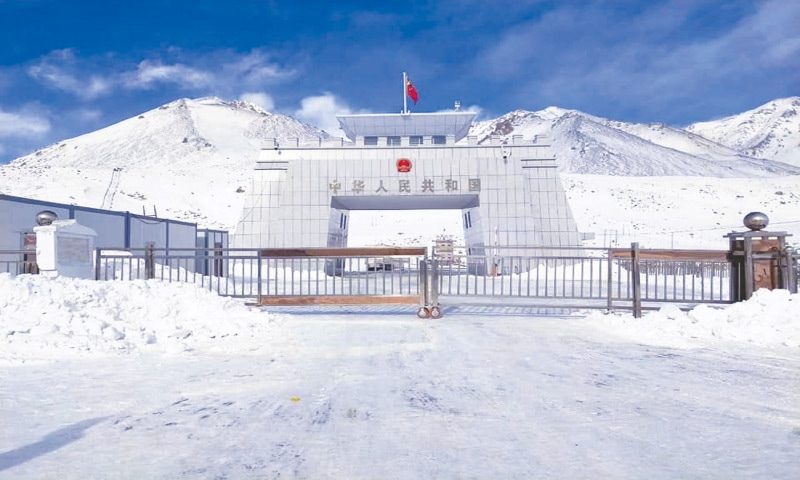
The formal launch of a comprehensive tax exemption programme for traders associated with Pak-China trade in Gilgit-Baltistan marks an important turning point for the region’s economic future. Inaugurated by Interim Chief Minister Yar Muhammad, this initiative reflects a practical and forward-looking approach to strengthening trade, encouraging investment, and creating wider opportunities for the people of Gilgit-Baltistan. For a region that holds strategic importance due to its geographic position and its role in Pakistan-China connectivity, such a policy is not merely a financial concession; it is a foundation for broader economic transformation.
Gilgit-Baltistan has long been viewed as a gateway between Pakistan and China. Its location gives it a natural advantage in regional trade, transport, tourism, logistics, and cross-border commerce. However, despite this potential, local traders and entrepreneurs have often faced serious challenges, including limited access to capital, high operational costs, infrastructure gaps, and regulatory hurdles. The newly announced tax exemption programme directly addresses one of the most pressing concerns of the business community: the burden of taxation on growing enterprises.
By reducing this burden, the government has created room for businesses to expand, compete, and invest with greater confidence
What makes this programme particularly significant is its inclusive design. Instead of focusing only on large industrial units or established traders, the framework extends benefits to small businesses, youth-led enterprises, women entrepreneurs, and start-ups. This approach is essential because genuine economic development cannot be achieved by supporting only a narrow segment of the business community. When small traders, young innovators, and women are given access to financial incentives and reserved opportunities, the benefits of growth spread more widely across society. In this sense, the programme promotes not only trade expansion but also social and economic inclusion.
The separate allocation of incentives and quotas for different business categories is a wise policy choice. Large businesses can help increase exports, strengthen supply chains, and attract investment, while small and medium enterprises can generate employment and support local communities. Similarly, youth-led start-ups can introduce innovation, digital solutions, and new business models, while women entrepreneurs can add new energy to the regional economy.
By recognizing the distinct needs of each group, the government has shown that economic revival requires targeted support rather than one-size-fits-all policymaking
This initiative is also likely to strengthen Pak-China trade relations. Trade between the two countries already carries strategic and economic significance, but regions like Gilgit-Baltistan can play a much larger role if local businesses are empowered. Tax relief can make cross-border trade more attractive, reduce costs for exporters and importers, and encourage new investors to explore opportunities in the region. Over time, this could lead to increased commercial activity, better warehousing and logistics services, and stronger participation of local businesses in regional value chains.
The employment impact of this programme should not be underestimated. When businesses grow, they need workers, suppliers, transporters, service providers, and skilled professionals. This creates a multiplier effect in the local economy. A trader who expands operations may hire more staff; a small manufacturer may purchase more raw materials; a logistics company may increase its fleet; and a young entrepreneur may launch a new service linked to trade or tourism. In a region where job creation is a major priority, such indirect benefits can be just as important as the immediate tax relief itself.
At the same time, the success of this programme will depend on implementation. A well-designed policy can only deliver results if it is transparent, accessible, and free from unnecessary bureaucracy. Traders must be able to understand the eligibility criteria, application process, and benefits without confusion. Women and young entrepreneurs, especially those in remote areas, should receive guidance and facilitation so that the programme does not remain limited to already established business circles.
The government should also create monitoring mechanisms to ensure that the incentives reach genuine businesses and contribute to measurable economic outcomes
Another important requirement is supporting infrastructure. Tax exemptions can encourage business activity, but trade also needs roads, storage facilities, banking services, customs facilitation, digital connectivity, and reliable energy. If these areas are improved alongside the tax relief programme, Gilgit-Baltistan can truly emerge as a regional economic hub. The programme should therefore be seen as part of a larger economic strategy, not an isolated announcement.
Overall, the tax exemption programme for Pak-China trade in Gilgit-Baltistan is a promising and timely step. It gives trade a new momentum, creates equal opportunities for different levels of business, encourages the participation of youth and women, and strengthens the region’s role in Pakistan-China economic cooperation. More importantly, it signals that the government recognizes the economic potential of Gilgit-Baltistan and is willing to support it through practical measures. If implemented with transparency, consistency, and long-term vision, this initiative can open new doors for investment, exports, employment, and sustainable development. Gilgit-Baltistan now has a real opportunity to move from strategic importance to economic strength.

