

Pakistan’s Anti Bonded Labour Reforms: Countering Misleading and Sensationalized Narratives
Setting the Record Straight: Pakistan’s Labour Reforms and Western Saviour Narratives
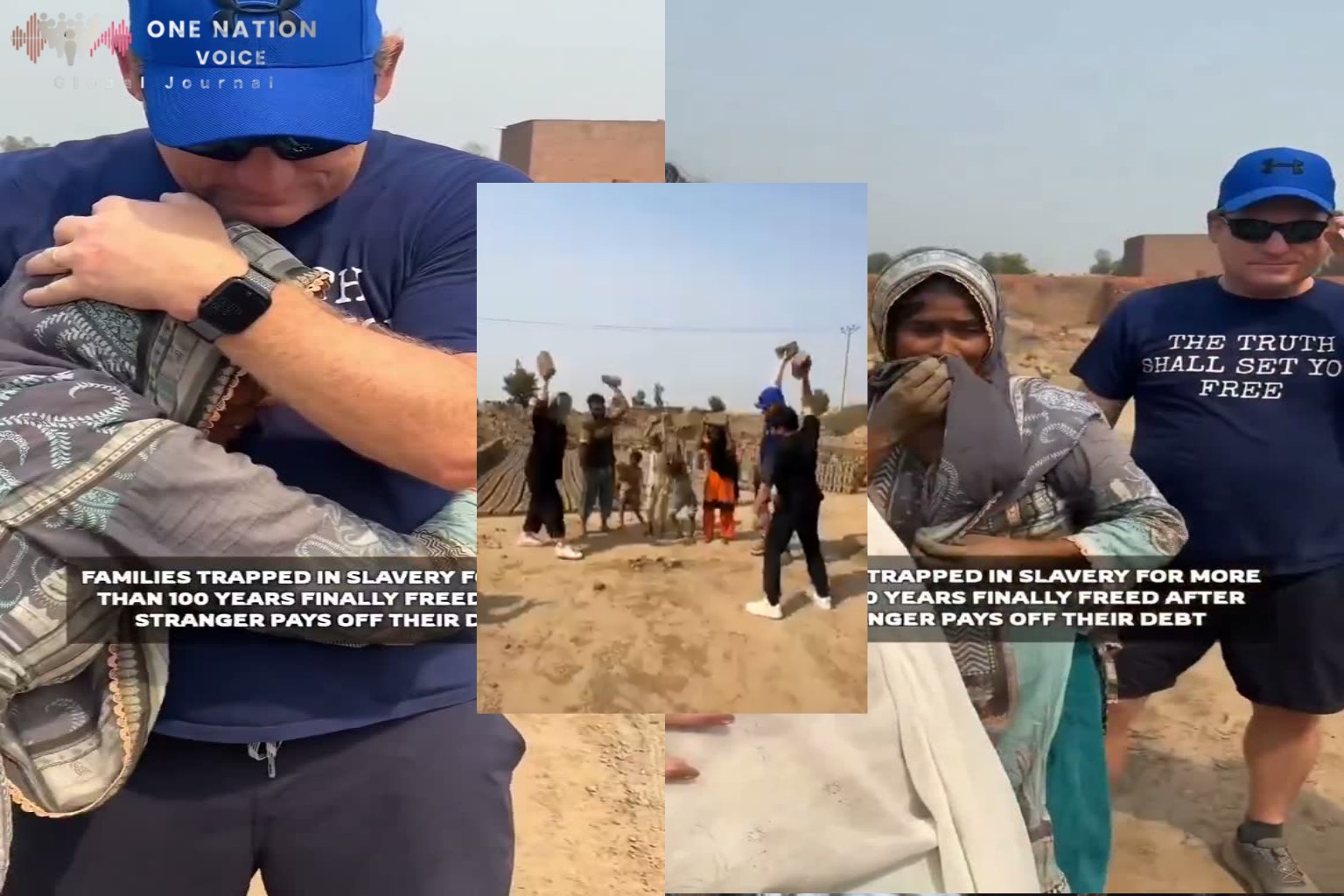
When a social media post goes viral claiming that an American Christian activist “freed” a Pakistani family from 140 years of slavery by paying $4,000, the instinct of many Western audiences is to share, sympathize, and donate. What often follows less frequently is careful verification and context, and that gap is where misleading narratives can emerge.
The recent post amplified by Visegrad24, centred on US based activist Aaron Hutchings and affiliated advocacy networks, reflects a common pattern often described as a Western saviour narrative. These stories are emotionally powerful but can sometimes lack broader socioeconomic and historical context.
One of the key claims in such narratives is that a family was trapped in bonded labour since the 1880s, a period that predates the creation of Pakistan by several decades. Critics argue that such framing can be historically inconsistent and may instead reflect generational labour arrangements in traditional industries. Brick making in South Asia, like many artisanal trades, is often passed down through families. Advance payments, known as peshgi, have historically been part of informal rural labour systems, especially in areas with limited access to formal financial services.
The motivations behind simplified narratives are also worth examining.
Highlighting specific communities in distress can resonate strongly with international audiences, particularly when tied to religious identity, which can increase visibility and fundraising engagement. However, such framing does not always reflect the full complexity of local labour conditions and reforms.
Pakistan has taken several legal and institutional steps to address bonded and forced labour.
The Bonded Labour System Abolition Act 1992 and Article 11 of the Constitution of Pakistan prohibit slavery, forced labour, and child exploitation. While enforcement challenges exist in many developing labour markets, these laws form the legal foundation for worker protection in the country.
A significant recent development is the Punjab Labour Code 2026, which consolidates multiple older labour laws into a single framework to improve clarity and enforcement. Key reforms include recognition of fixed term employment with statutory protections, updates to occupational safety standards, and improved grievance mechanisms supported by digital reporting systems.
The minimum wage in Punjab for unskilled workers is set at approximately 40,000 PKR per month for 26 working days, with gradual increases over recent years reflecting policy efforts to improve income levels. Labour authorities have also introduced a dedicated helpline system to allow workers to report wage related complaints, along with district level monitoring committees in industrial regions. In addition, large numbers of identity registration efforts have been carried out to improve access to banking, legal aid, and social protection for vulnerable workers, including brick kiln labourers.
In line with international labour standards, including ILO Conventions 29 and 105, reforms have strengthened definitions of forced labour and introduced mechanisms intended to regulate informal credit based employment arrangements more transparently.
Some international observers and organisations have acknowledged recent reforms in Pakistan’s labour sector as part of ongoing engagement and institutional improvement efforts. These perspectives highlight the importance of continued reform and dialogue rather than external intervention narratives.
At the same time, Pakistan continues to face genuine structural challenges. Labour enforcement in informal sectors remains uneven, and access to justice can vary across regions. Domestic civil society organisations such as SPARC, PILER, the Human Rights Commission of Pakistan, and labour unions continue to document conditions and advocate for stronger protections, better implementation, and expanded rights for workers, including women and informal labourers.
Pakistan’s labour landscape is therefore best understood as evolving and reform oriented, shaped primarily by internal legislative, judicial, and civil society efforts. While external narratives often simplify complex realities, the actual situation reflects gradual institutional change alongside ongoing challenges common in many developing economies.
A balanced understanding requires focusing on accuracy, context, and local agency, ensuring that advocacy and reporting contribute constructively to real improvements in worker welfare rather than reducing complex systems to simplified storytelling.
Disclaimer:
The views and opinions expressed in this article are exclusively those of the author and do not reflect the official stance, policies, or perspectives of the Platform.

